In today’s edition, we try to shed light on what to expect from 2024.
Buckle up. 2024 is going to be intense. Enjoy the ride!
The year ahead of us
Elections in Europe
Not since the ancient Greeks established a form of democracy in the 6th century BC will so many people on earth cast a ballot in a year as in 2024. Across all continents, 50 nations will hold elections in which 2 billion people — one in four of the world’s population — will vote. Sometimes, that doesn’t mean exercising one’s democratic rights, such as in Russia or North Korea, where “opposition” is not a thing. In others, elections can potentially reshape Western democracies and global partnerships.
The Brussels bubble’s energy and attention will be sucked up by the European Parliament elections, taking place from June 6-9. Some 400 million citizens can take part. All eyes will be on the right side of the spectrum, where the EPP’s long-standing supremacy will be tested over the rising tide of the ECR and ID-affiliated parties. The election result — and subsequent back-room negotiations among EU leaders — will determine the line-up of the next European Commission. President Ursula von der Leyen remains (unofficially) the bookies’ favourite to stay on for another five years while she gets a new European Council counterpart, as Charles Michel will step down earlier to run for the European elections.
All around Europe, Finland kicks off the EU’s election cycle with presidential polls on 28 January, with a second round scheduled for 11 February. Portugal (10 March), Lithuania (12 May), Belgium (9 June), and Austria (in the fall) all hold legislative elections this year. Croatia will elect a new parliament (by 22 September) and a president (in December), as will Lithuania, which will pick its president and hold a constitutional referendum on 12 May and elect a new parliament by 6 October. Slovakia (expected in March) and Romania (by December) both hold presidential votes. Look out for many new faces at the European Council’s round table this year.
U.K. Prime Minister Rishi Sunak confirmed last month that he would call a general election in the second half of this year. The opposition Labour Party is forecast to win big and end the Conservatives’ 14-year reign.
Everyone should pay particular attention to Belgium: while holding the presidency of the Council of the EU until June, a sweltering summer could see the far-right entering an independentist government for the first time. We expect big headaches.
The Middle East
October 7, 2023, has tragically marked a new era in the history of the Middle East.
Before that day, it seemed that the United States’ aspirations for the Middle East were materialising. The United States was in the process of forging a defence pact with Saudi Arabia, a move that would prompt the kingdom to normalise its relations with Israel. Additionally, plans were unveiled for an ambitious trade corridor spanning from India to Europe through the Middle East, aimed at counterbalancing China’s increasing influence in the region.
Hamas’ brutal slaughtering of Jewish people, the worst mass killing of Jews since the Holocaust, triggered the Israeli assertive response and, once again, completely changed the scenario in the area.
On the global stage, Israel’s closest ally, the United States, has been in the first line in supporting the Jewish State from the beginning, with Secretary of State Antony Blinken constantly travelling to the Middle East.
However, with the November elections fast approaching, polls betting on Donald Trump’s victory and a shifting public opinion on the conflict are forcing President Biden to adopt a more cautious approach, at least in official public appearances.
Israel’s worst enemy, Iran, which firstly triggered its weaponised proxy, Hamas, to jeopardise Western normalisation with Saudi Arabia in the larger framework of the Abraham Accords, is, in the meantime, taking advantage of the degrading scenario in the area by steering, on the one hand, Hezbollah on the Lebanese border with Israel and, on the other, the Houthis’ attacks against Western vessels in the Red Sea.
In this way, what is a regional conflict, geographically speaking, has enormous repercussions on global trade.
The Houthi attacks are disrupting with the potential to inflict similar damage as the Suez Canal blockage. Approximately 10% of globally traded oil at sea passes through the Red Sea, but due to the Houthi attacks, shipping companies are diverting to longer and more expensive routes around Africa. Oil prices surged when BP, a major oil firm, decided to avoid the Red Sea in December. Most attacks occur in the Bab el-Mandeb Strait, a narrow water passage near the region controlled by the Iran-linked militant group in Yemen.
Despite originating in Yemen’s northern mountains, the Houthis have demonstrated a surprisingly global understanding of disrupting international trade, targeting Saudi Arabian oil facilities long before their current actions.
However, taking advantage of what is happening in Gaza to bolster their agenda by threatening further global economic disruption can be considered a bold, but risky strategy.
Russia’s aggression against Ukraine
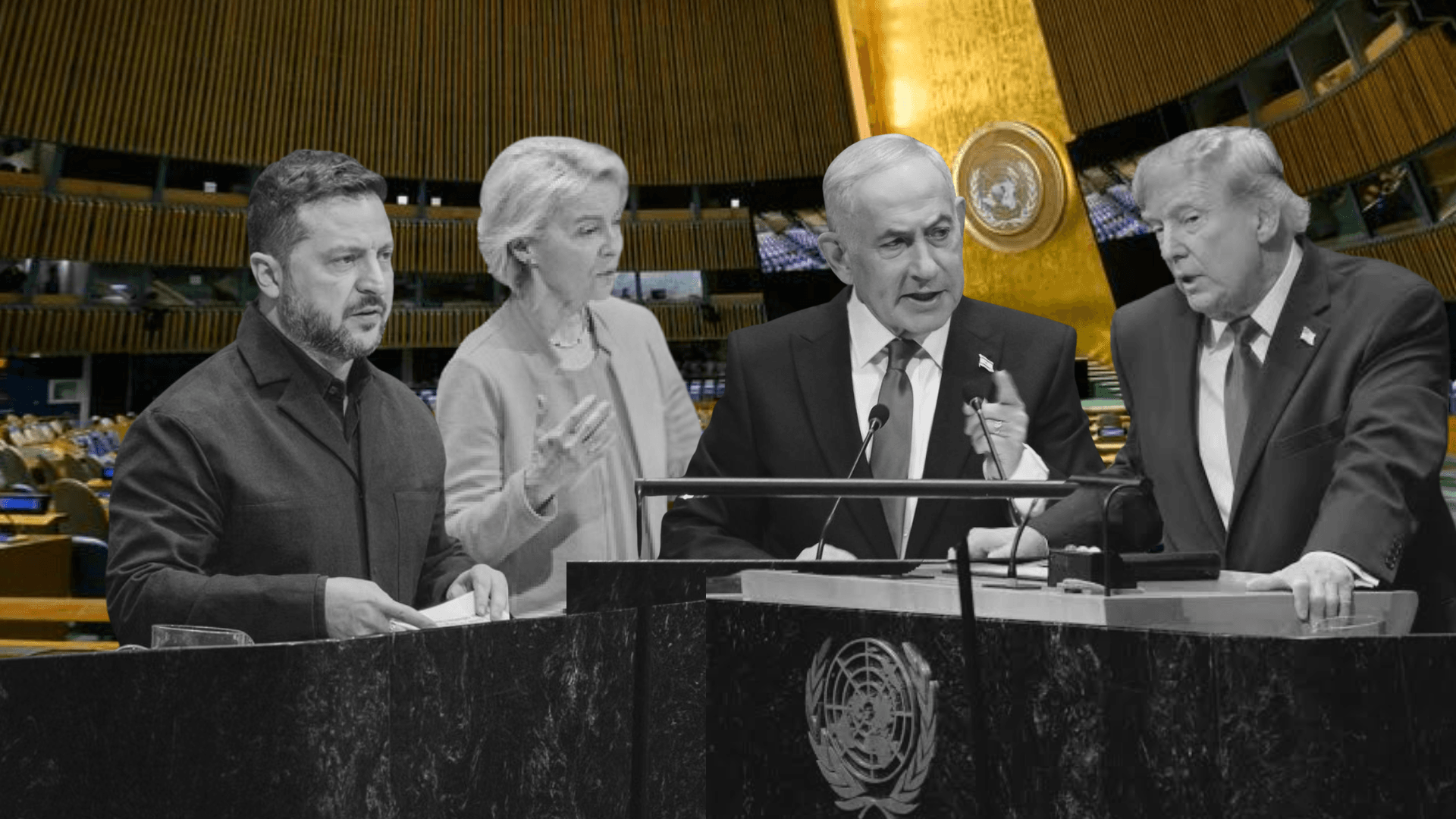
Europe’s consensus is that Ukraine will face a challenging year ahead, as U.S. support looks uncertain amid Trump’s political brinkmanship. Eastern Europe is especially worried that some in Western Europe would use his rhetoric as a pretext to turn military assistance for Ukraine into possible attempts to negotiate with Russia.
This comes as Russia piles the pressure on Ukraine, having launched a series of large-scale air attacks since the first days of the year.
Ambassadors representing the 27 EU countries agreed on Wednesday to start legislative work with the European Parliament to prepare a crucial €50 billion aid fund for Ukraine, which the country needs as a budget lifeline. Hungary is no longer blocking the entire fund, which has allowed ambassadors to agree at least to start working on it with Parliament. But Budapest is still insisting on some crucial changes to the fund — an issue which will likely have to be resolved by heads of state and government meeting on 1 February.
Even though the European Union will get there, a huge issue still needs to be addressed: although the Ukraine war effort has broad support in the US Congress, an agreement on further arms has been stopped by Republicans who insist that stricter security measures on the US-Mexico border must be part of any military aid deal.
An emergency spending measure that would have provided $50 billion for Ukraine was defeated in the Senate in December.
Ukraine is facing a $43 billion budget deficit, and officials say they may have to delay salaries and pensions for government employees if further aid from the West does not come soon.
But apart from this, Ukraine has another problem: 5 November.
The United States
The elephant in the room. The new year has barely dawned, but it is already sure that 2024 will prove to be one of the most controversial in the storied history of the United States.
America’s nine top justices of the Supreme Court will soon have to make the most consequential decision of their careers: Should Donald Trump be allowed to continue in his quest to seek a return to the Oval Office?
The former president is appealing to the court for a rapid ruling after his candidacy for the Republican Party’s presidential nomination was decreed ineligible in Colorado and Maine. The first caucuses of the electoral season will take place in Iowa on 15 January, with New Hampshire and South Carolina holding their primary contests shortly after that.
Should they decide to kick the ball into the long grass and decree that it’s too early for legal challenges to Trump’s candidacy, we can expect months of uncertainty ahead as his opponents keep their powder dry and prepare to launch fresh challenges later in America’s election drama.
A return of Donald Trump to the White House would once again shuffle the cards of international trade and global partnerships.
After Biden’s election, the partnership between the United States and the European Union settled on a “new normality”: Biden has had a strong relationship with von der Leyen over the past years of conflict in Ukraine, especially.
Following the outbreak of war, the Commission and the Biden administration initially maintained close cooperation, seemingly restoring the transatlantic relationship after the turbulent Trump years. However, tensions arose when Biden’s Inflation Reduction Act irked European officials due to perceived protectionist measures favouring American electric vehicle provisions. Brussels found itself scrambling to secure changes within the legislation. Despite initial difficulties, signs suggest a potential deal, with both leaders expected to announce progress and initiate talks on a global critical raw materials club early this year.
On Russia’s war against Ukraine, the Transatlantic partnership has held firm, at least in intention, although Washington’s military support to Kyiv (nearly $44.2 billion) far exceeded that of most EU countries (except Germany, whose military commitments now exceed EUR 17 billion).
Trump’s return to office would likely jeopardise this alignment, as the former president would presumably install loyalists in key Pentagon, State Department, and CIA positions.
The result would enable Trump to make sweeping changes to the U.S. stance on issues ranging from the Ukraine war to trade with China and to the federal institutions that implement – and sometimes constrain – foreign policy.
If he returns to power again, Trump could cut defence aid to Europe and further shrink economic ties with China, with the spectrum of withdrawing from NATO if countries did not meet their commitments to spend at least 2% of their gross domestic product on defence. Such a decision would be earth-shaking for European nations that have depended on the alliance’s collective security guarantee for nearly 75 years.
On Ukraine, Trump could exercise three options: significantly cut or cancel any support to Kyiv, condition it on approving specific measures in Congress or try to negotiate with Putin regardless of what Ukraine or the rest of Europe thinks. Such negotiations between Putin and Trump could lead to some compromise that will notionally return Russia to the status of a key player, and the others will have to somehow come to terms with that.
Contrary to a generalised retreat from globalism, there are good reasons to believe that a Trump administration would continue supporting Israel and its war against Hamas as long as it is necessary.
Just as a reminder, from 2017 to 2021, then-president Trump acknowledged Jerusalem as Israel’s capital (December 2017) and moved the US embassy there (May 2018). He also recognised Israel’s sovereignty over the Golan Heights (May 2019) and was crucial in brokering the Abraham Accords (September 2020) while significantly reducing financial aid to the Palestinian Authority and the UNRWA.
What needs to be evaluated is how far this support would go, namely if there is the risk of an American military intervention in the region.
According to your storyteller, the answer to this question lies in assessing how much and how long American interests in the Red Sea will be compromised and in evaluating the threat level that Iran will represent soon.
One thing is sure: despite the growing clouds on the horizon, we all hope 2024 will bring peace, freedom and prosperity—even just a little bit more.