In today’s edition, we sketch how NATO would look if Mark Rutte succeeded in his bid to become the next Secretary-General of the Atlantic Alliance. Enjoy!
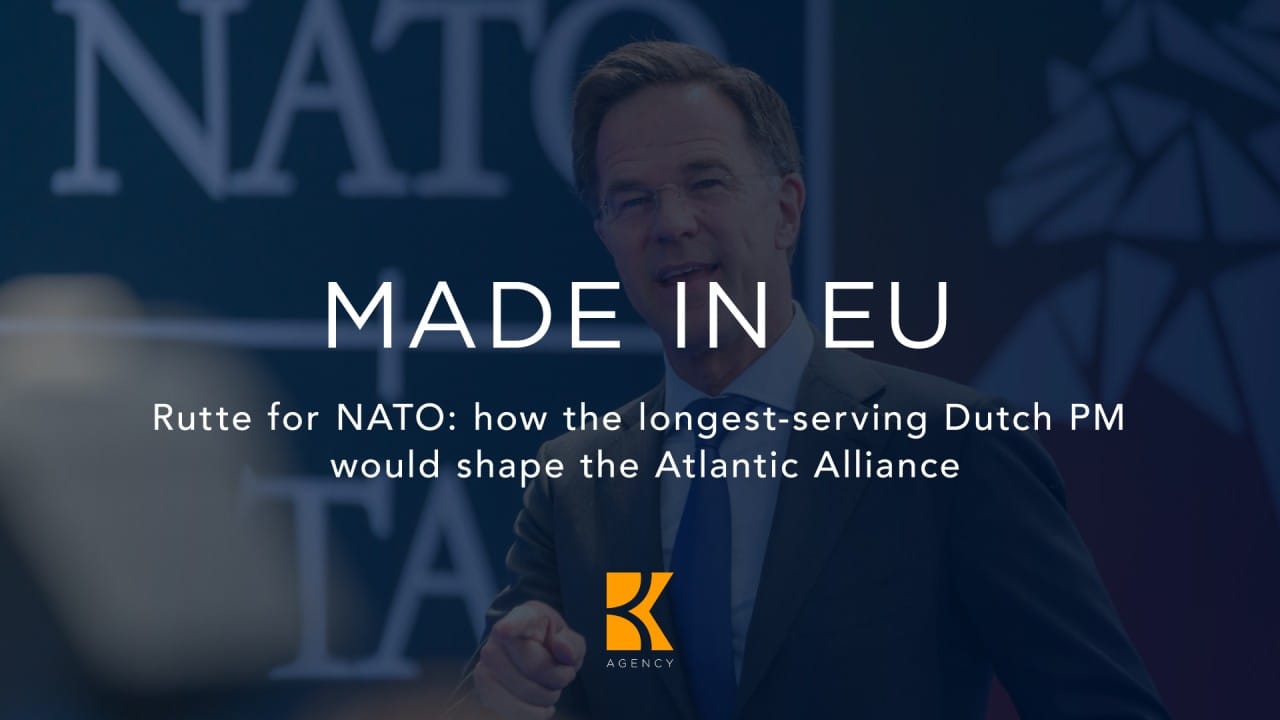
Rutte for NATO: how the longest-serving Dutch PM would shape the Atlantic Alliance
For the first time, the outgoing Prime Minister of the Netherlands, Mark Rutte, publicly announced his ambitions for the future, indicating his desire to become the next Secretary General of NATO in an interview with a Dutch radio station last Saturday. “That would be very interesting, and I could contribute something,” Rutte said, stressing that he would not campaign actively. If the post is offered to him, it will be ‘maybe yes’.
But Rutte himself acknowledged that he has ‘no great chance’ because the preference within the Atlantic Alliance to succeed Jens Stoltenberg, whose mandate has just been renewed for the fourth time until 31 October 2024, is for a European woman. The names of Commission President Ursula von der Leyen, Estonian Prime Minister Kaja Kallas and Danish Prime Minister Mette Frederiksen are circulating in the corridors of Brussels. On the other hand, Rutte has ruled out being interested in the post of President of the European Council. Instead, he would be more interested in that of the European Commission President, but the Dutch Prime Minister also admitted that he is not of the “correct” political orientation. Rutte is a Liberal, and the European People’s Party should again claim the post of Commission President under the higher number of seats it is projected to win in next year’s European elections.
Despite the “game of thrones” that the race for the NATO head will unleash, Mark Rutte’s win could potentially define and reshape the Atlantic Alliance’s programme of action in future years.
Under the hypothetical influence of Mark Rutte’s emphasis on economic stability and innovation, a NATO program might encompass multi-faceted initiatives.
Based on Rutte’s stances over his mandate as Prime Minister, let’s sketch some of them together.
Economic Security Resilience
Rutte’s focus on economic stability and building a resilient economy has been one of the most characteristic pillars of his political action. Therefore, we envisage that Rutte would project this aspect in his new position, focusing on economic security, examining vulnerabilities, implementing measures to protect critical financial infrastructure, and developing joint contingency plans to mitigate economic repercussions of security threats, such as cyber-attacks or geopolitical instabilities.
Cybersecurity Cooperation
Recently, in a trade mission to India, Rutte launched a program to help India’s top 10 cybersecurity companies with their European expansion via the Netherlands. We could see this attention to a multipolar cybersecurity effort reflected within the Atlantic Alliance to coordinate cyber defence strategies among member states and enhance readiness and response capabilities, including AI-driven threat detection.
Innovation in Defence Technology and Intelligence Sharing
Mark Rutte has proven to be a pivotal influence in the country’s tech policy over the past thirteen years. His governance, marked by flexibility and pragmatism, has seen the country align more with the United States in the race for technological supremacy.
This change in approach marks a significant shift from the Netherlands’ traditional role as a proponent of global free trade. Rutte’s governments have always been committed to safeguarding the nation’s intellectual property and preserving its technological advancement in the Western world. This reflects a sophisticated comprehension of the challenges and complexities within the contemporary tech landscape.
Therefore, it is not difficult to imagine that a Rutte-leaded NATO would foster and support collaborative research and development projects, focusing on emerging technologies like AI, quantum computing, and unmanned systems within enhanced coordination with the United States. This would incentivise technology sharing among allies and intelligence-sharing protocols to ensure interoperability, avoid duplication in defence technology development, and better understand evolving security threats.
These initiatives align with Rutte’s focus on economic stability and technological innovation, reflecting a proactive approach to fortify NATO against modern security challenges while fostering economic resilience and innovation within the alliance.
Implementing the NATO’s Strategic Concept
The abovementioned initiatives would be nothing more than a practical implementation of NATO’s Strategic Concept, an essential document for the Alliance that reaffirms NATO’s values and purpose, provides a collective assessment of the security environment, and also drives NATO’s strategic adaptation and guides its future political and military development.
The document is updated every ten years and was endorsed by leaders at the 2022 Madrid Summit last time. Still, Russia’s aggression against Ukraine and the current turmoil in the Middle East constitute an external threat that does not play in favour of reform-focused political cooperation, conditio sine qua non to allow a forward-looking reflection process to strengthen NATO.
Is Mark Rutte the right person at the right time to deliver? Only time will give us the answer.