From the China-EU relationship to the China-US relationship. This time, our weekly newsletter is all about love.
In today’s special edition, we walk right into Boris Johnson’s den. Guess what, dear reader: they won’t get rid of him.
De-risking, von der Leyen edition
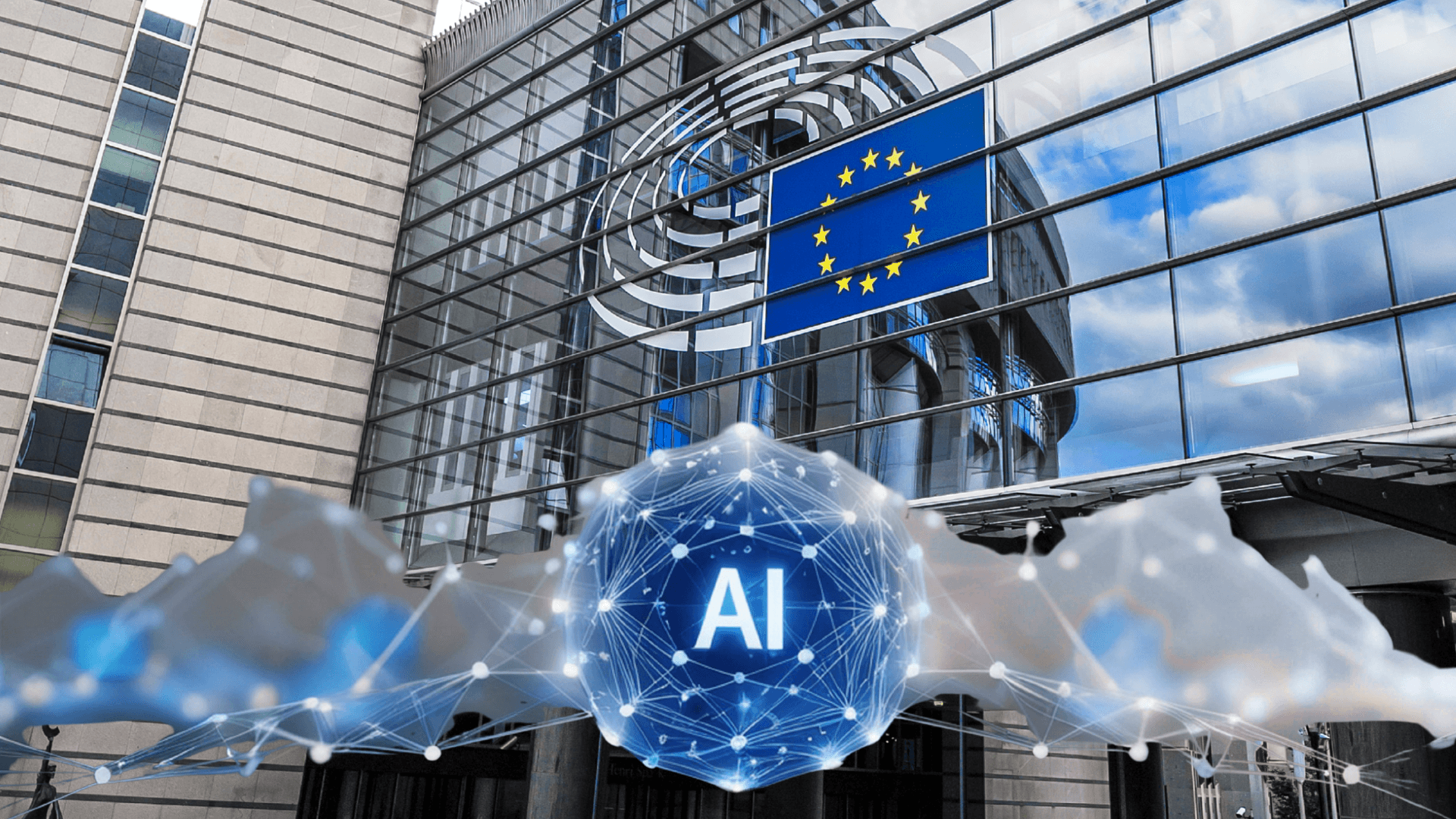
The European Commission on Tuesday unveiled its EU Economic Security Strategy, a pillar of the strategy to de-risk from China. But don’t say out loud (and don’t write in official documents) that China is the target because EU de-risking from China is a tricky business between divisions among the twenty-seven and sensitivities in Beijing.
The EU Economic Security Strategy is the concrete translation of the speech on China delivered by Commission President von der Leyen at the end of March, just before his trip to Beijing with French President Emmanuel Macron. De-risking was successful in the G7, to the point that even the Biden Administration took up the formula to avoid talking about ‘decoupling’ and seek a minimum of détente with Beijing. According to von der Leyen, China must remain a trading partner of the EU. But ‘there are several areas where trade and investment put our economic and national security at risk, particularly in the context of China’s explicit merger of its military and trade sectors’, she explained in March. In essence, Tuesday’s proposal frames EU-level restrictions on exports of certain sensitive technologies and dual-use goods but also on investments that lead to forced transfers of technology or knowledge.
However, von der Leyen’s de-risking does not please all member states. On the contrary, some fear that economic security will be used as an excuse to introduce dangerous and unjustified protectionism surreptitiously. Others want China to be kept from being mentioned. The President of the European Council, Charles Michel, envisaged a strategic discussion on relations with Beijing at the summit at the end of June. Compared to the past, the roles between France and Germany have reversed: Emmanuel Macron is much more resistant to the de-risking strategy than Olaf Scholz. To get around this, Tuesday’s Commission proposal focuses on stress tests of the EU’s resilience and dependencies, particularly for the industrial base and defence.
The Commission took the first concrete de-risking step on Thursday, 15 June, when Thierry Breton called member states to ban Chinese telecoms giants Huawei and ZTE from 5G networks in Europe. Breton complained that only ten member states had done so so far. Even national governments have yet to have obvious ideas about China. Macron is on his honeymoon with Xi Jinping. But, according to several sources, France is pressing the Commission to investigate Chinese subsidies for electric cars that could lead to anti-dumping duties. Germany, on the verge of adopting its China strategy, has just authorised Chinese entry into the port of Hamburg. In Italy, Giorgia Meloni’s government has used the golden power to exclude Chinese companies from running Pirelli. Still, it has not clarified what it will do about the Belt and Road Initiative.
Dazed and confused.
Joe, tell me the truth
Antony Blinken, the current U.S. Secretary of State, recently made a historic visit to China, marking the first time in five years that an American Secretary of State has visited the country. During his visit, Blinken met with Foreign Minister Qin Gang, China’s top foreign policy official Wang Yi, and notably, Chinese President Xi Jinping himself also received him. The meeting with Xi took place in the Great Hall of the People and lasted approximately 35 minutes. Although it was yet to be confirmed, the meeting with Xi was crucial to the trip’s success. According to a transcript released by the State Department, Xi stated that the discussions were open and extensive, and both sides made progress and reached agreements on certain specific matters without providing further details.
But then… Joe Biden came. The US President called his Chinese counterpart Xi Jinping ‘a dictator’ on 20 June, just one day after US diplomat Antony Blinken visited Beijing to stabilise bilateral relations between Washington and Beijing.
Beijing’s retort was short in coming. The Chinese authorities said Biden’s remarks about Xi were ‘absurd and irresponsible’ and a violation of ‘China’s political dignity’.
From his side, Xi did not comment personally on Biden’s comments. But the US president’s sorties are unlikely to be met with indifference, undermining efforts by both countries to put relations back on a more stable footing after the ball incident.
It is legitimate to ask a simple question… why?
Diplo Focus: All roads lead to Westminster
Out of the Parliament, he was repudiated by lifelong allies, betrayed by loyalists, and banished from the party’s leadership and the country. You tried once before, Boris, to put all the pieces back together, to regain ‘your’ place at Number 10 after the meteor of Liz Truss. But then came Rishi Sunak. The nemesis who convinces you not to risk it, to step aside so as not to ruin your electoral record of invincibility.
It was the second afternoon of June. Sunak and Johnson, in the same room, both animated – or so they swear – by good intentions after months of silences and conspiracies. Boris proposes to collaborate in the party’s rebirth, to campaign against the ‘red wall’, in the Labour fortress that he alone in British political history has been able to conquer; he solemnly promises not to have leadership ambitions. But then, he raises the question of his honours list: he intends to award titles of nobility to his loyalists – as the practice allows – but he asks Sunak for guarantees: that the special committee that scrutinises every proposal will not mess up his plans. And here, the air cools down. After the meeting, the Johnsonians say that Rishi betrayed the agreement.
Six days after that meeting in Downing Street, Boris goes to Egypt, and there, Harriet Harman, Johnson’s Labour nightmare for many months now, chairwoman of the Committee on Privileges, informs him that the investigation on whether BoJo deliberately lied to the Commons about the lockdown parties, is over. This committee decides to punish Johnson with a suspension from Parliament of more than ten days. Just enough to call for a by-election to jeopardise his seat.
At that precise moment, Boris convinces himself that the wheel has turned for him too: no longer a plotter of conspiracies but the designated victim of a plot with Rishi Sunak in the director role. He thinks they want to eliminate him, and he is different from the type to stand by and watch. So, he decides to take the initiative: he announces his resignation before ‘condemnation’.
A vote is taken on approving the report’s findings, with the Tories facing the following dilemma: support the prescriptions of a parliamentary institution or support Boris? The decision will be smooth. The crossroads is Hamletic, dear reader: stand with Parliament, exposing yourself to the charge of treason that would come from Conservative voters? Or side with Boris, prolonging Sunak’s agony, undoing attempts to archive the BoJo era to move on? The motion passed in the end, but most Conservatives did not turn up at Westminster to vote to avoid embarrassment.
With no apparent way out, this paradox explains just how much Boris Johnson still matters in British politics, notwithstanding the many who continue to write him off daily. At least five scenarios, some more likely, others less so, that could allow our UK’s Cincinnatus to get back in the saddle.
The first is the most complicated: Boris puts himself on the line in a by-election, perhaps benefiting from the resignation of one of his loyalists, wins the seat, returns to Parliament, and starts dealing cards again. A seemingly insurmountable obstacle exists: the leader controls the party. Why would Rishi put Boris on the list of candidates? He won’t.
Second scenario: Boris waits for the next general election. Several MPs always give up a new run; Johnson stands ready, and… even this time, Sunak would hardly agree to put him on the list.
The third plan is a classic compromise: the Conservatives are trailing in the polls; they need a successful ‘campaigner’, a speaker who can mobilise the base. And that is where Sunak and Johnson strike the deal. Difficult, but possible.
Then all that remains is the fourth plan: die Samson with all the Philistines. Sunak needs to involve Johnson to win the election. Boris convinces an MP to resign; he wants to run for a by-election, and, this time, a much more politically fragile Sunak does not have the strength to stop him from running again. At that point, a reversal is expected: once back in the race, Boris decides to contest the leadership with his former minister, with a good chance of success.
According to your storyteller, the fifth and last scenario is the most likely. Sunak loses the election but resigns immediately after the defeat. Johnson is cut out of the race for the Tory leadership because only MPs can compete for the role. But beware, the new leader secures the support of the Johnsonians by guaranteeing that he would not oppose a return of the old BoJo to Westminster. Johnson returns to the race for a seat, wins, stands on the sidelines, and shows loyalty to the new leader until he catches a moment of weakness. He plays on the fact that the voters have forgotten the scandals, on the Conservative people’s desire for revenge (and victory), he triggers a vote of no-confidence, and there he is again: who, better than him, can bring the Tories back to Downing Street?
On his side, BoJo has already started the dirty work. He lectures worldwide, has a well-underway memoir, and a new job as a columnist at the Daily Mail, with which he will dictate the Kingdom’s political agenda weekly. He will be a thorn in the side for Sunak and anyone considering dismissing his story and not forgetting the crazy, romantic idea that has emerged in the last few days: a solo run for the London mayoral seat. It would be a way to start again where this incredible story began.
Anything to prevent this from being ‘the last dance’, to avert a Macbeth-like ending.
Like the noble Scottish general, to whom the witches swear that no man born of woman shall ever hurt him, Boris Johnson will have to fear the traps set by his snares. Unless Rishi Sunak suddenly turns out to be Macduff, therefore able to eliminate Macbeth. At that point, be sure we would see Boris come forward, sword in a fist, ready to go all in. Once again, maybe for the last time.
To kiss the ground before young Malcolm’s feet,
And to be baited with the rabble’s curse.
Though Birnam Wood be come to Dunsinane,
And thou opposed, being of no woman born,
Yet I will try the last. Before my body
I throw my warlike shield. Lay on, Macduff,
And damned be him that first cries, ‘Hold!’