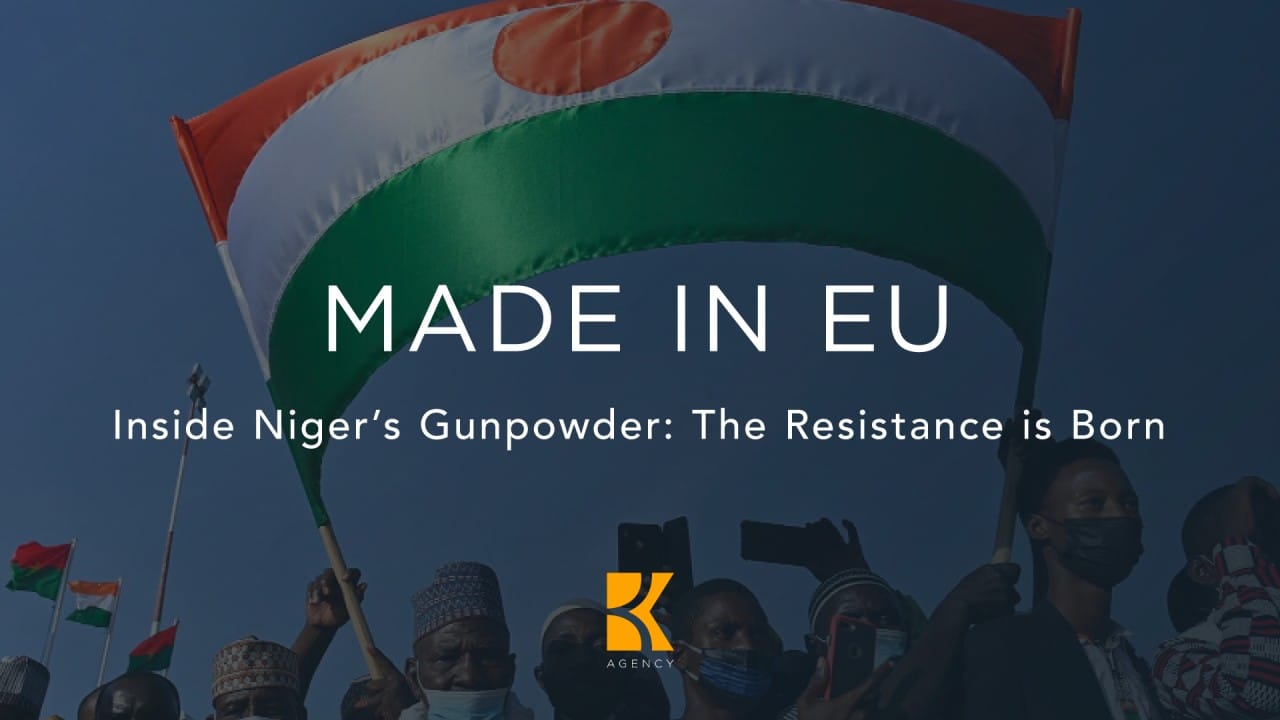
In today’s edition, we bring you again inside Niger’s gunpowder. With a significant last-minute update: The Resistance is officially born. Enjoy the read!
Inside Niger’s Gunpowder: The Resistance is Born. Who is the former rebel who promises to save Bazoum ‘by any means’?
Every day that passes, Niger enters uncharted territory. Unpredictability is the keyword here, a dimension in which anything can happen. And this also affects this slice of the world if, as someone says, ‘Niamey is as important for the definition of the global order as what happens in Kyiv’. In this sense, the last few hours have been crucial, accompanied by the smell of a possible breakthrough. Overnight, the birth of the Council of Resistance for the Republic was made official, a body that aims to ‘re-establish order, constitutional legality and President Bazoum in the fullness of his functions’.
The Niger resistance appeals to the ‘military, respectful of their oath and the people, to end the mutiny and to proceed, without delay, to General Tchiani’s arrest’.
This is a clear statement of the Niger Resistance, from which everyone can see that it does not want to compromise in any way, which marks a change of phase in the country’s history. But this now poses another question precisely because of the clarity of the intentions: by what means will the Resistance Council attempt to follow up on this? Only by political means or also military?
The decision to create such a body’s first objective is to discourage all Western governments from being tempted to recognise the coup plotters. The message is clear enough: even in the absence of President Bazoum, who is unable to represent Niger’s interests because he is a hostage, there is a Council (as well as an internationally recognised government) that the international community has a duty – at least morally – to consider as a privileged interlocutor. But there is more: in its founding declaration, the resistance ‘warns that it will provide itself with all necessary means’ to achieve its goals.
Rhissa Ag Boula, a past minister and a guerrilla fighter, is signing the letter.
He is a man with a controversial, somewhat shadowy past, an expert in the field of armed rebellion, having led it himself in the 1990s when Niger was torn by factional divisions and at the mercy of armed gangs. In the recent past, Rhissa Ag Boula oversaw former President Issoufou’s security. Now he has set himself the goal of saving his successor. It is unknown whether what inspires him is simply patriotism and a desire for justice. But it is a fact that the past hours have given us a new protagonist, a figure capable of playing second fiddle to anyone who wants to challenge the coup makers.
Many questions still need to be answered. What kind of relationship will the new resistance want to establish with the other ECOWAS countries? And with Western countries? How will it take sides if a decision is made for armed intervention? The coming hours will talk more about the potential of this Resistance.
All eyes are on today’s Economic Community of West African States (ECOWAS) meeting, which will supposedly decide whether to go to war with Niger’s military junta.