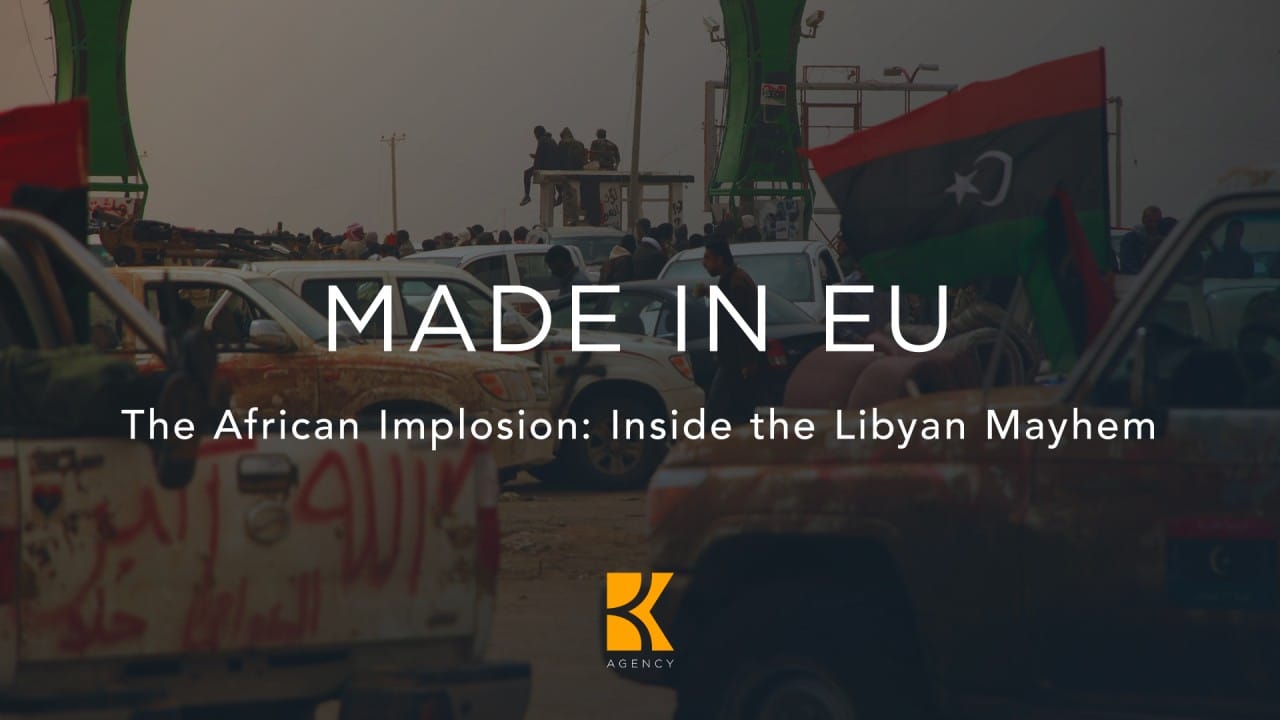
In today’s edition, we bring you inside the recent events occurring in Libya. Continued escalations on the African continent threaten to make August the hottest month ever. Here is our analysis!
The African Implosion: Inside the Libyan Mayhem
A few hours after the start of the clashes in Tripoli, it is now clear that what is happening in Libya is not a minor incident.
In Tripoli, dozens of people are severely injured, and the Ministry of Health has called for all types of blood to be donated to save the victims of the ongoing violence. If you have yet to hear about it in the news, the reason is simple: it is August bank holiday week in most southern European countries. But the events in Libya are paramount for Italy and all the Mediterranean countries, especially when the risk of a degenerating situation is high.
We must first take a step backwards to understand the course of events. That is, to explain why the kidnapping (and the following release) by the Special Deterrence Force (RADA) of Mahmoud Hamza, a colonel in the Libyan army at the head of Brigade 444, has the potential to explode the thousands of latent tensions in the country irreparably.
It is, therefore, necessary to go back to the days of the battle of Tripoli led by Marshal Haftar a few years ago, to the skirmishes in which Hamza distinguished himself as commander of the 20-20 militia, a branch of the same Special Deterrence Force that has now placed him under seizure.
His abilities and leadership skills do not go unnoticed in the hours when Haftar seems destined to get his hands on the dream he has cherished all his life: to go from being the Lord of Cyrenaica to the Lord of all Libya. The Turks, in particular, noticed the situation’s potential: they guaranteed the security of the then Prime Minister Sarraj, while Italy refused to use the military instrument to protect its interests. And they have won their bet, extending their influence in the Mediterranean.
The Turks are pushing for Hamza’s militia to leave RADA and go their way. Incorporated within the Ministry of Defence, no longer under the Ministry of the Interior, Hamza’s brigade thus changed its name: from 20-20, it becomes 444, an armed wing that receives more and more attention, equipment, training, and consideration from Istanbul.
Hamza’s growth is overwhelming. His contacts inside and outside Libya make him one of the most influential figures in the country. He meets Saddam Haftar, Marshal Khalifa’s favourite son. He flies to Jordan, the Emirates, Egypt, and wherever there is a need to discuss security policies, and balances of power, thus increasing his prestige, opportunities, and recognition. And perhaps it is precisely this disproportionate growth that irritates his old travelling companions. RADA men take Hamza by surprise. They seize him as he takes off from Tripoli’s Mitiga airport for Misrata. They get him off the plane and send a clear message: the 444th Brigade does not control the capital.
The political dynamic worries international observers in these hours. In particular, it has to do with the role of the current Prime Minister Abdul Hamid Dbeibah and the stability of Libya. While the international community is still vehemently pursuing the hypothesis of holding new elections, it is already clear that the head of the Libyan government is ‘the big loser’ in this crisis.
Unable to present himself as the man of ‘pragmatic stability’ in Tripoli, Dbeibah risks seeing his fragile system of power crumble. The capital’s militias are currently deciding which side to take if the clashes should resume and degenerate. The Libyan prime minister will also be called upon to make a choice.
But the developments in the streets of Tripoli are such that the executive leader’s support appears marginal. Nothing serious. However, at some point, militias might decide that Dbeibah is no longer needed, and then there would be no way to predict a peaceful outcome for the new African crisis.