Europe’s energy crisis is becoming a structural competitiveness problem, raising questions about whether the EU can decarbonise without making European industry increasingly uncompetitive.
Europe’s energy crisis is increasingly becoming a competitiveness problem, but the debate in Brussels is still largely framed as an energy-policy problem. The original causes of the crisis are well understood. The Russian aggression against Ukraine andEurope’s exposure to global energy markets produced an unprecedented increase in gas and electricity prices from 2022 onwards. Prices have subsequently fallen from their peaks, but the underlying gap with other major economies did not disappear. European industry still operates with substantially higher energy costs than many of its competitors, and this is particularly problematic for sectors in which energy is not simply one input among many but a fundamental component of the production process. For example: to produce a GW/h of electricity in Europe the cost is roughly between 140.000 euros and 180.000 euros depending on the jurisdiction against the 75.000 dollars of the United States.
Are Geopolitical Tensions the Only Problem?
The geopolitical shock explains the initial increase in prices, but it does not explain the entire structural problem. Europe entered the energy crisis with a policy framework already designed to make the economy progressively less dependent on fossil fuels. The European Green Deal, the EU Emissions Trading System, the Renewable Energy Directive and the wider Fit for 55 package were intended to accelerate the transition towards a low-carbon economy. The difficulty is that the transition has increased the importance of electricity precisely at the moment when Europe is struggling to provide electricity at a cost that remains competitive for the industry. The EU is asking companies to electrify transport, heating and industrial processes while simultaneously making carbon-intensive electricity progressively more expensive and imposing increasingly demanding requirements on the energy system.
The Core of the Problem: ETS
The EU Emissions Trading System plays a key role in this issue. Established by Directive 2003/87/EC and subsequently strengthened through the Fit for 55 legislation, the ETS was designed to create an economic incentive to reduce emissions by putting a price on carbon. In principle, this is a straightforward mechanism: activities that generate more emissions should become more expensive, encouraging companies to invest in cleaner technologies. In practice, however, the carbon price is transmitted through the electricity market. When gas or coal generation is required to meet demand and becomes the marginal source of electricity, the cost of EU carbon allowances becomes part of the wholesale electricity price. The Commission itself recognises that electricity is one of the main channels through which the ETS affects the wider economy, meaning that the cost of decarbonisation is not confined to the companies that directly emit carbon but is also passed through to companies purchasing electricity.
This creates a particular problem for European industry because the electricity system is still in transition. If a company operates a relatively efficient production process but depends on a grid in which fossil generation continues to set the marginal price during periods of low renewable output, it remains exposed to the cost of carbon even if its own emissions are relatively limited. European policymakers have attempted to mitigate this through compensation for indirect ETS costs in certain energy-intensive industries, but the existence of these mechanisms also illustrates the underlying problem. If the regulatory framework creates a cost that subsequently has to be compensated through public policy, the question is whether the system is allocating the cost efficiently in the first place.
The Renewable Energy Directive: But What About Nuclear?
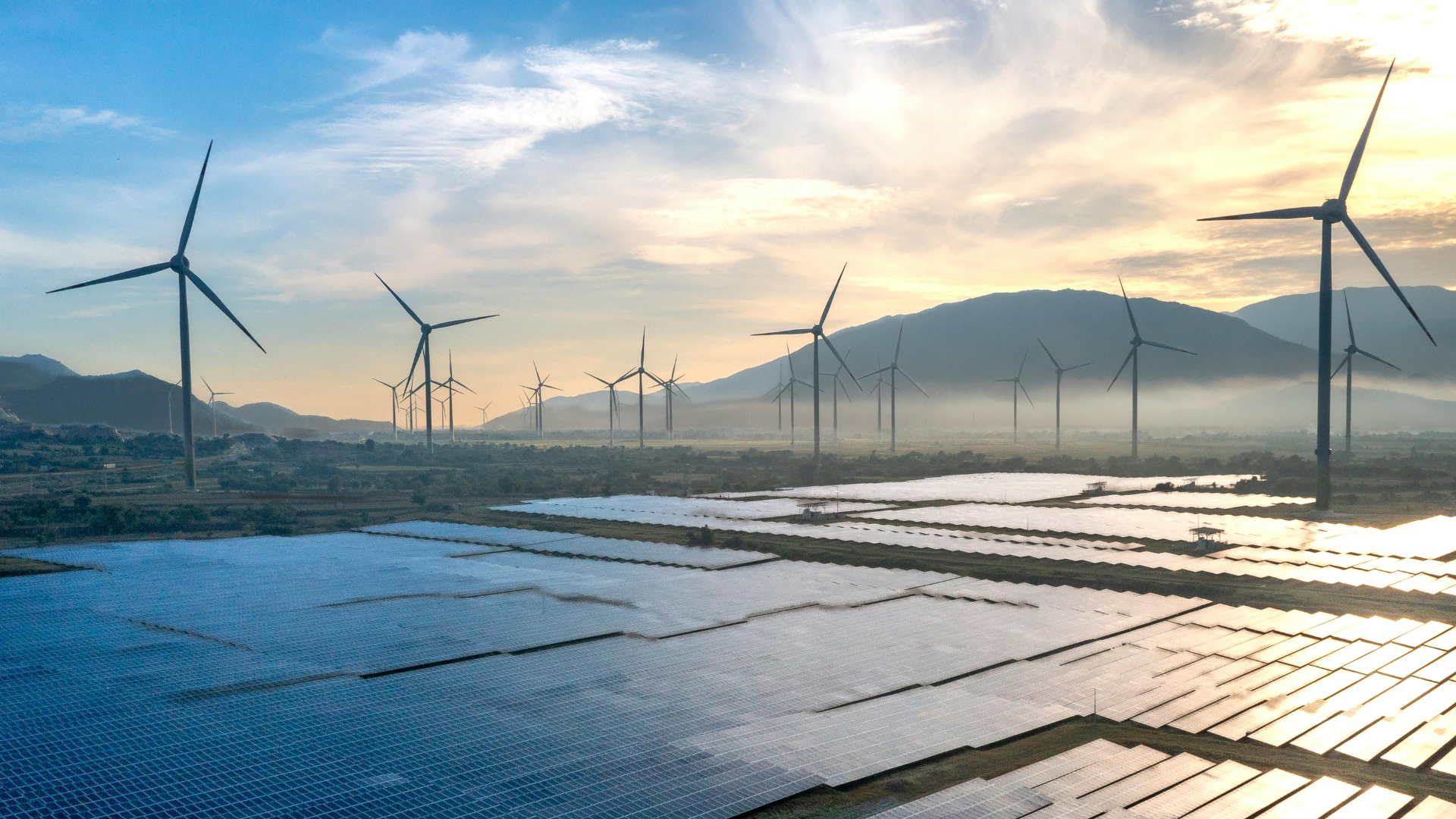
The same issue becomes apparent when looking at the EU’s renewable energy targets. The revised Renewable Energy Directive, Directive (EU) 2023/2413, requires renewables to account for at least 42.5% of EU energy consumption by 2030, with an ambition to reach 45%. Increasing renewable generation is clearly part of the answer to Europe’s dependence on imported fossil fuels, and renewable electricity can have extremely low marginal generation costs. The difficulty is that the marginal cost of producing electricity is not the same as the cost of operating an electricity system capable of supplying an industrial economy continuously. Wind and solar generation are variable, which means that their increasing share of the electricity mix requires investment in transmission networks, storage, interconnections, balancing capacity and other forms of flexibility.
This becomes particularly important as electrification accelerates. The EU wants electricity to replace fossil fuels in transport, buildings and industry, but this only works economically if electricity becomes sufficiently competitive with the fuels it is intended to replace. The Commission’s 2026 Electrification Action Plan places considerable emphasis on electricity taxation, network charges, grid investment, flexibility and storage because the economic incentives for companies to switch from gas and other fossil fuels to electricity remain insufficient in many cases.
This is also where the debate about nuclear energy becomes important. Nuclear provides firm low-carbon generation and does not have the intermittency associated with wind and solar, meaning that it can complement renewable generation. The EU has increasingly recognised this role, including through the Net-Zero Industry Act and the Commission’s work on small modular reactors. Nuclear nevertheless remains politically controversial among Member States, while concerns over waste and safety continue to influence national decisions, particularly in countries such as Italy and Austria where nuclear energy production was rejected through popular votes. If nuclear investment is delayed in countries where it could provide firm low-carbon electricity, the system may instead require additional renewable capacity, storage, grid infrastructure and backup generation.
Political Discussion Still Thinks Short Term
The policy discussion is currently focused mainly on how to redistribute or temporarily absorb the cost of the current energy shock rather than on why European energy remains structurally expensive. Media reported on a letter dated 21 August 2026 and signed by the finance ministers of Austria, Germany, Italy, Portugal, Poland and Spain, calling for an EU-wide framework to tax windfall profits, including a more targeted approach to the foreign profits of multinational oil companies. The ministers also called for the Commission’s investigation into refinery margins to be completed and for the issue to be discussed at the September ECOFIN meeting. The letter itself notes that measures taken so far have not been sufficient to reduce or stabilise prices for businesses and citizens on a permanent basis
A windfall tax could transfer part of the additional profits generated during a period of exceptionally high prices to governments, but it would not increase electricity generation, expand transmission capacity, reduce network charges or make the underlying energy system less expensive. It is therefore better understood as a short-term fiscal response to an energy-price shock than as an energy-competitiveness policy.
The wider regulatory landscape adds another layer to this assessment. The ETS and Renewable Energy Directive function alongside the Energy Efficiency Directive, the Industrial Emissions Directive and the revised Electricity Market Design, while companies must also adjust to sector-specific environmental rules and reporting requirements. Businesses ultimately assess these measures together with energy costs, taxation, capital requirements and regulatory uncertainty when deciding where to invest.
The Fiscal Problems
There is also a fiscal problem, particularly for Member States already facing high public debt and deficits. If energy prices remain high, governments will come under pressure to support strategic industries through subsidies, tax breaks or cheaper electricity. This is not a sustainable long-term solution and risks creating further differences within the Single Market, as countries with greater fiscal capacity will be better positioned to protect their companies.
What’s Coming Next for the EU Energy Policy
The issue is therefore not whether Europe should decarbonise. Reducing dependence on imported fossil fuels remains an important economic and geopolitical objective. The question is whether Europe can decarbonise at a cost that allows its companies to remain competitive.
Europe needs considerably more electricity to electrify its economy, but that electricity also needs to be reliable and affordable. Renewables will be an important part of the solution, while nuclear can provide additional firm low-carbon generation where Member States choose to use it. The challenge is to combine these sources with sufficient grids, storage and balancing capacity while avoiding a system in which the cost of decarbonisation remains structurally higher than in competing economies.
The Commission is increasingly recognising this problem, but the focus now needs to move from compensating companies for high energy costs towards making the energy system itself less expensive. If European energy remains structurally more expensive than elsewhere, companies will increasingly have an incentive to make their next investment outside the Union, with consequences for industrial supply chains, employment and Europe’s ability to develop strategic technologies domestically.
The next phase of European climate policy should therefore focus not only on the speed of decarbonisation, but also on its cost. Europe’s ability to remain competitive will depend on whether it can build an energy system that delivers sufficient reliable low-carbon electricity at a price that European industry can afford.