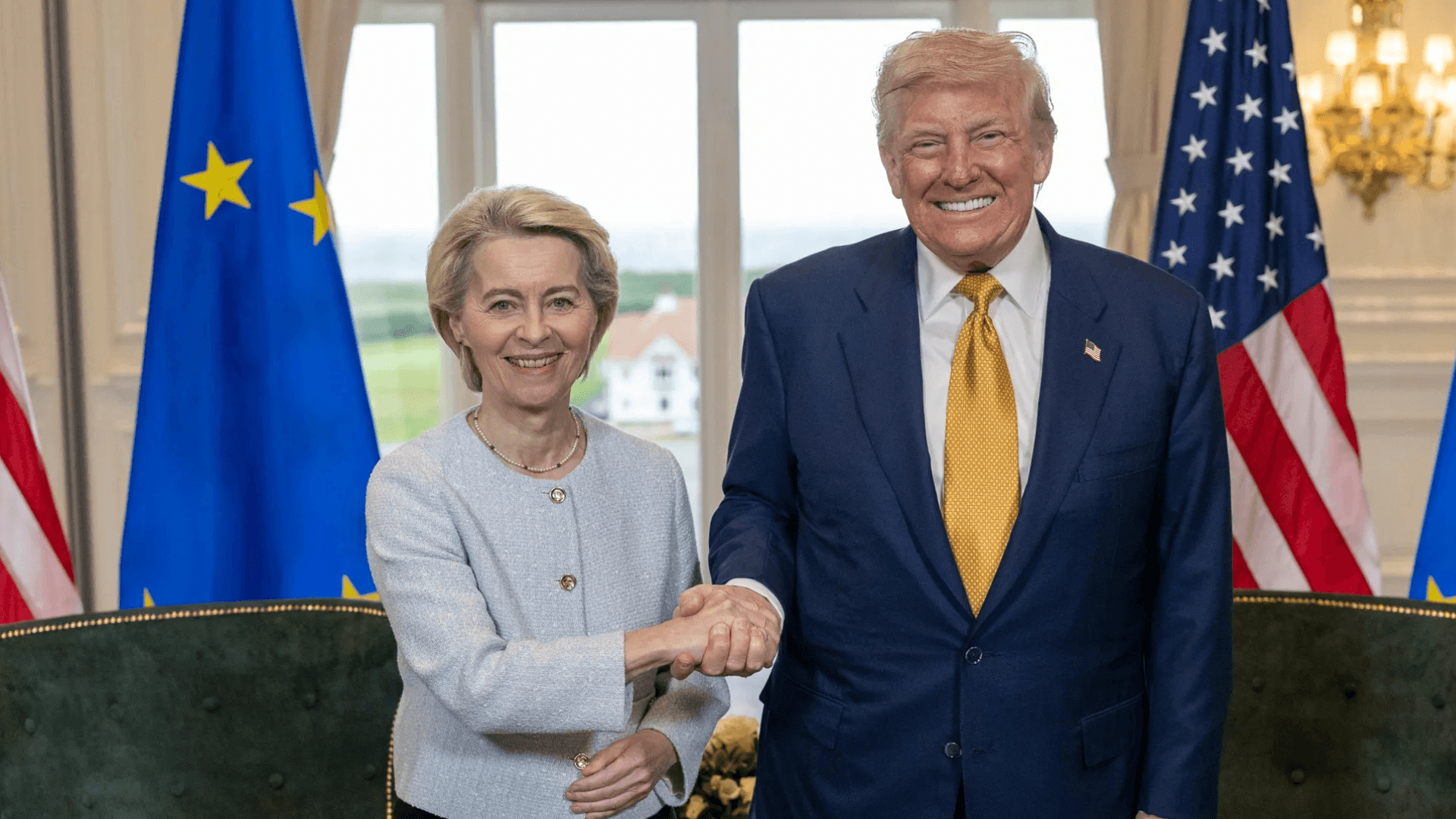
On 26 March, the European Parliament made a big step for the global trade and voted to approve the EU-US Transatlantic Economic Partnership Agreement, known as TEPA. The deal, passed with a clear but hard-fought majority, should mark the end of a period which was characterised by high tension in the field of international trade and provides a new framework for the world’s largest bilateral economic relationship. As the global economy faces increasing fragmentation, this agreement is not designed as a typical free trade deal. It represents more of a strategic alignment aimed at securing supply chains and lowering regulatory burden.
The Background
The path to today’s vote in the Parliament was paved by a rather long period of “tariff fatigue” and the need for a unified front in the times of ever-changing global power dynamics. For several years now, both Brussels and Washington have struggled with the balance between domestic industrial protection, such as the US Inflation Reduction Act and the EU’s Green Deal Industrial Plan, and the need for cooperation and mutual trade. Negotiations for TEPA were nearly derailed several times over the issue of agricultural standards and the digital sovereignty of European data. However, the geopolitical necessity of securing critical minerals and reducing dependence on other markets in the end pushed parties toward a compromise that tends to prioritise high-tech sectors and green energy instead of more sensitive traditional industries.
The EU-US Trade Deal Key Provisions
The agreement is built on the ideas that were purposedly designed to modernise how the Old and the New continent interact. One of the largest wins for the EU is the safeguard clause mentioned in early drafts. This allows companies that are based in the EU to qualify for US tax credits and subsidies in the electric vehicle and renewable energy sectors, which effectively means that European components will be treated as domestic under the US law.
Apart from cutting taxes on imports, the deal also focuses on regulatory harmonisation aiming at removing the non-tariff barriers and aligning technical standards. As an example, a medical device or a car part that has been tested and approved in the EU should now face a much faster mutual recognition process in the US which is expected to drastically reduce the time it takes for a product to reach the market for manufacturers. Other than that, the agreement establishes common ground regarding the artificial intelligence safety and data transfers. The EU has maintained its strict GDPR protections, but it still agreed to a “safe harbor” mechanism that allows for more seamless cloud computing and financial data flows between the two continents.
The TEPA Effect
The consequences of the trade agreement will likely be felt differently across different sectors. The clear winner of the deal is the automotive and green tech industry. European automakers and battery manufacturers have now stabilised their access to the American market without any threat of sudden tariffs. This will provide the needed long-term certainty for the companies to make billion-euro investments in manufacturing plants.
On the other hand, the agriculture remains the most defensive area. To secure the deal, the EU maintained its ban on certain agricultural practices common in the States (such as hormone-treated beef), but agreed to increase quotas for some US-made products. Farmers on both sides of the Atlantic remain cautious, as they fear that increased competition might lower the local prices. For European technological start-ups, the deal provides a clearer road to growing in the US market. However, the privacy advocates remain concerned that the safeguards that are agreed on data might not be sturdy enough to withstand possible legal challenges in the future inside European courts.
For market actors, the ratification of TEPA acts as a kind of stability insurance policy. In the era of volatility on the geopolitical front, having a codified trade relationship between the EU and US reduces the risk premium for the investors searching for transatlantic ventures. For the European Union itself, this vote can be regarded as a victory for strategic autonomy. By securing a deal that includes some safeguards for European industry, Brussels has shown it can negotiate as an equal with Washington, rather than simply reacting to American industrial policy. It also signals to other global powers that the transatlantic bloc remains the dominant force in setting international trade standards.
The Implementation Phase
While the European Parliament’s affirmative vote is a milestone, the deal now enters the trilogue stage. These talks, expected to start soon, will be important in reconciling the Parliament’s newly added safeguard provisions with the Council’s priorities. Once the legal framework has been fully set, the start date will depend on the “sunrise clause”. The EU tariff reductions will be triggered once the US formally shows that it has committed itself to capping the tariffs for European goods to 15%. On the other side of the Atlantic, the deal requires a final executive implementation. It does not, however, require a full Senate treaty ratification, but the specific parts of the agreement will be phased in through “executive agreements” over the next 12 to 18 months. A joint “Transatlantic Trade Council” will be established to resolve any possible disputes before they escalate into trade wars.
At the end of the day, the TEPA signals a move toward a model of managed trade. The trade agreement seeks to de-escalate trade tensions and secure the supply chain stability in the global market that is becoming more fragile. The unpredictability surrounding the trade disputes has proven itself to be costly for both sides, which is why the deal can provide a basis for certainty for the companies on the market. Today’s vote can mark the beginning of a new era of trade relationships for the EU and the US, and for the market players, it is the beginning of the new trade landscape that should be taken into consideration for future strategic planning.
Image source: Official Website of the White House (European Commission President Ursula von der Leyen & US President Donald Trump)