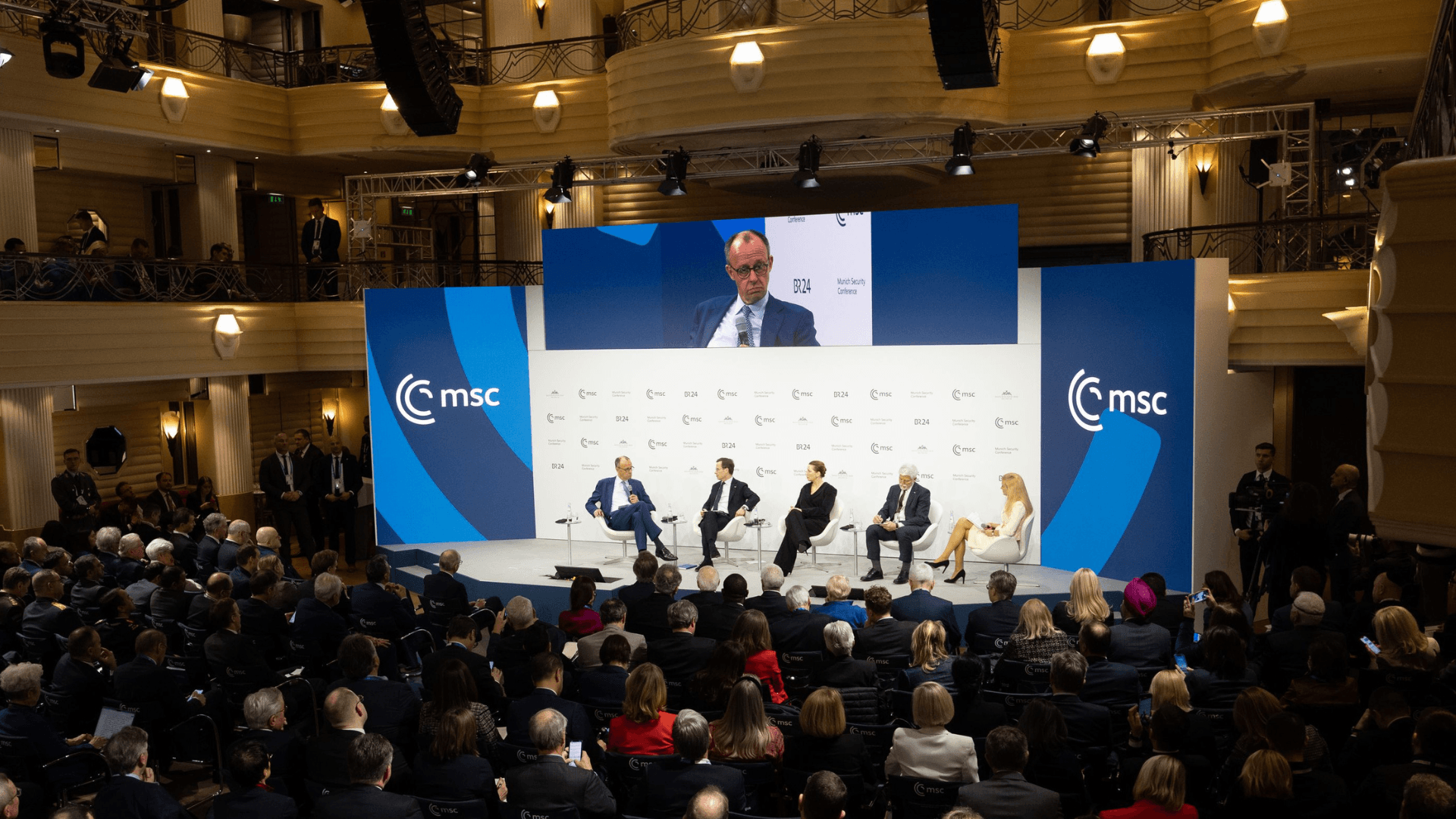
Yet another Munich Security Conference is behind us, and these were the key events that took place over the course of last weekend.
The Munich Stress-Test: The New World Is Emerging
The halls of the Hotel Bayerischer Hof are usually filled with the polite hum of strategic patience. This year, at the 2026 Munich Security Conference that was taking place between 13 and 15 February, it was replaced by something more interesting. This year’s theme “Under Destruction” was a very evident reality (on top of being a very catchy slogan). We saw a live-action preview of two different approaches competing for the steering wheel of the West.
Ally-Love Is Tough Love
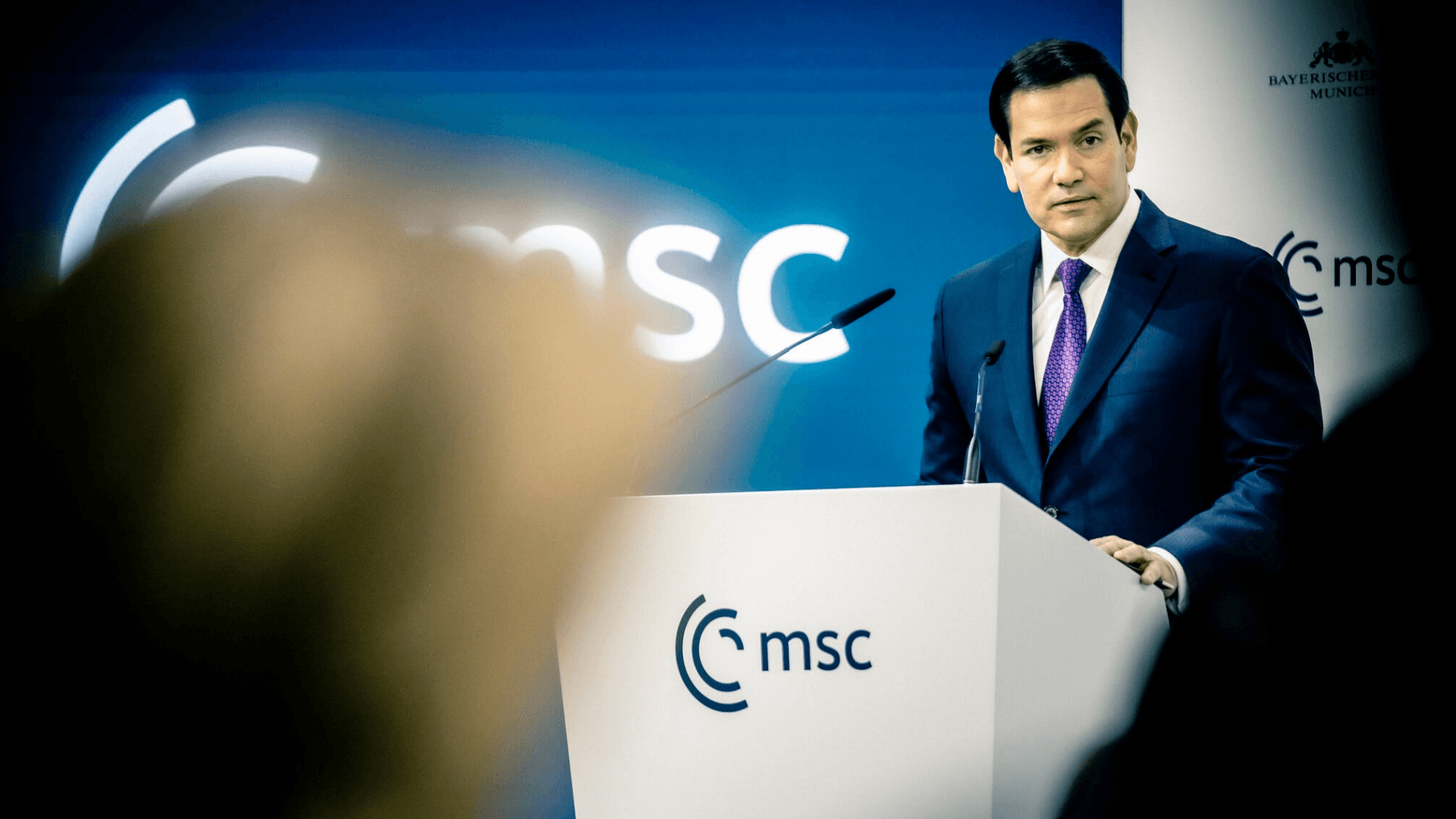
Last year, Vice President JD Vance left the European elite in a state of shock with his strong critique of the continent. Secretary of the State, Marco Rubio, chose a different path. He appealed to shared history and Christian heritage, as well as the common goals that the collective West should be aligned with.
Rubio’s message was a masterclass in “transactional realism”. His speech was very clear – US wants to be a strong partner, but it also needs to see a strong partner in Europe. The current US administration signaled that they could carry the weight on the West themselves, but that they would much prefer to do it side by side with the EU.
Rubio clearly stated that the Trump administration expects Europe to stop relying on American handouts and start paying for its own defence, as well as to diminish the reliance on other superpowers, subtly nudging to China when it comes to tech, and Russia when it comes to oil dependence. For the European leaders in the front row, it was a relieving speech compared to Vance, but the underlying message was still not too warm. The end of unconditional support of European countries by the US is here, and Europe will need to start bringing a bit more to the table as long as the common interests of security and defence are concerned. The European leaders mostly understood the message and are already planning their next steps accordingly.
The Brussels Divide
Behind the scenes, the two most powerful women in European security not to have the exactly same view on Rubio’s speech. Ursula von der Layen was relieved by Rubio’s messages, and she saw them as a positive sign, all while reiterating her commitment to a closer cooperation on the matters of defence coming from Brussels.
Kaja Kallas, the EU’s High Representative, took a perhaps more skeptical take. She indirectly answered to Rubio that contrary to what some say, “woke and decadent” Europe is not facing civilisational erasure. She even made a direct comparison regarding the US’s own domestic issues, pointing out that she doesn’t appreciate being lectured on press freedom by a country ranked significantly lower than her native Estonia.
Zelenskyy’s Warning
Unlike Rubio, President Zelenskyy didn’t come to Munich to talk about heritage or history, understandably, he was more concerned with the immediate survival of Ukraine. His speech was effective, aided by screens showing strikes on Ukraine. His core message was a warning against history repeating itself: he compared the current talk of peace deals to the Munich Agreement of 1938, where Czechoslovakia was sold out in the name of a peace that never came.
Zelenskyy’s focus has shifted from victory to what comes next. Ukrainian President is now, on top of insisting for a larger military aid, demanding the so-called PURL program, which was pledged by NATO Secretary Rutte. In essence, that is the European-funded mechanism that would allow Ukraine to buy US-made missiles. Zelenskyy was clear as her framed Ukraine as one of the strongest armies in Europe, and the only one that actually has first-hand experience in the modern combat with Russia. By framing Ukraine as such, currently holding the front for Poland and the Baltics, he effectively asked the question: isn’t it more logical to provide more assistance to Ukraine now, instead of waiting to deploy the military capabilities once the Russian drones start flying over the other Western countries at a much higher financial and political cost.
Still, the trilateral negotiations between Ukraine, Russia, and the United States that already took place in Abu Dhabi several weeks ago are scheduled for 17 and 18 February in Geneva. All the parties will try to come a few steps closer to the peace deal framework, which is something to keep an eye on this week.
AOC as a New Player at the World Stage
One of the most surprising faces at the conference was the US Congresswoman Alexandria Ocasio-Cortez. She has mostly been focused on domestic politics, especially those regarding the environment, so her presence in Munich felt like a soft launch for a national (or international) campaign. Whether it’s the 2026 midterms or a 2028 primary run, we can only assume. Nonetheless, she was there as the antithesis to whatever Secretary Rubio was trying to say on the matters of foreign policy.
She pitched a “foreign policy for the working class”, arguing that the rise of right-wing populism is a result of economic inequality. AOC also took time to discuss the rise of authoritarianism. By appearing on the world stage now, she is signaling to the Democratic base and some European allies that there is an alternative American vision that might become the official one after the 2028 presidential elections. Still, it is doubtable whether her speech was as influential in the European circles that first have to figure out what to do with their internal affairs before starting to think about the possible US administration change in the distant 2028.
Аre We Truly “Under Destruction”?
The world we knew and lived in is no longer around, as has been brought to our attention by various highly positioned decision-makers from both sides of the Atlantic. The question is, what will the reconstructed world look like, particularly for the Western “civilisation”, as framed by Marco Rubio? Hopefully, the answer to that question will be clearer once the war in Ukraine, which is slowly entering its fifth year, is over.
Image source: Official LinkedIn page of the Munich Security Conference (Marco Rubio, United States Secretary of State)