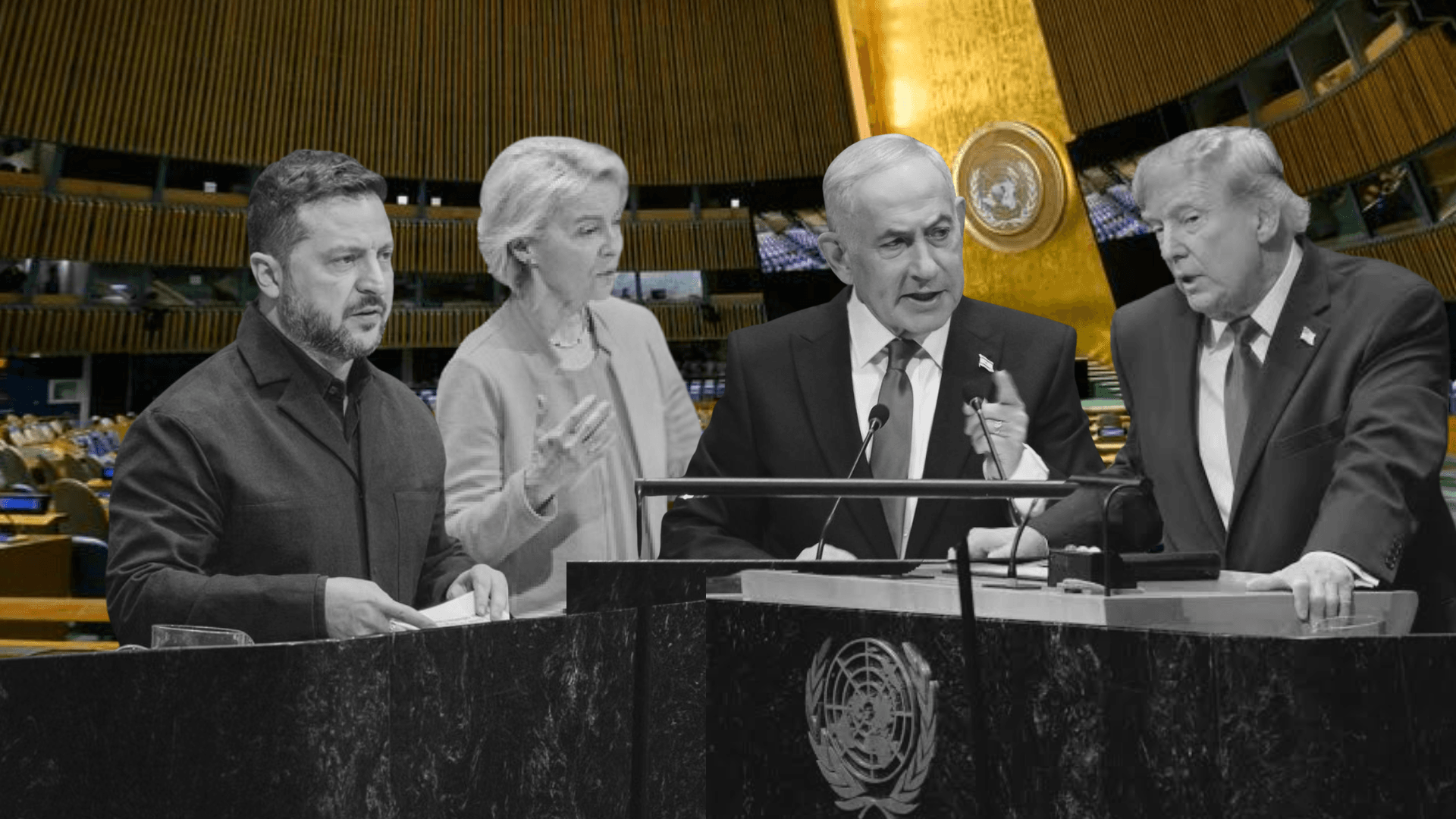
On 4 July, the United States celebrates 250 years since it declared independence from Great Britain. The American revolution in the second half of the 18th century was caused mainly by disputes over taxation and representation, as well as the right to govern without a faraway monarchy that would dictate the terms. This founding idea that legitimacy comes from the consent of those who are governed rather than from inherited power went on to shape political thought much beyond the US borders. Almost two centuries later, it directly inspired the postwar European project. After two World Wars, the founders of what would later become the European Union built a system based on shared sovereignty and economic interdependence rather than the power politics that dominated the continent for centuries. Washington actively encouraged this experiment, seeing a united and prosperous Europe as a good defence against Soviet influence and a stable trading partner.
Although the US and the EU became each other’s closest strategic ally over time, the relationship was never completely without internal conflicts. Tensions arose in the Suez crisis in the fifties between the US and the Western European nations, as well as with US and France after the latter withdrew its membership from NATO military command. More recently, during Trump’s first term, disputes over tariffs and the Paris climate agreement already showed that shared democratic values did not necessarily guarantee shared strategy. The alliance managed to survive all of this (and successfully so), but the current moment might represent something different in scale and tone.
So Close, No Matter How Far
Brussels sees the second Trump administration with a mixture of caution and alarm. Several episodes over the past year have convinced many European officials that the foreign policy of the D.C. has moved from the “rules-based order” the EU has spent decades trying to build, and towards something closer to typical power politics.
Perhaps the clearest example is Operation Absolute Resolve in Venezuela, in which American forces captured President Nicolas Maduro without authorisation from neither the UN Security Council nor the US Congress. The EU’s own response, a joint statement calling for restraint and respect for international law, was cautious and avoided a direct condemnation of Washington. That caution has itself become a point of internal criticism, with some people in the EU warning that Europe’s reluctance to call out an ally for behaviour it condemns when Russia or China engage in it undermines its own credibility as a defender of the current international order.
Days after the Venezuela operation, President Trump revived threats to annex Greenland, at times raising the possibility of using force or else increasing the tariffs on Denmark and the whole Union. For a bloc whose entire identity after World War II was based on the idea that borders should not be redrawn by force, open talk of annexing the territory (especially of a NATO ally) resonated loudly beyond Copenhagen. European leaders, including figures such as Friedrich Merz and Emmanuel Macron, issued a joint statement saying that Greenland “belongs to its people”, though even this response was measured rather than confrontational.
Eastern Front and Gulf Tactics
The war in Iran presents a different kind of tension. Under the agreement reached with Tehran in June, the hard question of stopping Iran’s nuclear programme was pushed into a 60-day negotiation window led by Vice President JD Vance. Brussels is trying to get a seat at the table during the coming verification phase, with most EU politicians being aware that its influence may be limited unless it can offer something Washington regards as valuable. This captures a broader pattern of the US increasingly treating major security decisions as its own to make, inviting Europe to participate mainly where its economic weight proves useful. Trump’s administration has repeatedly expressed discontent with their NATO allies as not being supportive enough during the war, although it was precisely the US that did not consult its allies before deciding to attack Iran in February. The EU is most likely to welcome a deal that would normalise the trade corridors in the Strait of Hormuz, as both businesses and consumers are dependent on energy that goes in and out of the Gulf.
Ukraine, on the other hand, remains a philosophical divide. Brussels has consistently framed the war as a matter of principle and argued that any agreement that would reward territorial conquest ultimately sets a dangerous precedent for the international order, which exists precisely to protect smaller states. The Trump administration has approached it differently. In the White House, the war is treated as a conflict that should be ended through pragmatic bargaining between great powers, even if that means accepting outcomes Europeans find deeply uncomfortable. These are two different worldviews about what stability requires, with one rooted in legal norms and collective deterrence and another in negotiated spheres of interest. However, it is true that the US has softened its rather cold stance towards the Ukraine, particularly in the light of recent Ukrainian attacks on Russian infrastructure. This shift is additionally driven by strategic cooperation between the two countries in Iran, with Ukraine providing vital air defence assistance to the US. The Kyiv and Washington have since also finalised a deal to begin manufacturing Ukrainian drones on the US soil.
The Strongest Link in the Chain
Despite the geopolitical disagreements, the economic relationship between two of the largest economies in the world continues to prove its success. The US and EU remain each other’s largest trading partners – together, they account for almost a third of global trade in goods and services and 43% of global GDP, with combined trade in goods and services reaching around €1.7 trillion. Investment ties are deep as well, with EU and US firms holding several trillion euros in investments in each other’s markets.
This economic relationship was reaffirmed in June, when the European Parliament approved legislation for the EU-US trade agreement first outlined in August last year. The deal removes most EU tariffs on US industrial goods and expands access for select American agricultural products, while setting a 15% tariff ceiling on EU exports to the US. Notably, it includes safeguard mechanisms allowing the EU to suspend concessions if Washington raises tariffs above agreed thresholds or threatens EU territorial integrity, a clause added directly in response to the Greenland issue. The agreement still requires final ratification by all Member States, but its passage through Parliament signals that both sides see enough mutual benefit to keep the economic relationship going even as trust might seem to erode in other sectors.
The deal is not a comprehensive trade agreement – the burning questions regarding the AI policy or digital service taxes remain out of the scope of the agreement, with Trump explicitly saying the US will impose immediate 100% tariffs for any European nation that tries to impose such taxes on American tech companies. Still, the deal that was reached after a year of back and forth signals that both sides are willing to sit at the table and make at least some concessions for one another.
The Relationship at the Crossroads
The coming years present several plausible paths for the EU, and as there are no easy decisions when it comes to highest-level policy, each of them carries different trade-offs and risks. The most optimistic scenario within Brussels is a return to a more predictable transatlantic partnership once the current administration leaves office. Many policymakers hope a future US president (regardless of his party) will restore a foreign policy closer to how it used to be prior to Trump. This scenario requires Europe to simply wait out an unpredictable period rather than adapt, with no guarantee the shift in American politics, driven by domestic issues that helped Trump get (re)elected, will reverse itself. Even more importantly, there is a high anxiety that a potential Vance presidency could be even more problematic. His Munich speech in February 2025, arguing that Europe’s greatest threat came from within its own democratic institutions rather than from Russia or China, was widely seen as a challenge to the EU’s political legitimacy, and it has influenced how policymakers in Brussels view his aspirations.
A second scenario involves deeper engagement with China. Beijing’s appeal lies in its vastness as a market and its growing role in clean technology and manufacturing supply chains. However, the case against a major shift remains fairly strong. China’s political system and industrial policies conflict with EU regulatory principles and its human rights record generates overall opposition from the public. Its overcapacity in sectors like electric vehicles and steel has already triggered EU trade defence measures rather than closer cooperation. A sharp move towards Beijing is unlikely, although selective cooperation on green technology and critical minerals is plausible, especially if the EU and the US enter a new period of trade volatility in the near term.
A slightly more likely path involves the EU deepening ties with a wider circle of regional powers, including Canada, India, Australia, Japan and South Korea. The appeal here is diversification without the ideological problems of a close cooperation with China. The countries mentioned are democracies with relatively compatible legal and regulatory systems, making trade and security cooperation easier to negotiate and implement. The downside is scale. None of these partners can replace the US as a security guarantor or as a market of comparable size, meaning the likelihood of this strategy to perform best is as a complement to the transatlantic relationship, and not as a substitute for it.
The most likely outcome, at least in the near term, is a hybrid approach: continued economic cooperation with Washington where the interests intersect and quiet diversification of trade and security partnerships in the attempt to reduce dependency. The 250th anniversary is a good time to reflect on a relationship rooted in shared democratic values, but the coming months will show whether Brussels is prepared to defend those values even when Washington appears to be moving away from them.