The European Commission has adopted its annual Enlargement Package, while MEPs concluded discussions on the EU’s long-term budget for the next programming period without reaching an agreement.
The EU Budget in Parliament’s Crosshairs
Yesterday, EU Budget Commissioner Piotr Serafin met with Members of the European Parliament to discuss the €2 trillion Multiannual Financial Framework (MFF) proposal for the period 2028-2034. Unless MEPs and the Commission reach an agreement by 12 November, the Parliament is expected to reject the proposal.
The core of the new budget structure is the creation of a European Competitiveness Fund, which is designed to stimulate investments in strategic technologies across the EU. This focus is part of the move towards a more centralised investment model, which requires merging existing programmes into new national and regional partnership plans. The Parliament sees this proposed change as a bad move that could reduce parliamentary and regional oversight.
To finance the budget’s ambitions while repaying NextGenerationEU debt, the Commission proposes five new “Own Resources” (taxes at EU level). These include revenues from the Emissions Trading System, the Carbon Border Adjustment Mechanism, e-waste, tobacco excise duty, and a new corporate resource on large companies. This push for new common revenue streams is also a major source of political contention.
Yesterday’s meeting ended without agreement on any amendments to the €865 billion plan to merge farm and regional funds into national plans. While Serafin expressed willingness to accommodate their demands for less centralised control, no concrete proposals were made, prolonging the institutional standoff within the EU. On the other hand, the Danish Presidency-led EU Council is actively pushing back against the Parliament. According to the draft document, the Council has allegedly rejected the MEP’s key demand to separate agricultural subsidies from the merged national plans.
With the deadline for rejection coming up next week, yesterday’s meeting with the MEPs is the last opportunity to reach a compromise and prevent an institutional crisis that risks derailing the EU’s long-term spending plan. The path to a final, stable MFF agreement will take a long time, potentially leading to a last-minute rejection that would leave the EU either struggling to reach a deal or having to rely on an extension of the current budget rules.
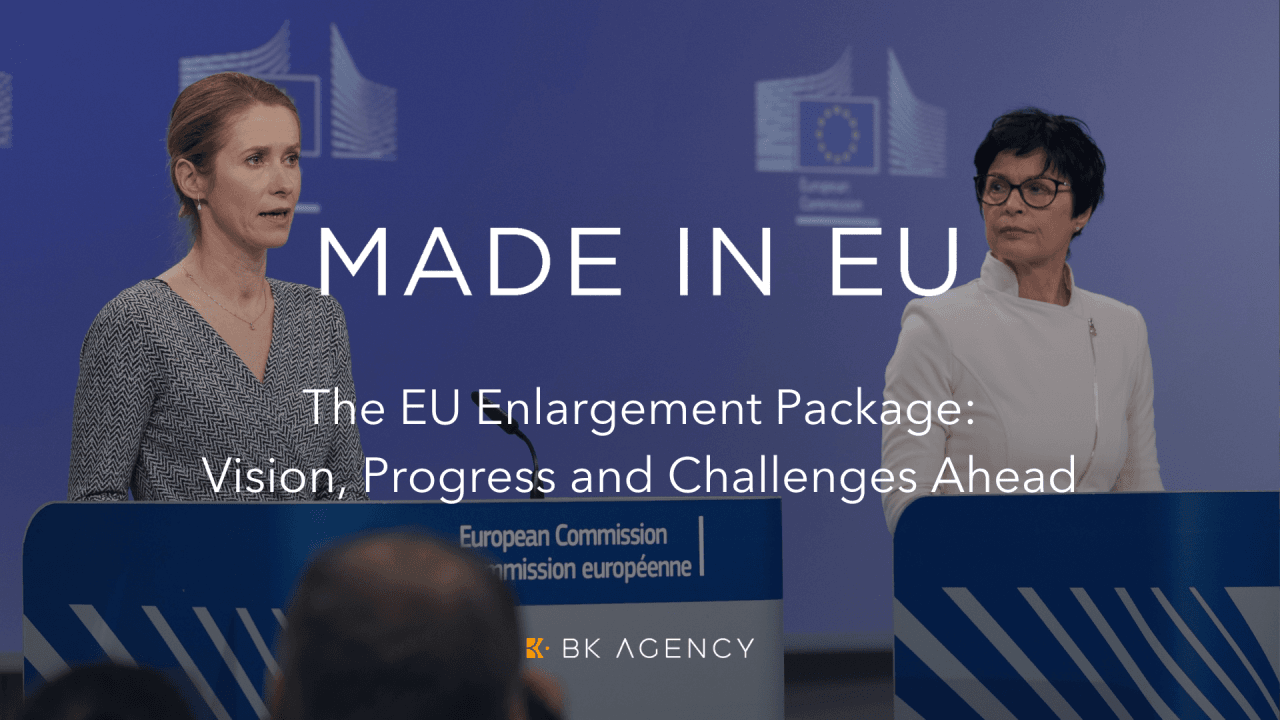
The EU Enlargement Package: Vision, Progress and Challenges Ahead
On 4 November, the European Commission adopted its annual Enlargement Package. As always, the document comprises a comprehensive status report and strategy regarding the admission of the new member states to the European Union.
The EU views the admission of new members as an essential geostrategic investment in the peace and stability of the continent, especially since the beginning of Russia’s aggression towards Ukraine. For this reason, the report focuses on several countries, primarily from Eastern Europe and the Western Balkans that aspire to eventually become part of the European family.
While this year’s report was satisfactory for most states, some expressed discontent. Let’s take a closer look:
Frontrunners
Montenegro and Albania have reasons to celebrate, having received the most praise from the Commission this year and positioning themselves as the frontrunners. If both countries keep up with their current pace of reforms, an optimistic projection is that they could close negotiations by the end of 2026 and 2027 respectively. The European Commission itself has stated that admitting new members by the end of this decade is a reasonable goal, providing a realistic but ambitious political deadline for the most promising candidates. This may encourage the EU to address the budgetary implications of enlargement more concretely, and signal that the internal debate on how to fund a larger EU will intensify.
Moldova and Ukraine were also praised for adhering to the reforms and pursuing a European path amid the continuous conflict and hybrid threats. Moldova made the greatest progress in the past year, meeting the conditions to open three new clusters. As regards Ukraine, the country received its best assessment in the past three years, but the Commission noted that more reforms to the rule of law are needed.
Conditional Progress and Stagnation
North Macedonia and Bosnia and Herzegovina received mixed assessment, with the EU stating that further work is required, particularly in terms of judicial reforms. The Commission also highlighted that Kosovo and Serbia must prioritise the normalisation of their relations, criticising the latter for significantly slowing down reforms and urging Serbia’s government to reverse the erosion of the freedom of expression and academic freedom.
The language used in the report indicated a failure to translate political commitment into tangible results. While the criticism of Serbia was very explicit and direct, the critiques towards Bosnia and Kosovo were more subtle, highlighting that they face structural or external blockages that require a higher level of political will to overcome.
Setbacks and Standstill
The Commission considers Georgia to be “a candidate in the name only”, having observed a sharp decline in the rule of law and serious democratic backsliding. Türkiye’s accession negotiations remain at a standstill since 2018, and the report underlines that the deterioration of democratic standards, judicial independence and fundamental rights has yet to be addressed.
The report sent a diplomatic signal to these two countries, making it clear that membership is impossible unless they completely reverse their course. Otherwise, the consequence might be the freezing or severe downgrading of Türkiye and Georgia’s status.