The European Commission intends to find a solution to the growing number of hybrid threats with its new European Democracy Shield, while MEPs remain dissatisfied with the new budget proposal.
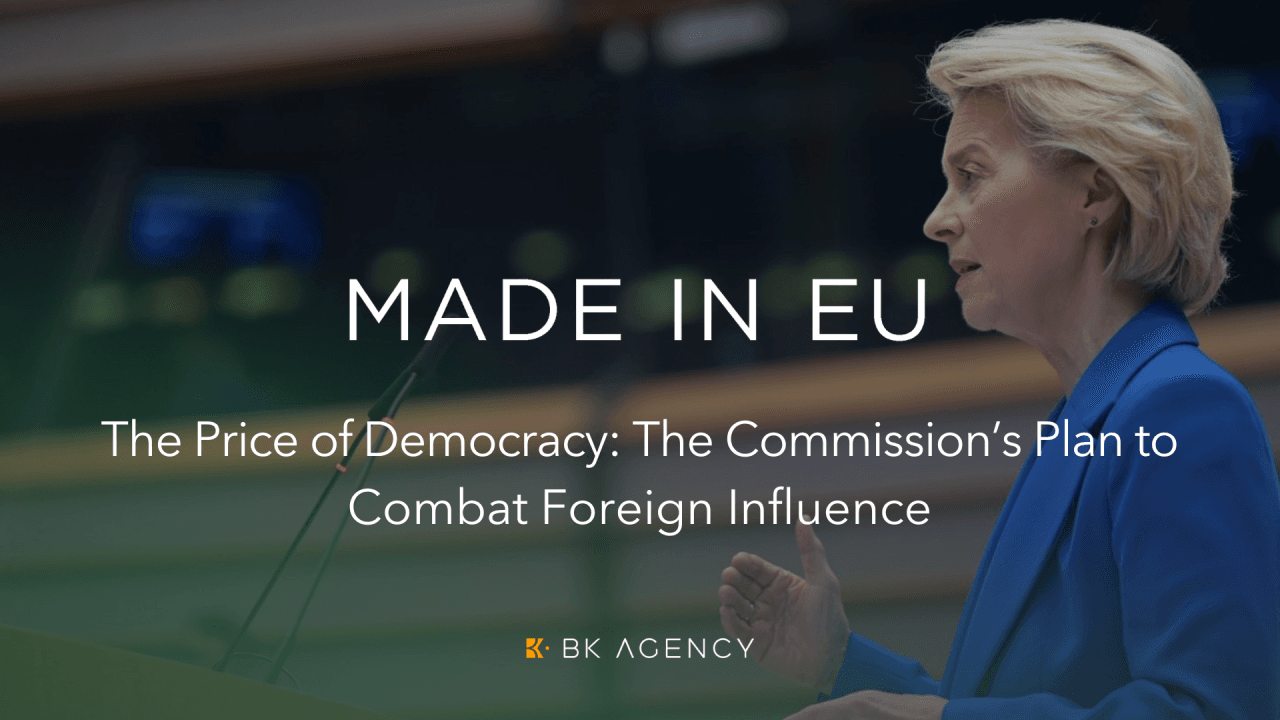
The Price of Democracy: The Commission’s Plan to Combat Foreign Influence
As a response to growing geopolitical volatility and hybrid threats, the European Commission has presented the European Democracy Shield initiative on 12 November. Together with the EU Strategy for Civil society, these aim to combat primarily the Foreign Information Manipulation and Interference and disinformation. Shield is structured around three pillars: safeguarding the integrity of the information space (through Digital Services Act crisis protocols and new European Network of Fact-Checkers), strengthening the democratic institutions and media (by supporting independent journalism and offering guidance on using AI in electoral procedures), and boosting the societal resilience through digital literacy.
The strategy includes the formation of the new European Centre for Democratic Resilience. This institution will bring together the expertise of the EU and its member states to facilitate information sharing and anticipate threats. It will serve as a key actor against common hybrid threats.
What to expect
The initiative moves the EU’s defence strategy from uncoordinated national responses to a coordinated mechanism. It acknowledges the challenge posed by new digital technologies. Moreover, it can be regarded a direct response to hybrid threats from authoritarian regimes, most notably the recent Russian interference in Moldovan and Romanian elections.
The accompanying EU Strategy for Civil Society will allow for a bigger funding for the civil society actors, recognizing their importance in maintaining a functional democratic society. This package also signifies that the active defence of democratic values is now one of the Commission’s and the EU’s priorities, and that they are ready to directly finance joint efforts to dismantle the foreign influence and disinformation.
European Defence Shield is ambitious. Its effectiveness will depend on how seriously the EU takes its implementation, as well as on the willingness of the Member States. The countries will have to adhere to information sharing and cooperation within the new Centre, potentially leading to institutional friction regarding the balance between EU coordination and sovereignty over integrity of elections.
The new DSA crisis protocol will likely enforce greater scrutiny and pressure to act against transnational information operations, reinforcing the responsibilities of online platforms, particularly the Very Large Online Platforms, under the Digital Services Act. However, it should be noted that these companies have struggled in the past to adhere to the European standards from the Act, and it remains to be seen if large tech companies will be cooperative with the Commission. When it comes to fighting the online disinformation, the Commission expressed their desire to create a network of voluntary social media influencers that would raise awareness about the EU legislation.
The path forward requires political will from all actors involved. The question remains – will the European Parliament accept all of these ambitious proposals? The MEPs have been in the spotlight over the last couple of weeks by refusing to accept the Commission’s budget proposal for the 2028-2034 period, and the inner disagreements between the European institutions have marked the past months.
Multiannual Financial Framework, the Future of EU Agriculture and the Interinstitutional Tension
The European Commission, the Parliament, and the Council of the EU have been caught up in a series of negotiations trying to find a solution regarding the EU’s budget. The Multiannual Financial Framework is the EU’s long-term plan, which sets spending limits and priorities for a seven-year period. Following the conclusion of the current 2021-2027 cycle, the Commission has presented its proposals for the next framework, a plan worth nearly two trillion euros, designed to rebalance priorities towards geopolitical challenges, defence, competitiveness, and the green and digital transitions. This process is very complex and requires the unanimous approval from the Member States and consent from the European Parliament, leading to protracted and politically charged negotiations.
The MFF defines the scope of all major EU policies, including the Common Agricultural Policy. The current proposal is seen as a strategic shift driven by the reality of new economic pressures and the need to repay the debt from the NextGenerationEU recovery instrument. This has forced difficult choices regarding the allocation of funds, especially in agriculture. While general spending increases slightly in nominal terms, the relative weight of the CAP within the total budget is projected to decrease, indicating a broader strategic realignment of Union resources.
The Parliament, which initially completely opposed the plan and claimed that it gives an excessive amount of power over agricultural funds to the national governments, received some concessions from the Commission this week. The Commission suggested two safeguards: mandating a 10% ‘rural target’ for agricultural spending within the national plans and granting regional leaders more power to decide how the funds are spent. The final decision has not yet been made, although many regard these amendments as a step in the right direction, with some of the MEPs still holding that the Commission’s suggestions are not enough.
The agriculture in Europe will be directly affected by this document through financial allocation and a new governance structure. The Commission has proposed merging the CAP budget, which traditionally consisted of two separate funds, into a single one, implemented via National and Regional Partnership Plans. The new plan is designed to simplify the management of funds and ensure that they are paid out only when concrete goals are met and necessary changes are carried out.
This architectural change can carry significant implications for European farming. On one hand, the proposal attempts to provide stable and predictable income support. On the other hand, integrating agricultural funding into larger national plans risks weakening the common nature of the CAP, which could increase divergence in standards and ambition across the Member States.
Environmental organisations also point out that the lack of dedicated, mandatory environmental funding within the new framework could allow Member States to lower green standards and abandon their long-term climate and biodiversity goals. Similarly, farm representative bodies have expressed their opposition. They argue that proposed budget cuts and increased national flexibility could undermine food security and create competitive disparities for farmers who rely on consistent support from the EU.
However, there has been no confirmation as to whether the MFF will be approved as it is, even with the new additions pledged by the European Commission. The MEPs have softened their voice, but there is still a long way to go. The Parliaments’ approval is needed in order to successfully pass the Framework, but so is the Council’s – the EU ministers are pushing for the proposal to stay the same. It remains to be seen whether the changes to the plan will be made, and will the Parliament manage to negotiate more concessions. The Commission will have a hard time trying to satisfy both the MEPs and the Council, as well as the environmental organisations and farmers’ representatives.