As the EU discusses closer cooperation on security and defence, national elections can challenge the discussions happening in Brussels. Over the weekend, the presidential elections in Poland and Romania indicated that pro-EU candidates are still favourites, despite popular concerns about migration, the cost of living and the ongoing conflict in Ukraine.
Poland’s Civic Coalition and Law and Justice candidates prepare for Presidential runoff
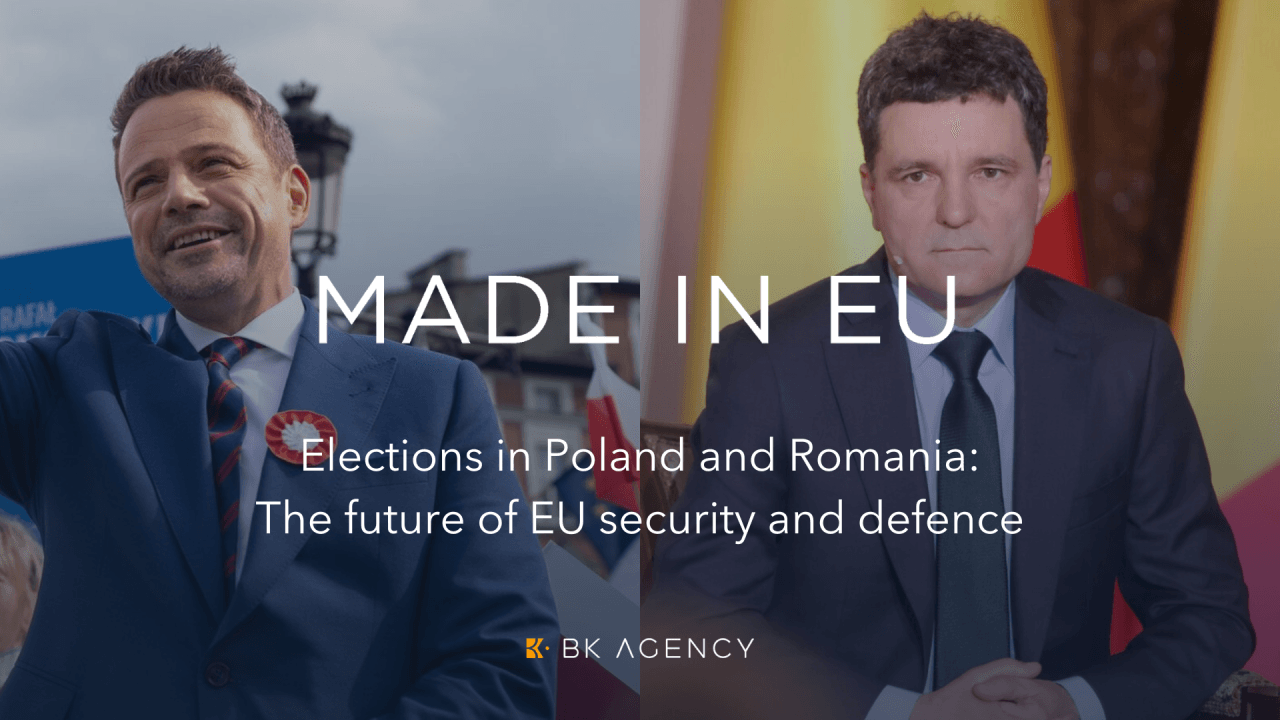
On Sunday, Poland held the first round of Presidential elections. According to the latest numbers, Rafal Trzaskowski, the candidate for the centrist Polish party Civic Coalition (KO), obtained the majority (31.2%) of votes cast. Trzaskowski represents the centrist and pro-EU coalition of the current Prime Minister Donald Tusk. The victory was narrower than expected, as conservative Law and Justice (PiS) party candidate Karol Nawrock came in second with 29.7% of votes. The two candidates are now expected to face each other in a second round on Sunday, 1 June.
The results of the elections are likely to play a role in the country’s position towards the EU. Security has been a key priority for voters, especially given Poland’s proximity to Ukraine. While Trzaskowski supported Ukraine’s entry into NATO and a stronger role of the EU in security and defence, Nawrock stressed the importance of transatlantic relations and closer ties with Washington on questions of global security. Poland is currently holding the presidency of the Council of Ministers of the EU, through which it has been pushing for stronger European security and defence capacities. The election results could reinforce or put under pressure this stance.
Trzaskowski’s victory could also help Poland overcome the gridlock over certain rule of law and justice policies – such as the reform of the judiciary – which have been pushed by the current centrist Prime Minister Donald Tusk, and which would be highly welcomed in Brussels. Nonetheless, according to some analyses, a challenge for the candidate in the next round will be to appeal to broader sections of the rural population, where Nawrock’s strong position on migration is seen highly favourably by voters.
Romania’s pro-EU candidate wins the elections
In the meantime, the pro-EU and pro-NATO centrist candidate, Nicusor Dan, became Romania’s president with 54% of the national vote on Sunday, in an election with the highest turnout in the past 25 years. Dan is the current mayor of Bucharest, and his election was unexpected as the right-wing conservative George Simion had been the leading candidate in previous polls. Numerous EU leaders, as well as European Commission President von der Leyen and European Council President Costa, welcomed the results of the elections.
The election of the president comes 6 months after the first vote, which was cancelled over concerns about foreign interference. In November, the independent candidate Călin Georgescu, known for his strong criticism of NATO, had led the first round of elections, but was banned from running again. The victory signals a strong pro-EU stance in the country, as Nicusor Dan has committed to fighting corruption, ensuring that the country continues aligning with the EU in foreign policy and supporting Ukraine. Ukraine was a particularly contended issue in the elections, as Simion opposed any military aid to the country, whereas Dan repeatedly stressed that Romania’s support for Ukraine was crucial for its own security against the threat of Russia.
A stronger path for European security?
The elections were under close observation for the direction that they could set at the European level, particularly with regard to the increasingly fragile consensus on continuing EU solidarity with Ukraine. Nonetheless, the results seem to reaffirm a pro-European path at a time of deep political disillusionment, especially in Romania. While this might indicate a commitment to a joint EU way in European defence, the strong traction of candidates that have questioned NATO and support to Ukraine should not be underestimated. The growing divide in public opinion could challenge the EU’s continued unity on security and foreign policy.