After twenty-five years of diplomatic games, the ghost of the Mercosur trade agreement has finally materialised into a hard political reality – although this is still just the beginning.
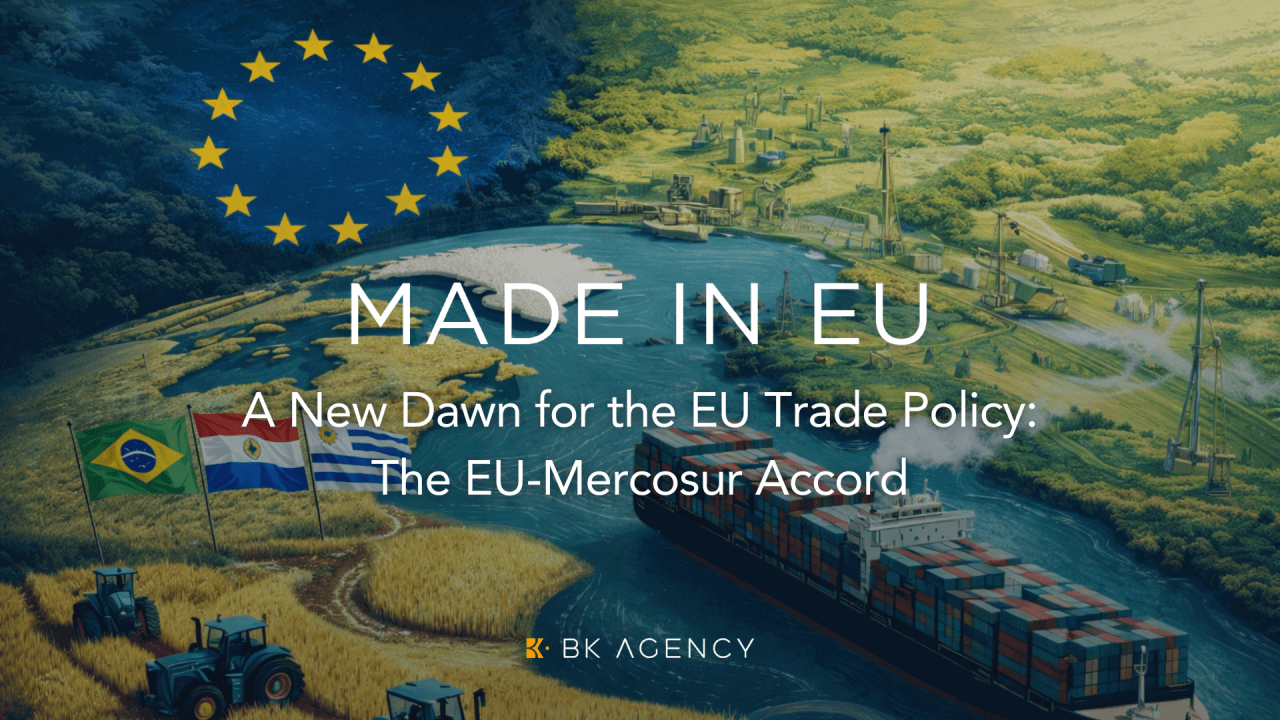
A New Dawn for the EU Trade Policy: The EU-Mercosur Accord
The EU and Mercosur will sign their long-awaited trade agreement on Saturday, with European Commission President Ursula von der Leyen travelling to Paraguay on 17 January for the signing ceremony. The deal between the EU on one side, and Argentina, Brazil, Paraguay, and Uruguay on the other will represent the end of a generational negotiation cycle and the beginning of an important restructuring of the EU’s global economic presence.
The decision-making process was anything but easy. Since the deal was blocked with a continuous French-led veto, the European Commission came up with an original idea to split the elements of the deal. By separating the trade elements into an Interim Trade Agreement, Brussels changed the legal requirement from unanimity in the Council to a qualified majority voting. This technicality essentially bypassed national parliamentary ratifications in capitals, allowing the deal to move forward despite the resistance from one of the largest economies in the EU.
Competitiveness in the Limelight
The timing of this signature is not accidental. As we noted in our previous analysis, the European Union is currently moving away from pure regulation towards competitiveness. With intensifying trade friction with the United States and a wish to reduce dependence on Chinese supply chains, Mercosur represents an excellent opportunity.
This is a strategic play for critical raw materials for the EU. The South American bloc holds some of the world’s largest reserves of lithium and copper, both of which are essential to the European automotive sector’s transition to electrification. Brussels is attempting to protect its industrial base from possible global supply shocks in the future by securing a preferential trade channel. The deal has a huge appeal to the players in the chemical and manufacturing sectors, as it offers a massive opening into a market of 260 million consumers where tariffs on machinery and pharmaceuticals have historically reached as high as 35%.
The Satisfaction Rates
The analytical reality is that the Mercosur deal is a zero-sum game in the eyes of many domestic actors. The players who are expected to benefit the most from the accord are the automotive and tech sectors, and the northern European shipping hubs. For them, the elimination of €4 billion in annual duties is a clear victory.
Those who perceive themselves as losers of this deal are mostly in the agricultural sector of countries such as France, Italy, Ireland, and Poland. The biggest fear is a surge in high-volume, low-cost meat imports that are not bound by the same environmental or sanitary standards as European-made products.
The political cost for French President Emmanuel Macron is significant. French MEPs across the spectrum have already promised to transform the ratification vote in the European Parliament into a referendum on the “survival of European farming”. Some kind of reprise of the massive tractor protests that characterised 2024 and 2025 are expected, but with a more existential tone as the implementation phase nears.
The Interim Phase
Because the deal was split, the trade-only portion (ITA) now heads to the European Parliament for a simple majority vote, likely in the coming months. If passed, the tariff reductions will begin almost immediately, even as the broader “Political and Cooperation” chapters flow through uncertain processes of ratifications on a national level. This creates a dual-track reality for everyone involved. Companies can begin adjusting their supply chains and pricing models based on the new tariff schedules, but the full legal certainty of a permanent Association Agreement remains a relatively distant goal.
The ITA will be centrally governed by a ministerial-level Trade Council, which is granted technical authority to amend tariff schedules and rules of origin through binding decisions. This means the agreement is able to evolve without the need for full treaty renegotiations. Beyond the phased elimination of customs duties on industrial and agricultural goods, the agreement formally integrates sustainability by requiring adherence to the Paris Agreement and international labour standards, with a dedicated panel of experts to monitor environmental commitments. The document also includes a complex dispute resolution mechanism.
The Immediate Effects
To calm down the agricultural sector, the Commission will pursue so-called mirror clauses – the regulations that mandate imports meet the exact same production standards as EU goods. This will likely lead to a new series of technical disputes with Mercosur producers regarding pesticide use and animal welfare.
With the trade barriers lowering, a surge in European foreign direct investment into the “Lithium Triangle” and green hydrogen projects in Brazil is more than likely. Energy and infrastructure industries should look for new Global Gateway funding instruments made to facilitate those connections.
At the end of the day, the ratification vote in the European Parliament will be a test for the new majority. The EPP will possibly seek a deal with the Socialists, perhaps trading support for the Mercosur deal for increased social spending or protections for the automotive sector in the budget for 2028-2034.
The Mercosur deal is a bet that the geopolitical and economic benefits of a South American alliance outweigh the internal political instability it will almost certainly trigger in the short term. Until the final vote in the Parliament, companies should prepare for market entry while hedging against the potential for sudden regulatory shifts in response to domestic political pressure.