On 22 March, voters in Slovenia returned to the polls in a parliamentary election that has delivered a narrow lead by the ruling party and heralded a period of political uncertainty. At the same time, the French voters casted their ballots in the local elections, which secured a Socialist victory in the capital, but also gave a morale increase to the country’s right-wing players.
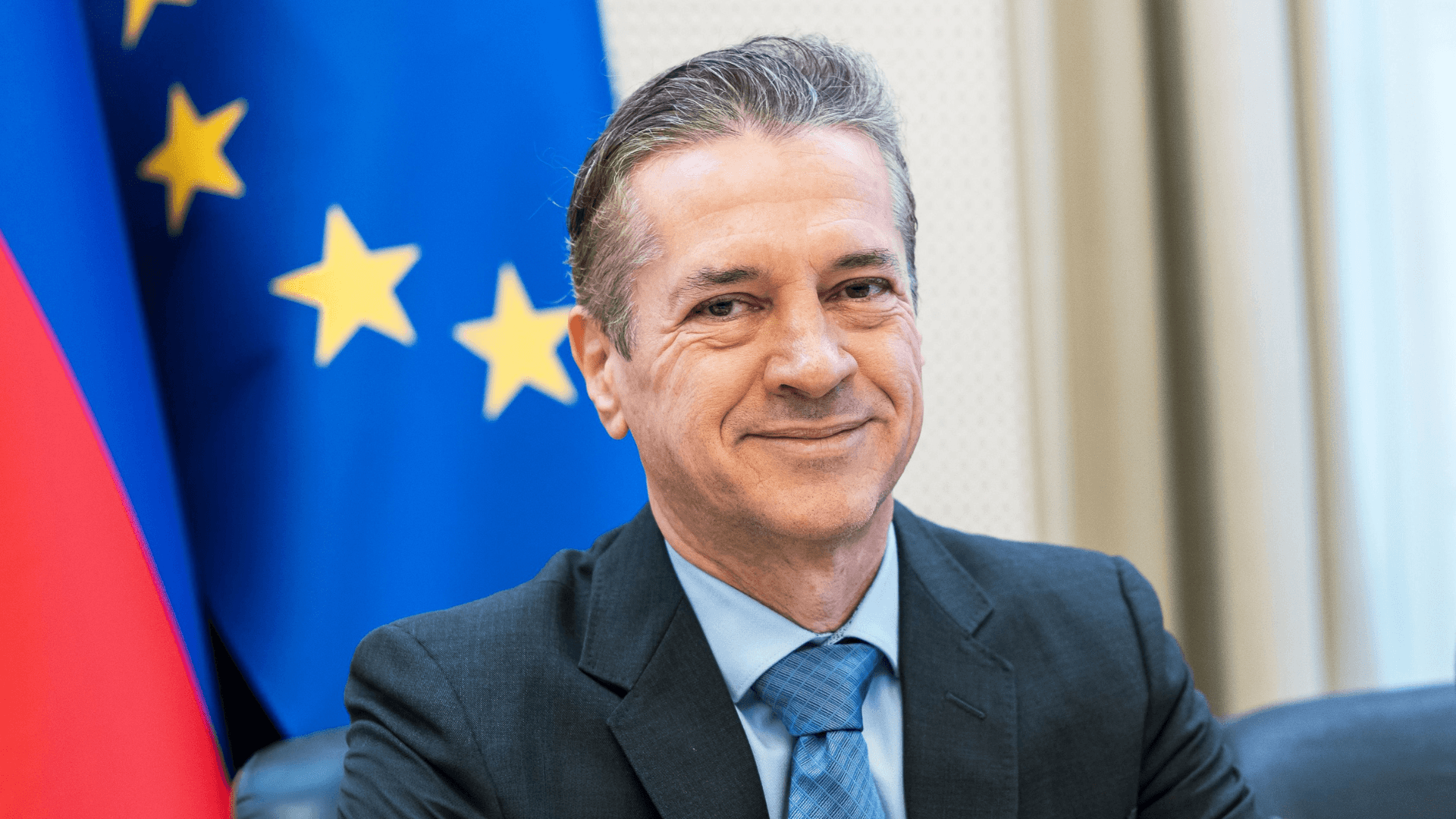
Preliminary results of the parliamentary elections held in Slovenia on 22 March indicate that the centre-left Freedom Movement (GS), led by Prime Minister Robert Golob, has secured a narrow victory with 28.6% of the vote, translating to 29 seats in the National Assembly consisting of 90 members. This is a step back from the party’s landslide victory four years ago, when it held 41 seats. A few percentage points behind them stands the centre-right Slovenian Democratic Party, led by the three-time former Prime Minister Janez Janša. The SDS acquired 28% of the vote, thus securing 28 seats. The close result between the two main blocs effectively makes the process of forming a government harder.
The secondary tier of parliament is more fragmented and diverse than in previous cycles. The conservative alliance gathered around New Slovenia emerged as a third largest political force with 9.29% (9 seats), followed by the Social Democrats (SD) and the newcomer liberal Democrats of Anže Logar, who both secured 6.7% (6 seats). The Left and the right-wing Resni.ca also cleared the 4% threshold, securing 5 seats each.
Aggressive Campaign and Controversies Behind It
The 2026 campaign was arguably among the most volatile in Slovenia’s recent history, as it was dominated by allegations of systemic corruption and foreign interference. The final weeks were overshadowed by the “black cube” scandal, involving secret video recordings allegedly linked to private intelligence actors, where people close to the government admitted to participating in the corruption scandals across. While Janša’s SDS was accused of using these to sway public opinion, the party countered with claims of government-sponsored deep state meddling.
Domestically, the Golob administration entered the election weakened by internal struggles between coalition partners, several ministerial resignations, and a perception of inconsistent tax policy. The primary cause for voter dissatisfaction remained the unaddressed healthcare reform and the cost-of-living crisis. While the Freedom Movement campaigned on stability and green transition, Janša used a nationalinterest narrative, focusing on migration and security. This strategy successfully mobilised his core base but didn’t capture the centrist majority.
Possible Coalition Scenarios
With a 46-seat majority required, neither the left nor the right-wing bloc has a clear path to power without compromises and negotiations. In the first scenario, Golob could attempt to reform his current coalition with the Social Democrats and the Left. However, this bloc only reaches 40 seats. To govern, they would need to attract the Democrats of Anže Logar, that have stated that they are still more prone to staying in the opposition. Logar, a former SDS foreign minister who distanced himself from Janša, currently holds the most leverage. A coalition involving Logar would represent a significant shift toward thepolitcal centre for a Golob-led government.
The second scenario would involve the current alliance of GS, social democrats, and the Left, together with the populist newcomers Resni.ca, a party that built its reputation by organising anti-COVID lockdown protests in 2020 and 2021. As improbable as it sounds, Resni.ca representatives only ruled out the coalition with Janša’s SDS, while being open to cooperation with everyone else. If Resni.ca enters the government, a more eurosceptic shift in the Slovenian foreign policy is expected. Both the first and the second scenario would represent a significantly less stable government, because the friction between GS and its coalition partners were evident even when Golob’s party had 41 seats alone. Third scenario would involve a minority government around either the current ruling bloc or SDS and NSi that would have to rely on continuous support from one of the remaining parties in order to pass laws. If that happens, the first fallout could mean the new parliamentary election cycle.
Geopolitical and Market Implications
For Brussels, the result is a mixed signal. A Golob-led government would maintain Slovenia’s current alignment as a reliable pro-EU voice, particularly regarding the green agenda and a supportive stance toward Ukraine. However, a return of Janez Janša could potentially complicate consensus on migration policy.
International markets and institutional investors are likely to view the results with caution. The primary concern is the potential for reform paralysis. Key structural issues, such as the pension system or energy market deregulation, require a stable government with a strong mandate. A weakened multi-party coalition could end up engaging with the populist spending to maintain internal peace, potentially impactingSlovenia’s fiscal outlook. Furthermore, the sharp divergence in foreign policy remains one of the key differences between GS and SDS. While Golob has moved toward a more vocal pro-Palestinian stance over the past years, Janša remains pro-Israel. A change in government would represent a 180-degree shift in Slovenia’s orientation in the Middle East, affecting its role within the UN.
The coming weeks of negotiations will determine whether the country continues on its current course or shifts back towards the Janša’s vision for the country. For market actors and diplomatic partners, the immediate priority will be monitoring whether Anže Logar chooses to act as a partner for the center-left or centre-right.
Left-Wing Stays Relevant while Right-Wing Wins in the South
The local elections in France produced a balanced outcome across the country with a several surprises. In Paris, a Socialist Emmanuel Grégoire secured the mayor’s seat with approximately 52% of the vote, defeating the conservative Rachida Dati. This victory, achieved with the alliance between Socialists, Greens, and Communists, extends the left’s decades long tenure in the capital. The broad left-wing bloc successfully marginalised the radical-left La France Insoumise in the final round. In Marseille, incumbent Benoît Payan of the Left Alliance narrowly beat the National Rally’s Franck Allisio (RN). Meanwhile, Bordeaux results were surprising, as Renaissance candidate Thomas Cazenave scored a victory against the Green incumbent, providing President Macron’s centrist movement with a local victory in an otherwise underwhelming national performance for his party.
The most disruptive result emerged from Nice, where Éric Ciotti claimed victory. Ciotti, who transitioned from the traditional right to a formal alliance with Marine Le Pen’s National Rally, provided the far-right with its most significant municipal victory. Unlike previous RN victories in smaller towns, the victory in one of the largest cities demonstrates the viability of a broader right-wing coalition. This union is expected to prioritize national preference in social housing and security reforms, potentially creating a localised friction point with national and EU standards.
Institutional Context and the Road Ahead
The 2026 elections were the first conducted under the new law which reformed the voting mechanics in Paris, Lyon, and Marseille toward a more direct council-election model. Critics argued this was a tactical attempt to weaken leftist incumbency, but the results suggest that local identification remained strong. The campaign was marked by the fatigue of the traditional tactical withdrawal of candidates to block the far-right candidates. While this strategy was successful in Marseille and Toulon, its failure in Nice and Carcassonne suggests that the strategy that was used to keep the far-right out of power is starting to fall, as more people are now willing to either vote for the RN or refuse to cooperate with their political rivals just to block them.
Former Prime Minister Édouard Philippe secured a re-election in Le Havre. This cements his status as the de-facto frontrunner for the center-right presidential nomination, offering a moderate alternative to both the more left-oriented candidates and the far-right. On the other hand, the success of the Greens and Socialists in excluding far-left LFI from winning major mayoralties suggests a divide on the left. This may lead to a dual-track strategy for 2027, where the moderate left attempts to reclaim the center-ground.
The continuity in Paris and Lyon provides a predictable environment for long-term infrastructure projects. However, the emergence of “Ciotti-style” administrations in the south may introduce more protectionist procurement policies. The results suggest that the country is getting more polarised and that the far-right’s new local legitimacy in the south will likely amplify Eurosceptic narratives aboutmigration which might influence the upcoming presidential election, set for 2027.
Cover image source: Portal Gov.Sl