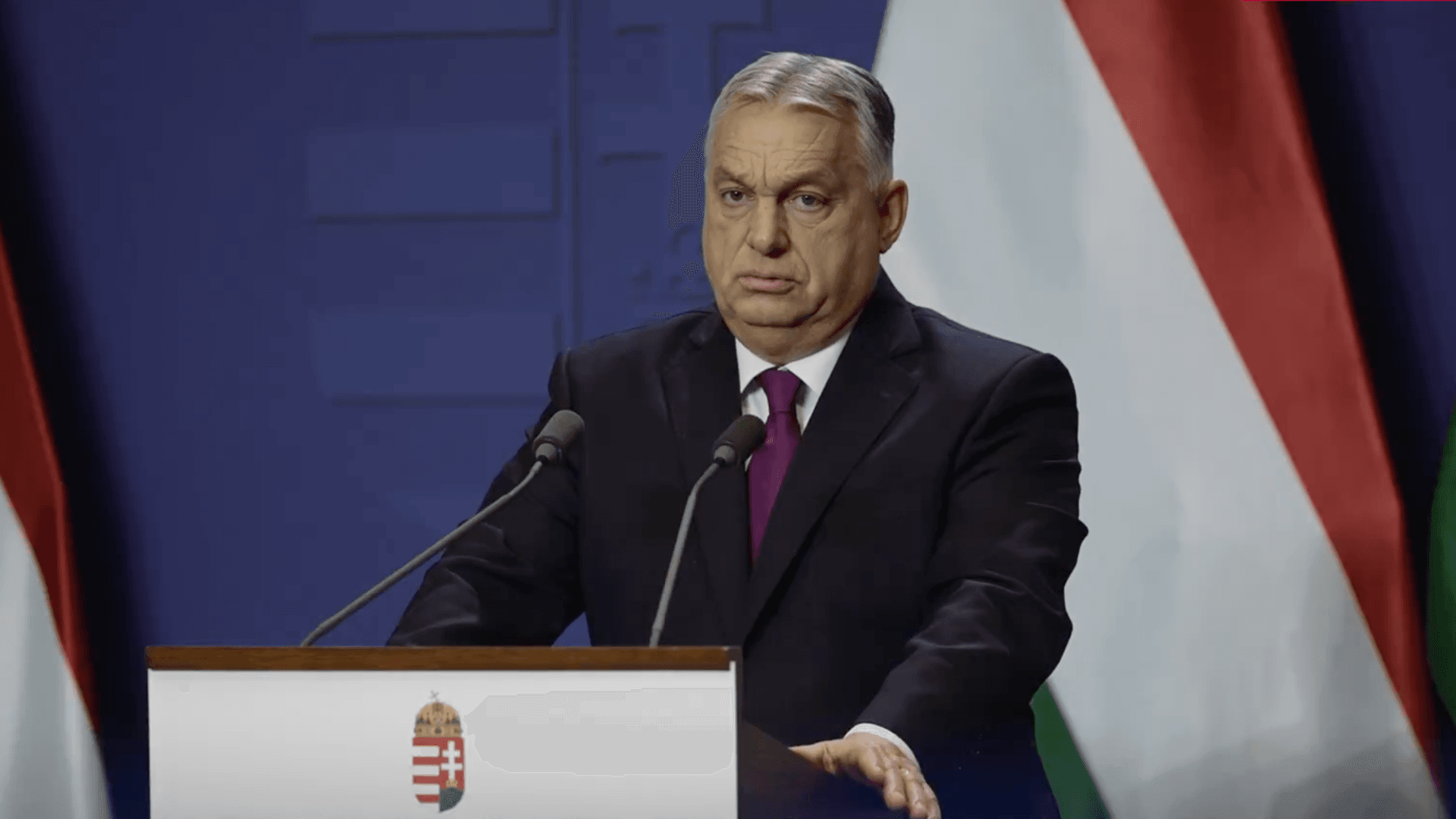
This Sunday might be one of the most stressful days for the Hungarian incumbent Fidesz party and its leader, Viktor Orbán, whose political destiny has never seemed less certain.
Parliamentary elections in Hungary on 12 April represent a pivotal challenge to the political status quo in Budapest since 2010. For the first time since, the governing Fidesz party and its leader Viktor Orbán are entering the last days of campaign without a comfortable lead in the opinion polls. A unified opposition movement has transformed what was once a not so eventful electoral cycle into a geopolitically relevant event with implications for the European Union and security in the region.
The central driver of this shift is Péter Magyar and his Tisza party. As a former member of the Fidesz administration, Magyar has used his intimate knowledge of the governing structure to build a wide bloc that appeals to both conservative leaning voters and the traditional liberal opposition. Unlike previous electoral cycles where the opposition was fragmented with smaller parties on the ballot, the 2026 campaign has seen most of the anti-Fidesz actors gather around the Tisza platform. Current polls from independent institutes place Tisza up to ten percentage points ahead of Fidesz. Magyar’s campaign has focused heavily on domestic issues such as corruption, the rule of law, and the perceived stagnation of the Hungarian economy compared to its neighbours. So far, Tisza seems to be succeeding in attempts to shift the discourse from cultural identity politics that have traditionally favored the incumbent government.
The Security Plot Twist: The Serbian Pipeline Incident
In the final weeks of the campaign, the narrative has been increasingly redirected toward regional security after the discovery of high-powered explosives in Serbia near the Hungarian border. On 5 April, Serbian authorities reported finding two backpacks filled with military-grade explosives and detonators just a few hundred meters from the TurkStream gas pipeline in the Kanjiža district. This pipeline is a critical artery for Hungary’s energy security as it remains the primary route for Russian natural gas imports.
The reaction from Budapest was immediate. Orbán called an emergency meeting of the National Defense Council and suggested that the incident was a sabotage operation linked to Ukraine’s long-term goal of severing European energy ties with Russia. This framing served a dual purpose. It reinforced government’s image as the sole guarantor of national security and built a link between opposition and foreign interests. Ukrainian government and its officials, and in particular President Volodymyr Zelenskyy, were one of the main targets of Fidesz’s electoral campaign, portrayed in an extremely negative light and framed as “national enemies”.
However, a significant point of friction appeared between the two usually aligned neighbors. While President Vučić of Serbia initially briefed Orbán on the findings, the Serbian Military Security Agency later issued a clarifying statement that did not sit well with the Hungarian government: the Agency’s director Đuro Jovanić explicitly rejected the narrative that Ukraine was behind the plot. Although the explosives were identified as US-made, Serbian intelligence emphasised that the origin of the hardware does not identify the perpetrator and that there is no evidence linking Kyiv to the operation. This public disagreement caused a rare moment of diplomatic tension between Belgrade and Budapest, complicating Orbán’s attempt to use the incident as wind in the back for Fidesz.
Vučić and his party officials, already criticised by the EU for lack of internal reforms and Serbia’s ties to Russia, has effectively abandoned one of its closest allies in the photo-finish of the electoral campaign. Serbia thus attempted to improve its rather tainted image in Brussels after a series of tensions with EU and its representatives, and effectively bet on Orbán’s defeat.
Campaign Tactics
The Fidesz campaign has responded to the rise of the Tisza party with a strategy involving an intensive discrediting campaign and the utilisation of emergency narratives. Promotional materials across the country have depicted Péter Magyar as a puppet of Brussels and Kyiv, aiming to paint the opposition as a threat to Hungarian sovereignty. This is often coupled with the government’s frequent use of state-of-danger decrees, a mechanism that was used almost continuously since the COVID pandemic and the start of the war in Ukraine.
Critics and opposition leaders have characterised the pipeline incident as a “false flag” operation designed to justify further emergency measures. The concern among analysts is that if the election results are tied or Fidesz loses its majority, the government could utilise these emergency powers to delay the certification of results or the constitution of a new parliament. This would create an environment of institutional uncertainty.
Likely Scenarios
The National Assembly consists of 199 MPs and is elected through a complex mixed-member system that favors the largest party. Even if Tisza wins the popular vote by a small margin, Fidesz could still keep its parliamentary majority or a significant blocking minority. The first scenario involves a narrow Tisza victory. In this case, Magyar would likely face an institutional fortress built by Fidesz over the last decade. Key positions in the judiciary and other key institutions are held by loyalists with long mandates, meaning a new government would struggle to implement the reforms it promised without a two-thirds majority. The second scenario is a Fidesz victory, likely achieved through its strength in rural areas and the structural advantages of the electoral rules. This would signal a continuation of the current trajectory but with much more vocal and powerful opposition in the parliament than ever before. A third, more volatile scenario involves a contested result, leading to legal challenges and potential civil unrest, which could further polarise the people.
The Day After
One of the primary concerns for market actors is the potential for reform paralysis. A divided parliament or a contested transition could lead to volatility for the Hungarian Forint and uncertainty regarding fiscal policy. Business could start preparing for two contrasting regulatory futures. Tisza-led government would likely prioritise unblocking of EU funds through rule of law reforms, whereas a Fidesz victory would likely see further state intervention in strategic sectors like energy and banking. Stakeholders in Brussels and neighboring nations are viewing the election as a test for the stability of the EU’s eastern bloc. A change in government would likely lead to a serious shift in Hungary’s stance on the EU Migration Pact and military aid to Ukraine and potentially remove one of the largest obstacles to consensus within the European Council. Conversely, a Fidesz victory could lead to more EU sanctions, along with the potential suspension of voting rights.
The next few days will reveal if Hungary intends to remain a pariah or if it’s ready for the long journey back to Europe. The focus for the industry stakeholders now shifts to what happens when the dust settles. If the status quo changes, the big question will be whether the new leadership can navigate an established system that wasn’t exactly constructed with them in mind. Either way, the outcomes in Budapest are not going to be as predictable as before, and businesses and individuals can expect a period of increased volatility in Hungary.
Image source: Official X account of Viktor Orbán, Prime Minister of Hungary