Once a country with the fastest-growing democracies in Eastern Europe and grouped with Ukraine and Moldova as the EU’s eastern frontrunners, Georgia has been facing a growing discrepancy towards the EU enlargement policy as the country has been suspended from the track. The key question remains: is this a temporary procedural freeze or a fundamental political shift from the West? The active political confrontation has reached its peak this week. Following threats of sanctions from both Brussels and Moscow, the Georgian Ministry of Foreign Affairs summoned the EU Ambassador yesterday morning.
As of yesterday, Georgia is perceived by Brussels as a candidate “in name only”. The reasons behind this are clear, as the Georgian Dream drastically changed its communication trajectory, distanced itself from core EU values, and adopted reforms that resulted in significant democratic backsliding.
Geopolitical pressure on Tbilisi is now coming from both sides. On March 6, 2026, the EU Commission suspended visa-free travel for Georgian holders of diplomatic, service, or official passports in response to Georgia’s failed commitment towards democracy and fundamental rights. Unexpectedly, this was followed by a warning on April 1 from Russian officials, who threatened Georgia with a negative outcome if it continues its path toward EU membership.
From Candidate to Frozen Status
All dates to December 2023, when the European Council granted Georgia EU candidate status, on the condition of implementing nine reform priorities identified by the European Commission. This moment was widely seen as historic and celebrated, reflecting both the EU’s geopolitical readjustment after Russia’s invasion of Ukraine and Georgia’s long-standing pro-EU aspirations.
The momentum did not last for long. By mid-2024, the European Council concluded that Georgia’s political direction was jeopardising its path to the EU. This was shortly followed by the decision of the Georgian Dream government to pause its EU accession efforts and reject EU grants until 2028. This choice marked a critical turning point: rather than being excluded by the EU, Georgia stepped back on its own.
For Brussels, this action was beyond acceptable, resulting in frozen candidate-related funding and halted high-level political dialogue. Since then, dialogues have been postponed by both sides, each blaming the other, and prominent officials of Georgian Dream have been sanctioned by the EU.
Democratic Backsliding and Legal Reforms
Beyond the formal suspension, Georgia’s internal political and legislative developments have raised substantial concerns. While the EU’s enlargement framework is grounded in democracy, the rule of law and fundamental rights, Georgia’s legislative trajectory is moving in the opposite direction. Brussels relationship with Georgia severed in spring 2024 when Georgian Dream adopted the “foreign agents” law, targeting civil society organisations and independent media outlets that receive foreign funding. These measures have been widely criticised as tools to suppress dissent and restrict pluralism. The European Commission explicitly noted “substantial backsliding” in democratic standards in the 2025 Report on Georgia, including restrictions, reforms on freedom of protest and assembly, voting rights for Georgian nationals living abroad, media coverage of trials, etc. In this context, Georgia is no longer seen as a reform-driven candidate, but as a state in the midst of a political crisis that is actively separating itself from the Copenhagen criteria.
Georgia’s Absence from the EU Summit in Cyprus
The symbolic “non-mention” and exclusion of Georgia during the Cyprus conference was not accidental either. At a recent informal gathering, EU leaders were joined by partners from the Gulf and Ukrainian President Zelensky. While the agenda focused on the war in Ukraine, instability in the Middle East, energy security, and defence cooperation, Ukraine and Moldova were central to discussions about the EU’s future architecture. However, Georgia was absent, which can make one think that Brussels has shifted its focus from integration and enlargement towards Georgia to an impactful response to its democratic decline.
Discussions in the EU institutions increasingly include the suspension of the visa-free travel arrangements, which have been enjoyed by the Georgian population since 2017. This tension peaked in late April 2026, when the EU Ambassador to Georgia clearly warned that the country could return to a “dark past” if Georgian Dream remained on its current track. Likewise, Minister Irakli Kobakhidze made critical remarks, calling the speech shameful, accusing the Ambassador of inciting civil War. Confrontation culminated yesterday when the Foreign Ministry of Georgia summoned Paweł Herczyński. In conclusion to such actions, Georgia can be perceived as a politically unreliable partner in its relationship with the EU.
Domestic Crisis, Ongoing Protests and Government Narrative
Internally, Georgia is experiencing one of its most volatile periods, since society is extremely divided and polarised. Since late 2024, there have been sustained, youth-led protests against the government for over 500 days. These protests are often met with force, including the use of chemical irritants and mass arrests, and have drawn international concern. Equally significant is Georgian Dream’s increasingly hostile rhetoric toward the EU, referring to “deep state” conspiracy theories and often echoing narratives associated with Russian disinformation. This discursive shift reinforces the perception that Georgia is moving away from the European political space.
Despite these developments, public opinion in Georgia remains highly pro-European. Surveys indicate that around 74% of Georgians would support EU membership, with only a small minority opposed. People in Georgia have notable trust in the EU institutions, and the majority of the population believes that integration would benefit the country economically, politically and socially.
This creates a paradoxical situation in which Georgia’s population aligns with the EU; despite its elected government. For the EU, this makes policy responses even more complicated. Punitive measures risk losing confidence of the population, while continued engagement risks legitimising an increasingly authoritarian government. Kaja Kallas recently addressed this dilemma, affirming that while the EU fully supports the Georgian people, there is no place for those representing repression in the union.
The Remaining Window of Opportunity for Georgia
Georgia’s absence from a larger Europe is not the result of structural barriers or geopolitical exclusion. It is the outcome of political choices that have undermined the trust between Tbilisi and Brussels.
The associate trio has been demolished, and Georgia is facing critical times. As EU officials have emphasised, Georgia’s future remains open. A return to reform democratic standards; and genuine commitment to EU integration could restore its trajectory. Ultimately, the defining question is whether Georgia’s leadership will realign with the aspirations of its own population, which values freedom, independence, and democracy since its first day of liberation.
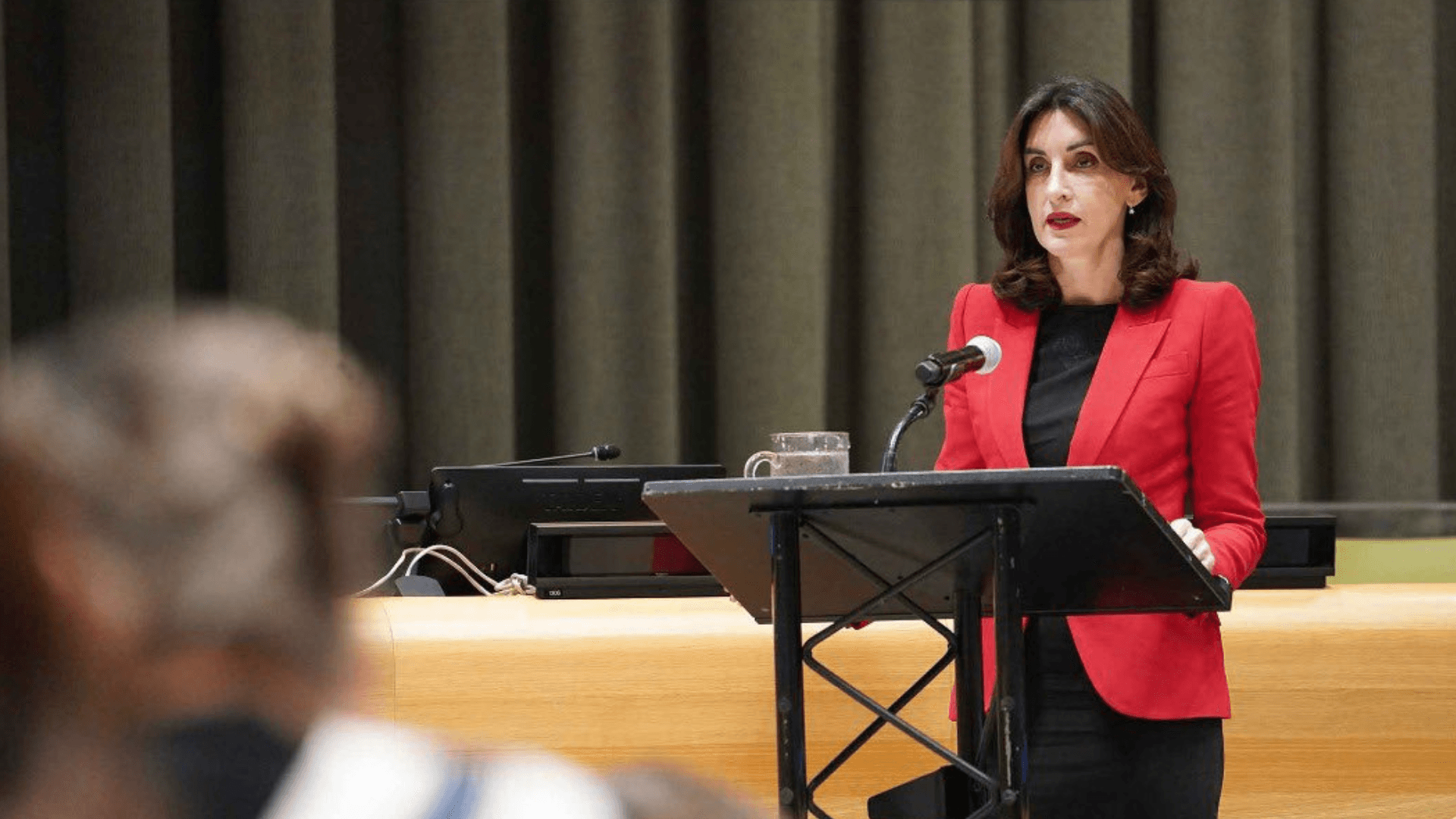
Image source: Official X account of Maka Botchorishvili, Minister for Foreign Affairs of Georgia