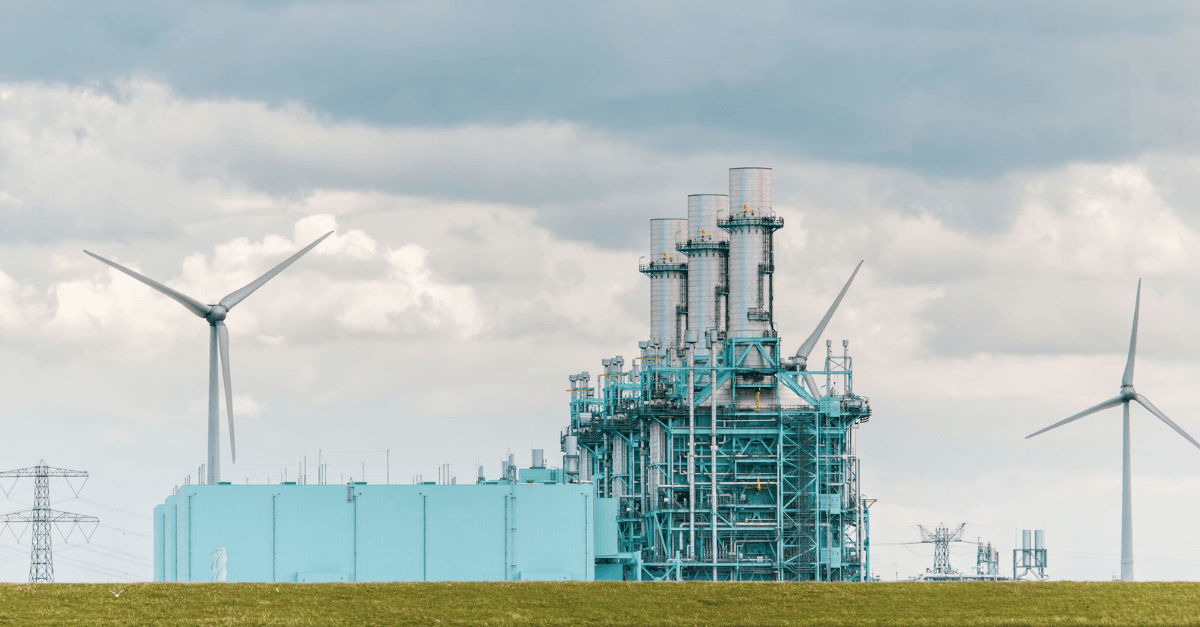
For decades, Europe’s energy policy was a green energy-oriented mission focused on carbon reduction. Right now, that mission has evolved into a model of industrial realism for the purposes of European survival. The biggest strategic change is the shift from being clean to prioritising autonomy and independence from foreign actors. Brussels has stopped treating energy and raw materials as mere global commodities and instead views them as national security assets that are essential for energy security in difficult times. For businesses, this signals that European supply chains are growing in demand and that they will likely be incentivised by the EU to reduce the reliance on the global supply chains.
The RESourceEU Action Plan
While oil and gas were essential materials in the past century, often called the “black gold”, the term now belongs to lithium, cobalt, and rare earth minerals. In December 2025, the Commission adopted RESourceEU, the practical implementation act behind the Regulation on Critical Raw Materials. According to it, the EU must extract 10%, process 40%, and recycle 25% of its strategic raw materials domestically by 2030. Additionally, no more than 65% of any material can come from a single country outside EU – a direct move to reduce the reliance on China.
RESourceEU also introduces a new central watchtower whose role will be to provide market intelligence and aggregate demand. Similar to the idea of the joint purchase of vaccines, the EU will now help companies buy raw materials as a unified single bloc to lower prices and stabilise supply. Another key provision is the restriction on the export of scraps, especially permanent magnets and aluminum. This limitation will go into effect by mid-2026. The EU aims to retain waste within Europe and require businesses to recycle domestically rather than selling to the processors in third countries.
The Clean Energy Investment Strategy
In March 2026, the Commission unveiled its Clean Energy Investment Strategy, supported by 75 billion euro in financing from the European Investment Bank. This tool for subsidies has the potential to change the outlook for European business. The most significant novelty is the “Made in EU” requirement that is part of the proposed Industrial Accelerator Act. If a project aspires to access public funding for products such as batteries or wind turbines, it must prove that a significant portion of the technology was manufactured either in the EU or Norway, Iceland, and Liechtenstein, which are considered trusted partner countries.
The IAA also creates an advantage for green materials: a project must meet a specific percentage of the materials produced using clean energy or recycled methods to qualify for public funding. For steel and aluminum, at least 25% of the product needs to meet strict eco-friendly standards, whereas the threshold for concrete is set at 5% – as producing carbon-friendly concrete is significantly harder and financially demanding than steel. For electric vehicles, 70% of battery components will need to be EU-made.
Hydrogen
Many countries were announcing national hydrogen strategies, and the European Union has set an ambitious target of 10 million tons for domestic production by 2030. Companies were releasing memorandums of understanding for electrolyser plants over the past couple of years, however only a small amount of those projects had the actual funding secured. Most of the investors now demand a firm offtake agreement – proof that a specific customer has signed a ten-year contract to buy hydrogen at a set price.
To be legally labeled as low-carbon, hydrogen now must prove a 70% emission saving compared to fossil fuels. This methodology is now final and offers investors the legal certainty they needed to sign the ten-year purchase agreements. However, the green premium is higher than it was expected to be, and it has forced the corporate subjects to move away from standalone projects and toward hydrogen valleys. Hence, instead of building a countrywide pipeline, companies can now build the hydrogen plant next to the factories that use them. This physical connectivity helps avoid massive cost of building a pipeline network spanning multiple countries immediately.
The Next Months
The Internal Market Emergency and Resilience Act will become fully applicable in May 2026. In the event of the global crisis, such a sudden shortage of the graphite needed for batteries or the chips essential for building cars, European companies were left to compete on the global market alone and were often outbid by larger players. With a new regulation in place, the European Commission has the legal authority to step in during a crisis and legally mandate that industrial orders that are vital for Europe’s security are moved to the front of the queue. For the business, this can be a double-edged sword: if a company is deemed a critical provider, it will offer a sense of safety net, but the standard commercial contracts could be legally paused if a higher-priority emergency arises.
In July 2026, a major shift is expected in the metals market as the EU plans to reduce the tariff-free import volumes and simultaneously raise the tariff on over-quota steel from 25% to 50%. This policy aims to prevent market saturation of high-pollution imports. If a business relies on the lowest-priced steel available from overseas, the cost will most likely grow significantly. On the other hand, if a company has already switched to European suppliers, it will be in a more stable and competitive position as the rivals will face extra tariffs.
In September 2026, the EU will finalise its second list of strategic projects under Critical Raw Materials Act, where the companies can expect a reduction in administrative burden. In most cases, opening a new mine or a mineral processing plant in Europe is a bureaucratic challenge taking up to a decade of permits, approvals and court proceedings. Projects on this strategic list will get preferential treatment. By law, a new mine must receive its final approval within 27 months, and a processing plant within just 15 months. A new procedure effectively bypasses years of local administrative back-and-forth. For investors and industrial firms, this translates into a clear, fast-tracked timeline for launching new strategic projects and integrating raw materials into the supply chain.
The Path to Compliance
Businesses can start preparing for the changes by conducting an audit for the compliance with the new “Made in EU” standards. If a business relies on public tenders or EU subsidies, the “high-risk” components should be reconsidered. Even though it might be fully functional, a product that lacks trust will soon become ineligible for European funding. Under the Industrial Accelerator Act, all Member States must establish a single digital point of contact for industrial permits. If a company’s expansion project is stalled in local bureaucracy, the new EU-mandated acceleration timelines that force a timely decision can provide relief.
It is also advisable to secure secondary raw materials. With export bans on scrap metal and magnets approaching soon, prices for recycled materials within Europe may stabilise while global prices spike. Securing long-term contracts with European recyclers now is a good move to mitigate possible volatility in the future. Companies that align their supply chains with “Made in EU” and low-carbon standards will be more successful with placing their products on a market, and are likely to be protected by a growing layer of strategic tariffs and subsidies.
Read the full Regulatory Horizon Report by B&K Agency: