Ukraine’s campaign against Russian energy infrastructure has emerged as one of the most strategically consequential dimensions of the war. While previous operations largely focused on military assets, Kyiv is now systematically targeting oil refineries, storage facilities, export terminals and logistics hubs that underpin Russia’s wartime economy. The objective extends beyond disrupting military operations; it seeks to weaken one of the Kremlin’s principal sources of revenue while increasing the domestic economic costs of sustaining the conflict.
From Economic Sanctions to Direct Economic Warfare
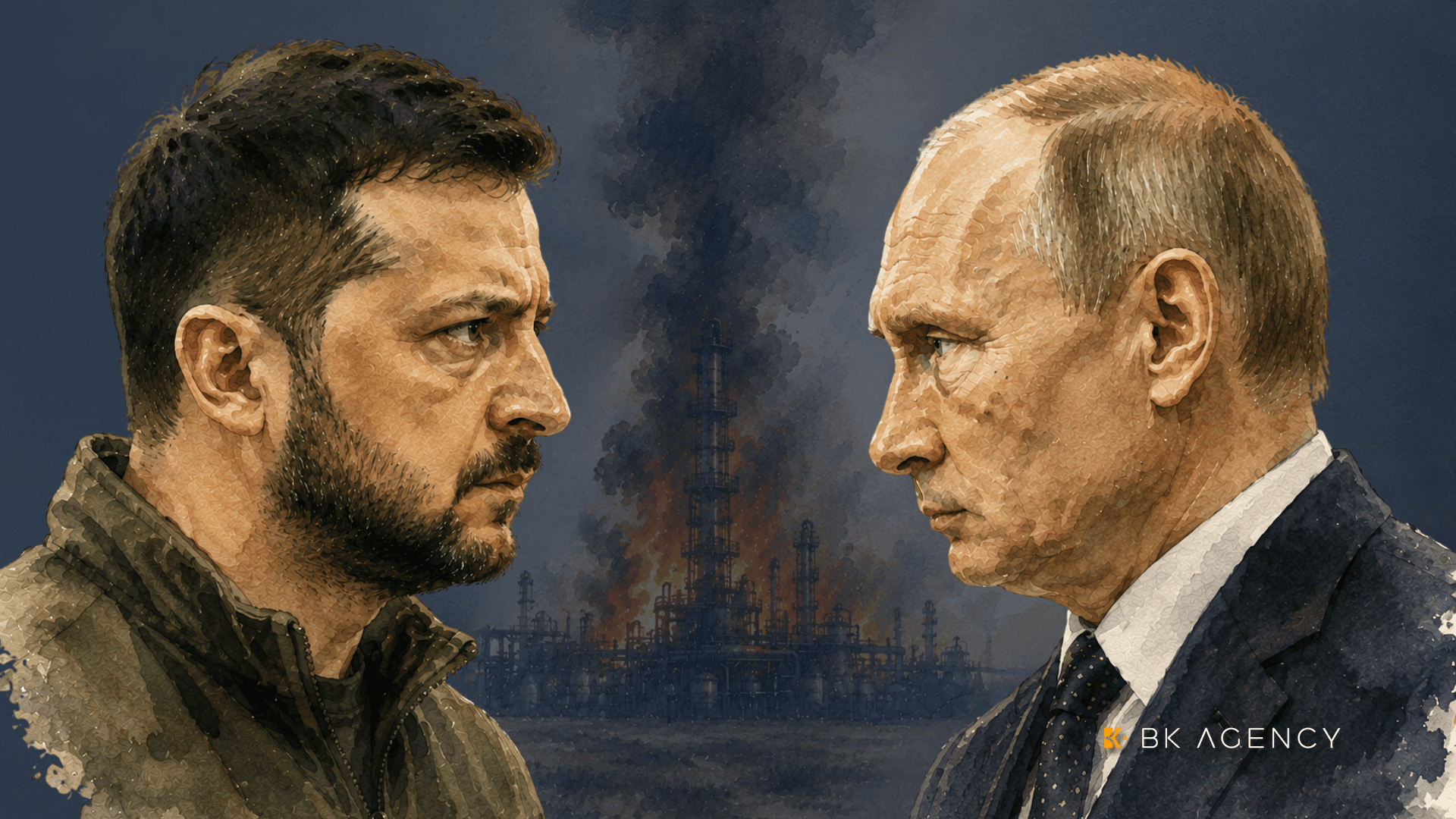
President Volodymyr Zelensky has characterised these operations as Ukraine’s “long-range sanctions,” signalling a strategic pivot in Kyiv’s strategy. Rather than relying exclusively on sanctions imposed by the West, Ukraine is attempting to impose economic pressure directly by demolishing the infrastructure that finances Russia’s military campaign.
The latest attacks illustrate the capacity of this shift. Ukrainian drones struck oil infrastructure in and around St. Petersburg, including the city’s oil terminal and facilities near the strategically important port of Vysotsk on the Baltic Sea. Describing the operation, Zelensky stated that Ukrainian forces had targeted “port oil infrastructure that generates revenue for Russia’s war.” The selection of targets has a clear objective to reduce Russia’s ability to export energy, by forcing Moscow to dedicate additional resources to protect critical economic infrastructure.
Pressure on Russia’s Energy Sector
Although the full scale of the damage remains difficult to verify independently, Ukraine claims that almost 43% of Russia’s oil refining capacity has been disabled since the campaign escalated. Regardless of the precise picture, the cumulative effect is increasingly evident. Fuel shortages have spread across multiple Russian regions, prompting authorities to introduce supply restrictions while regional governments attempt to stabilise domestic markets.
The consequences are extending beyond the energy sector itself. As Russia enters its annual harvest season, fuel shortages have begun affecting agricultural producers in some of the country’s most productive grain-growing regions. Farmers have reported difficulties securing diesel supplies necessary for harvesting operations, highlighting how disruptions to refining capacity are beginning to affect strategically important sectors of the broader economy. For a country that remains one of the world’s largest grain exporters, prolonged supply disruptions could generate additional economic and logistical pressures beyond the energy market.
Paradoxically, Moscow has publicly described the strikes on energy infrastructure as “not critical” while simultaneously approving legislation designed to strengthen domestic fuel supplies. The apparent contradiction reflects the Kremlin’s increasing frustration. Although official messaging continues to project resilience, emergency measures, including greater fuel allocations to the domestic market and increased gasoline imports from India and Kazakhstan, prove that the authorities recognise the growing strain on Russia’s energy system.
The Domestic Cost of War
Perhaps the most significant development is that the effects of the conflict are becoming increasingly visible within Russia itself. Images circulating across Telegram, Instagram and other social media platforms have shown lengthy queues at petrol stations, drivers waiting hours to refuel and isolated incidents of confrontations over limited fuel supplies. While individual social media posts cannot be independently verified, the volume and geographical spread of such reports indicate that shortages are no longer limited to isolated regions.
The visibility of these disruptions presents a political challenge for the Kremlin. Fuel shortages, rising prices and disruptions affecting transport, agriculture and everyday mobility are considerably more difficult to manipulate than developments on the battlefield. Unlike military setbacks, which can be managed through official messaging, shortages affecting daily life directly influence public perceptions of the state’s actual economic conditions.
This represents an important strategic objective. Beyond reducing export revenues and constraining military logistics, the Kyiv seeks to increase the domestic costs of continuing the war by exposing vulnerabilities within Russia’s economic infrastructure. Reaching targets located more than 800 kilometres from Ukraine’s border also demonstrates that distance alone no longer guarantees the protection of critical assets, forcing Russia to reconsider how it allocates air defence resources across its vast territory.
Strategic Outlook
Ukraine’s long-range strikes are likely to continue expanding beyond refineries to include storage depots, export terminals, pipelines, rail infrastructure and logistics networks that support Russia’s energy exports. Such an approach places Moscow before an increasingly difficult strategic trade-off, either to reallocate additional air defence systems to protect economically vital infrastructure or prioritise military assets closer to the front line. Either option imposes additional operational costs that Moscow might not manage to afford.
If the current trajectory continues through the second half of 2026, Russia could face frequent fuel shortages, higher domestic inflation and critical pressure on key sectors such as agriculture and transport. While these developments alone are unlikely to alter the Kremlin’s broader strategic objectives, they raise the economic and political costs of sustaining a prolonged conflict.
Ukraine’s concept of “long-range sanctions” therefore represents more than a rhetorical innovation. It reflects an evolving strategy that integrates military capabilities with economic objectives, targeting the financial foundations of Russia’s war effort rather than its armed forces alone. As the campaign continues, the success of this approach will depend not only on the physical damage inflicted on energy infrastructure but also on its ability to generate sustained economic disruption and increase domestic pressure on the Kremlin.