As 2025 comes to a close, we look ahead to 2026 and explore the decisions set to define Europe’s political and economic path. Enjoy!
From Regulation to Fragmentation
The year drawing to a close has been a particularly complex one for the European Union, and especially for the Commission’s legislative and political agenda. After five years dominated by the Green Deal and an expansive, often heavy regulatory push, 2025 marked a sharp inflection point. The Commission attempted a near-180-degree turn, reframing its priorities around simplification, competitiveness and investment attractiveness. This shift has not come without political costs. It has exposed deep fractures inside the traditional centrist coalition, with the Socialists, the Greens and parts of Renew Europe increasingly resistant to deregulation, while the EPP has looked for new working majorities with centre-right forces, such as the ECR and the Patriots. The result has been a more unstable parliamentary geometry and a legislative agenda that is far less predictable than in the previous mandate.
2026 on the Table
Looking ahead, 2026 is shaping up as a decisive year. The Commission, Parliament and Council all formally agreed to prioritise ten legislative files that together define the political direction of the next phase of the mandate. At the core of this agenda are competitiveness and simplification, with flagship initiatives such as the 28th Regime for Innovative Companies, the Automotive Package, the Critical Medicines Act, the European Grids Package and the Savings and Investments Union. These proposals are explicitly designed to reduce fragmentation in the single market, unlock private capital, lower energy costs and strengthen Europe’s industrial base.
Alongside competitiveness, the institutions have elevated social cohesion and affordability as parallel priorities. The European Affordable Housing Plan, the Fair Labour Mobility Package and the sectoral proposals linked to the next Multiannual Financial Framework reflect the growing political pressure to address cost-of-living concerns and labour market distortions without reopening a full-scale expansion of EU social regulation. Migration and security will also remain high on the agenda through the Return Regulation, which is expected to reopen sensitive debates on border management and enforcement in both the Parliament and the Council.
Running across all these files is the simplification drive. The Omnibus packages — covering SMEs and small mid-caps, digitalisation, defence readiness, chemical products and the digital acquis, including AI, cybersecurity and data — will be the most politically contentious element of the 2026 programme. While the Commission presents them as a horizontal correction to years of regulatory accumulation, opposition from the left side of the Parliament is already solidifying.
Europe’s Next Test
According to the B&K Agency’s prediction, the Omnibus proposals are likely to pass, but not without consequences. Their approval would effectively break the so-called “Ursula majority” that has underpinned the Commission since the beginning of the mandate. This rupture will not be a temporary episode, but a structural shift that will shape the mid-term institutional reshuffle, when both the President of the European Parliament and the President of the European Council are due to change. From that point onwards, EU governance is likely to become more transactional, with shifting coalitions depending on the file rather than a stable centrist bloc.
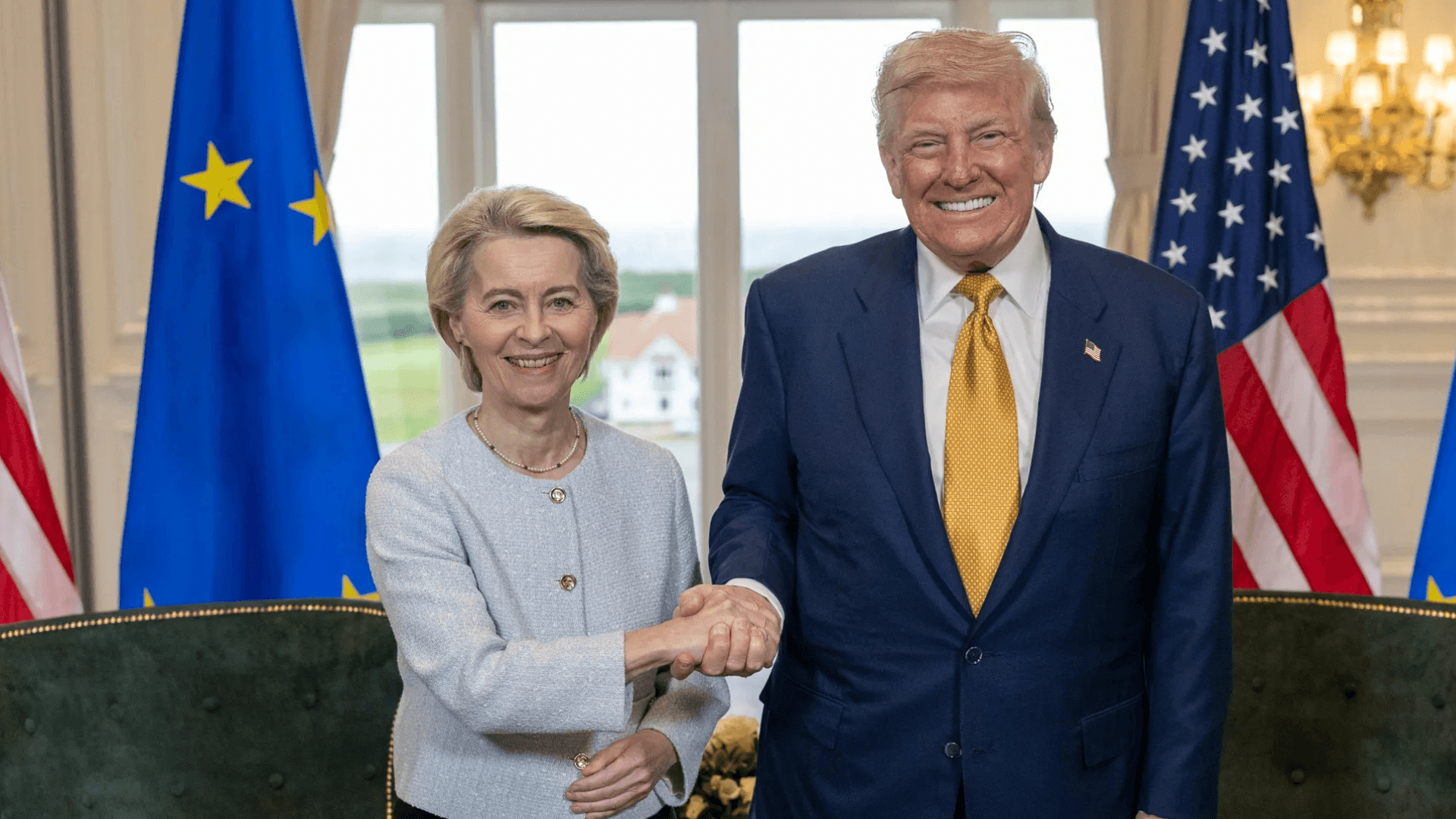
This internal political volatility is unfolding against an increasingly adverse geopolitical backdrop. Trade tensions with the United States are again a concrete risk, while the Commission has already faced resistance in the Council on sensitive external policy issues, such as the management of Russian assets. More broadly, Europe is confronting uncomfortable structural realities: US GDP per capita is now roughly double that of the EU, American technology companies dominate AI and other frontier sectors, and Europe’s traditional economic model — based on open markets and cheap energy — has been undermined by the war in Ukraine and years of policy indecision, particularly in automotive and industrial policy.
It is in this context that the Commission has proposed a far-reaching reform of the EU’s long-term budget, with discussions starting on a €2 trillion framework for the period beginning in 2028. The objective is to rebalance spending away from agriculture and cohesion and towards competitiveness, research, defence and security. A new European Competitiveness Fund, a sharp increase in defence funding and a more flexible budget architecture are meant to align financial resources with geopolitical and economic priorities. However, unanimity in the Council and approval by the European Parliament will be difficult to secure, with net contributor and net beneficiary states already positioning themselves defensively.
Cuts to the Common Agricultural Policy and cohesion funds, combined with the proposal to merge them into national envelopes, have triggered strong resistance from farmers’ organisations, regional authorities and a significant part of the Parliament. While Brussels argues that flexibility and efficiency are necessary, critics warn of reduced predictability and weaker EU credibility. At the same time, the competitive allocation of funds under the new competitiveness instruments risks exacerbating existing imbalances between richer and poorer Member States.
Against this backdrop, the EU’s external economic strategy is also under renewed scrutiny. The Mercosur agreement has returned to the political agenda as a potential instrument to diversify trade and secure access to key markets and raw materials. Yet divisions among member states remain deep. Countries such as Germany and Spain continue to support the agreement on strategic grounds, while others, most notably France and Italy, remain firmly opposed, citing the impact on agriculture, food standards and domestic political stability. The B&K Agency policy division believes that continuing to drag the Mercosur process out indefinitely will not signal prudence or unity, but rather reinforce the perception that Europe is unable to conclude any major trade agreement, weakening its credibility as a global economic actor.
Taken together, the 2026 legislative priorities, the Omnibus simplification drive, the budget overhaul and the unresolved Mercosur file all point to the same underlying challenge. Europe is attempting to pivot from a phase defined by regulation to one centred on power, resilience and competitiveness. Whether this pivot succeeds will depend less on the ambition of the proposals than on the Union’s capacity to manage political fragmentation, sustain shifting majorities and project coherence at a moment when both internal and external pressures are intensifying.
Happy Holidays from B&K Agency. We look forward to reconnecting with you in 2026!