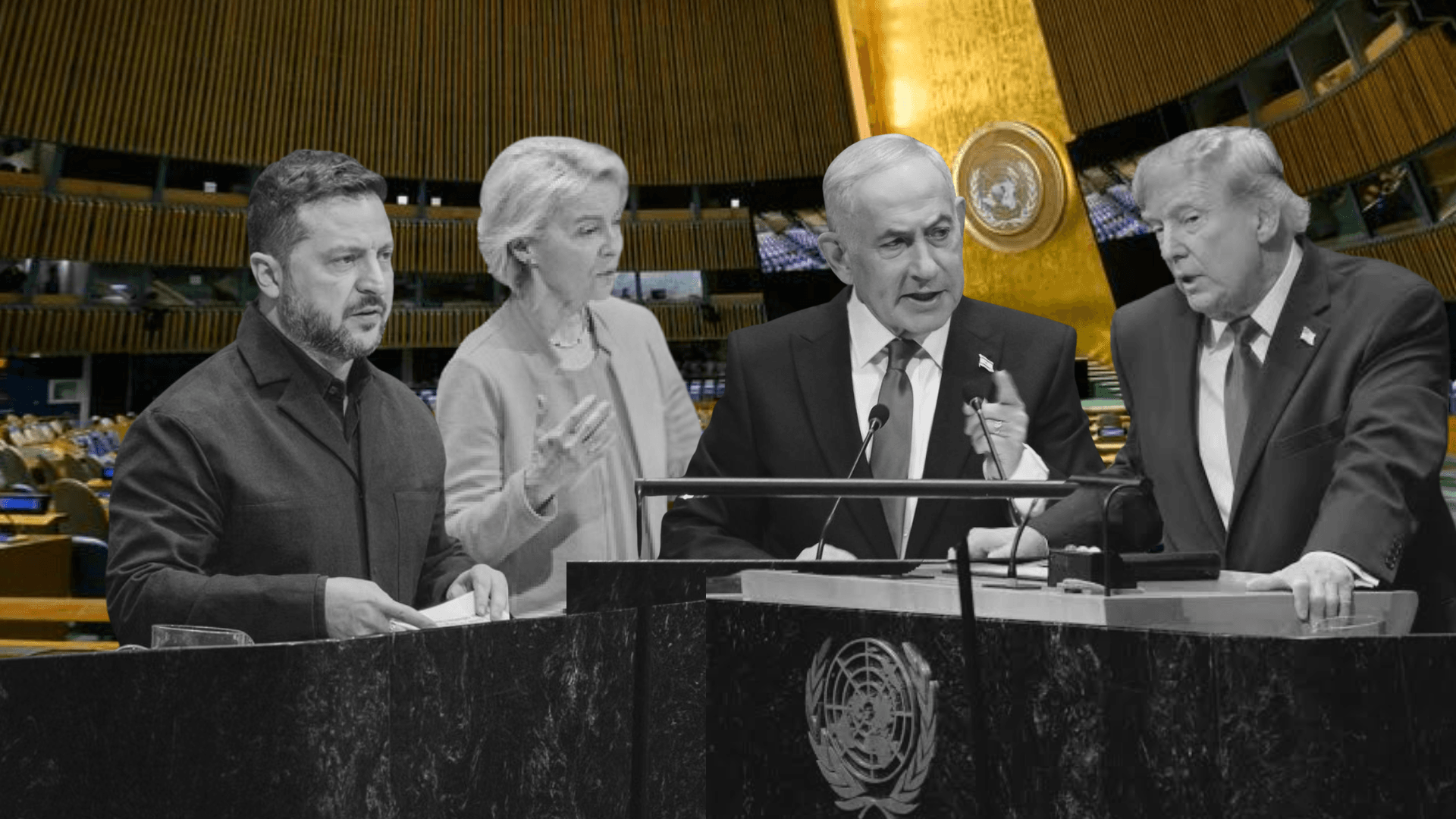
Earlier this week, the European Commission unveiled its plan to impose sanctions on Israel due to the humanitarian situation in Gaza. The implications are far-reaching, affecting not only Israel, but also Europe and its security. Let’s dive into it.
A Misguided Approach: Europe and Israel
In recent days, tensions between Europe and Israel have escalated, driven by the intensifying conflict in Gaza and the European Commission’s proposal for punitive measures. The Commission has proposed suspending certain trade-related provisions of the EU-Israel Association Agreement — a step that could reinstate tariffs on Israeli exports worth roughly €5.8 billion annually. While significant in symbolic terms, the economic disruption this could cause is uneven: key sectors of the Israeli economy, particularly technology, defence-related manufacturing and agricultural exports, are unlikely to be affected.
The Commission has also suggested targeted sanctions against specific Israeli officials and entities, notably National Security Minister Itamar Ben-Gvir, Finance Minister Bezalel Smotrich, certain Israeli settlers and affiliated entities, alongside ten senior Hamas leaders. These measures, which include asset freezes and travel restrictions, signal a level of political censure that Brussels has historically avoided in relations with an ally. Yet, the practical likelihood of these measures being implemented remains low. Influential member states, including Germany, Italy, Hungary and the Czech Republic, have expressed strong reservations, making it unluckily to find unanimity.
The Commission’s proposals nonetheless constitute a disruptive political development because, for the first time, the European Union is seriously considering punitive measures against Israel — not against an adversary, but against a historic ally.
The discussion on economic or trade restrictions serves as a representative example. While some measures enjoy support in public opinion, the reality of the strategic and technological relationship reduces the potential impact on Israel to almost nothing. Israel does not depend on Europe for its economic or security needs; rather, Europe benefits greatly from Israeli technology and innovation. Israeli exports to EU countries amount to nearly €6.8 billion, compared with EU exports to Israel of around €92 million — a one-to-seventy ratio.
To put this into numbers: Germany alone in the past year has imported from Israel an amount of goods worth €4 billion and sold to Israel only €326.5 million worth of goods. Romania has just bought the SPYDER anti-aircraft defence system from Israel for a value of €2.1 billion, while selling only €59 million.
Historical evidence underscores a critical lesson about the efficacy of sanctions: efforts to isolate technologically advanced and globally integrated states, such as Russia, can be systematically circumvented. In today’s interconnected economy, mechanisms like alternative trade routes, financial networks and third-party intermediaries make bypassing restrictions easier than ever. Applied to the EU-Israel context, this suggests that any punitive measures imposed by Brussels are unlikely to meaningfully constrain Israel’s activities while simultaneously exposing Europe’s access to key technological capabilities to substantial risk. Israel’s defence and technology sector ranks among the world’s most sophisticated, producing advanced drones, missile defence systems, intelligence-gathering tools and cyber security solutions that have no equivalent in Europe. Major Israeli strategic partners, such as the United States, rely on Israeli innovations to meet critical defence requirements. The proposed measures are more likely to harm Europe than Israel. Limiting access to Israeli technology could weaken European security in an increasingly unstable international environment, from threats from Russia in Eastern Europe to the global war against terrorism.
Israel, for its part, has already demonstrated its ability to maintain resilience and self-sufficiency, even under international pressure. Israel’s Prime Minister Benjamin Netanyahu himself has recently emphasised the importance of being “self-sufficient, at the limits of autarky,” highlighting Israel’s economic and industrial strength.
From a European point of view, it is important to remember that cutting back on tech and defence collaboration might have some downsides, considering that the EU-Israeli partnership has helped to keep things stable and secure in the region and fostered long-term collaboration. Maintaining a cooperative relationship means finding a balance between European strategic, tech and security goals, especially since Israel is a key player in the Middle East. For Europe, the big question is whether to tweak our policies to keep this engagement going.