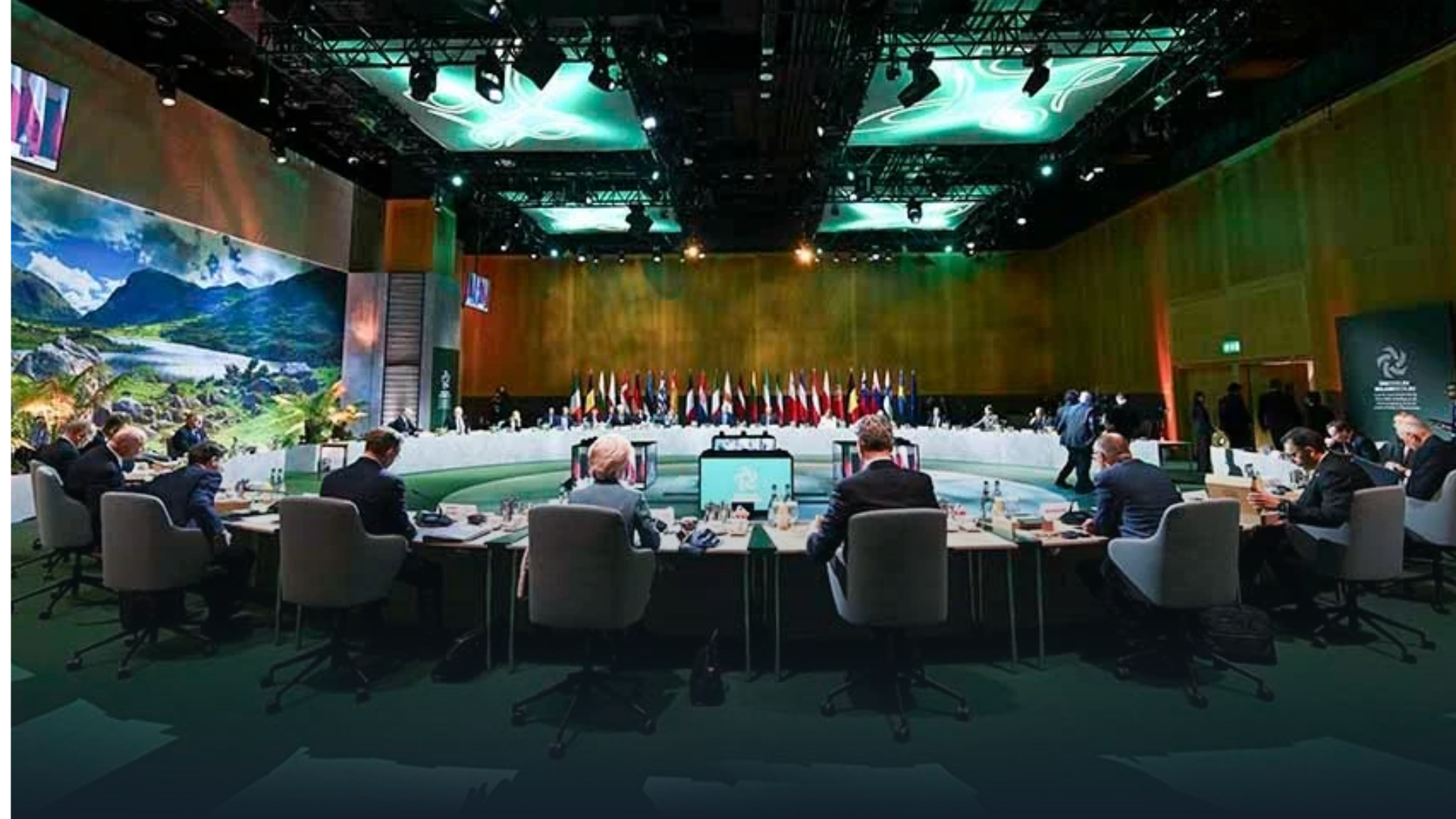
The informal European Council meeting in Dublin on 13 November could be marked as a significant moment in the evolution of the European debate on competitiveness.
For the first time, EU leaders held a strategic discussion dedicated to artificial intelligence, with the participation of Arthur Mensch, CEO of Mistral AI, and Geoffrey Hinton, Nobel Prize laureate.
The discussions focused on Europe’s position in the global AI race, the investment needed to develop its technological capabilities and the wider consequences of AI for the economy and society. What made the meeting interesting was the change in priorities behind the discussion. European leaders are increasingly moving away from the idea that Europe’s digital leadership should be built primarily through regulation. The focus is now on industrial capacity, private investment, energy costs, infrastructure, and the ability of European companies to compete internationally.
The discussion also fits into the broader direction of the Commission’s 2027 Work Programme, presented on 4 November, which places competitiveness, simplification and the completion of the Single Market among its main priorities.
Artificial Intelligence and the Competitiveness Gap
The participation of Arthur Mensch was particularly relevant. Mistral represents one of the few European attempts to compete in the development of advanced AI models, in a market still dominated by American and Chinese companies. Its experience reflects a wider problem for European technology businesses: access to capital, computing infrastructure and affordable energy remains considerably more difficult than in competing markets.
European leaders discussed the need to mobilise public and private investment, strengthen European capabilities across the AI value chain, and reduce dependence on foreign providers. The adoption of AI across manufacturing, healthcare, transport, and public administration was also discussed as an opportunity to improve productivity.
However, Europe’s objective should not necessarily be to replicate the American technology ecosystem. Rather, it should be to establish the conditions in which European companies can develop, attract investment and scale up, without being held back by fragmented markets, limited access to capital, and high operating costs. It needs to create an environment in which European companies can develop, attract investment and scale up without being constrained by fragmented markets, limited access to capital and high operating costs. The proposed European Competitiveness Fund, the Savings and Investments Union and the 28th regime could contribute to this objective, provided they translate into tangible improvements for businesses.
The 2027 Commission Work Programme: A Shift in Economic Priorities
The Commission’s 2027 Work Programme provides a clearer indication of where the political debate is heading. The document includes 23 key initiatives, 10 simplification initiatives, 18 proposals for withdrawal and 14 proposals for repeal. Its emphasis is on reducing administrative burdens, addressing barriers within the Single Market and improving the conditions for European businesses.
Several initiatives deserve attention: the proposed Digital Transformation Package, expected in the second quarter of 2027, will combine simplification measures with provisions on copyright. The Commission also plans a Bank Competitiveness and Simplification Package, faster permitting procedures, measures to address market segmentation and a post-2030 energy framework and simplification package.
However, there is still a gap between political commitments and implementation. Simplification has become a recurring priority for this Commission, but businesses continue to face overlapping reporting obligations, complex compliance requirements and differences in national implementation. There is also an inherent contradiction in promising deregulation while continuing to expand the legislative agenda across multiple policy areas. The Digital Transformation Package will be an important test of the Commission’s willingness to reconsider existing rules where they create unnecessary obstacles to innovation and the same applies to the implementation of the AI Act and the ongoing Digital Omnibus discussions.
Driving Industrial Competitiveness
For years, the EU has treated regulation as one of its main instruments for shaping markets and influencing international standards. This has produced important results in areas such as data protection, digital markets and AI governance, but it has not translated into comparable industrial leadership.
The United States has developed some of the world’s largest technology companies, while China has invested heavily in industrial capabilities and technological infrastructure. Europe, meanwhile, has concentrated much of its political attention on defining the rules governing these markets. Regulation remains necessary, but it cannot replace investment, innovation and economic growth. European companies need access to capital, infrastructure and a regulatory environment that allows them to compete internationally. The Commission appears increasingly aware of this, although changing the direction of European economic policy will require more than new packages and political declarations.
Dublin and the 2027 Work Programme suggest that the European debate is moving in a different direction, with greater attention to business conditions, investment, and industrial development. Europe does not need to abandon its regulatory model, but it needs to recognise that regulation alone cannot generate competitiveness. After years of prioritising rules and compliance, the focus should now be on creating the conditions for businesses to innovate, invest and grow. That would be a more meaningful definition of European strategic autonomy.
Image Source: European Council Website