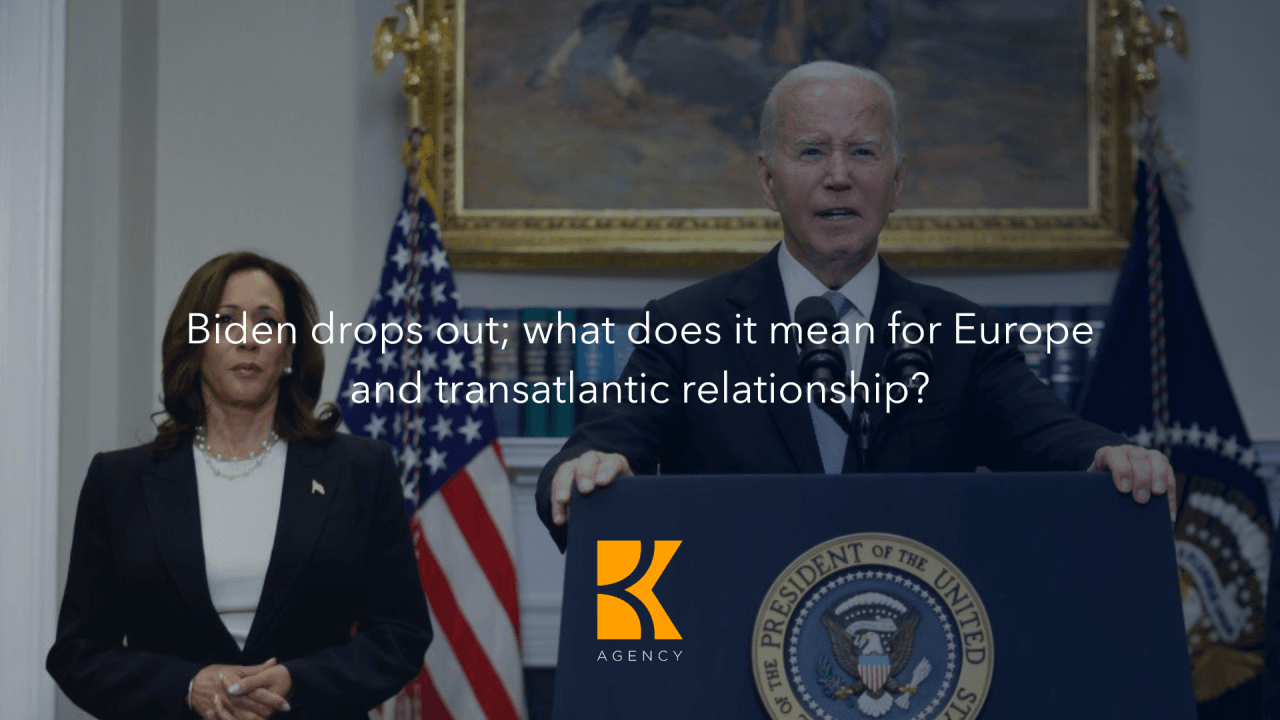
On Sunday, July 21st, 2024, President Biden made an unprecedented decision to officially withdraw from the presidential race and endorse his vice president, Kamala Harris. This move has not only redirected attention to the Democratic Party in the U.S. but has also left President Trump overshadowed until the Democratic convention in August. Additionally, for the first time in history, the delegates originally elected to vote for Biden can now choose any candidate.
The implications of Biden’s move on Europe and the transatlantic relationship are significant. Vice President Kamala Harris has had limited involvement in the transatlantic partnership despite visiting Europe approximately 12 times over the past four years. Her engagements in trade, defense, and technology-related issues have been minimal and raise questions about her potential stance on these matters if elected. However, she has strongly supported Ukraine and is committed to upholding the U.S. as a global leader in democracy. Nonetheless, her positions on technological standards and trade remain uncertain.
The strategic partnership between Europe and the U.S. is crucial. Yet, there is a prevalent perception among many Americans that their country is being unfairly treated by its trading partners, including Europe. This sentiment is fueled by Europe’s growing surplus in goods trade with the U.S., and just in the first four years of 2024 the import from the EU has doubled the US exports to Europe. Simultaneously, the European Union has pursued legislative measures targeting major American corporations in the energy and tech sectors. According to a recent poll by pewresearch, 55% of Americans believe that having a fair and good relationship with Germany (the biggest European Economy) is important, dropping to just 52% regarding the entire European Union.
As President Biden concludes his term, he will have the opportunity to further strengthen the transatlantic relationship. However, it is essential for European policymakers and businesses to consider that regardless of the election outcome – whether it is Trump or Harris – addressing the American perception of transatlantic trade will be a priority. This will lead to a fundamental shift in the narrative surrounding the US-EU relationship.
The future of the transatlantic relationship will be shaped in the coming months, and it is incumbent upon European stakeholders to demonstrate to Americans that they remain strategic and reliable partners. Their ability to achieve this will have a notable impact on the relationship between the two continents.