As Donald Trump wins Presidency, is Europe losing on its future in tech?
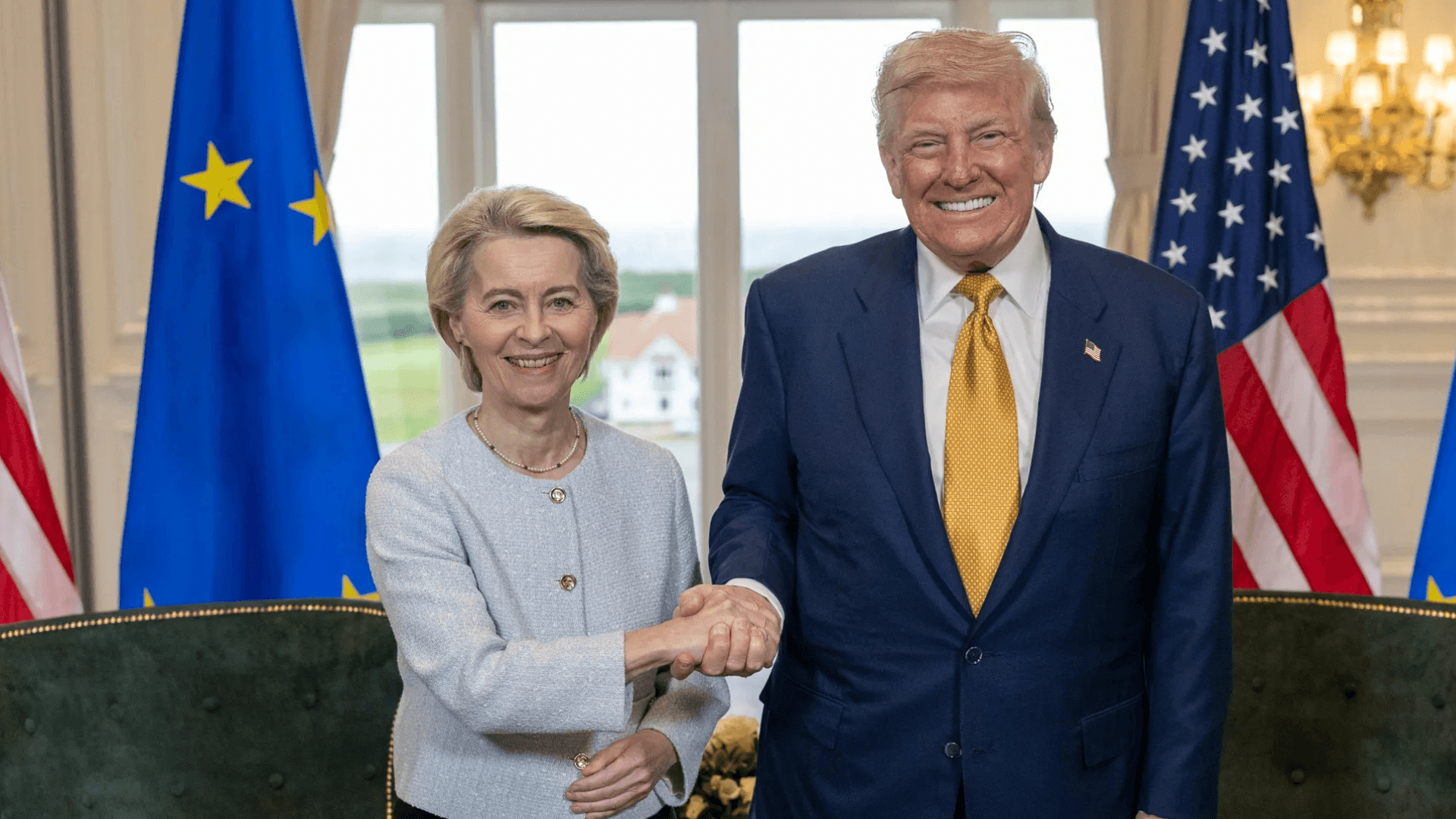
The global elections super-cycle is drawing to a close, with one of its most impactful moments potentially being Donald Trump’s election as the 47th President of the United States, securing over 300 electoral votes. Although EU leaders, including European Commission President Ursula von der Leyen, have responded diplomatically to Trump’s re-election, there is an underlying concern in Brussels. The pressing question is: what might another four years of a Republican presidency mean for the EU?
Until 2015, the Republican Party was the party of free trade agreements, and this was quite significantly visible when President Obama was able to start the TTIP discussion thanks to the Republican Party’s votes in Congress.
This dramatically changed with Trump’s first administration.
We all remember that one of the first actions of the initial Trump administration was to impose tariffs on certain European products, particularly aluminum and steel, and products that derive from them. Early in his term, the Biden administration paused these tariffs on European goods but never repealed the regulations, meaning Trump could easily reinstate them when he returns to office.
When it comes to EU-US trade relations, a new republican administration might attempt to renegotiate existing trade agreements with European countries to secure terms more favorable to the U.S. This could result in even higher tariffs or new trade barriers, affecting industries on both sides of the Atlantic.
If protectionist policies are reintroduced, the European Union may struggle to maintain a balanced trade relationship with the U.S., potentially impacting sectors such as automotive, agriculture, and technology. Technology is one area where Europe needs to decide on its policy direction the soonest.
Over the past four years, the European Union has implemented several new digital regulatory acts, specifically the Digital Markets Act, the Digital Services Act, and the AI Act, aiming to set a new standard for technological innovation. These policies have significantly affected American companies and are clashing with the Republican agenda, which advocates for deregulation in tech, data privacy, and healthcare.
Despite criticism coming from the EU regulators, the deregulation approach promoted by Trump and his supporters, especially Elon Musk, could create opportunities for U.S. businesses. However, it may also lead to regulatory divergence from European standards, complicating transatlantic business operations.
Additionally, the Republican party program emphasizes on the need for stronger IP protection in trade agreements, particularly in copyright and pharmaceuticals. In contrast, over the past few years the EU has focused on lowering IP barriers to promote a noble goal of increasing access to medicine and content for consumers and patients and reduced R&D investment in Europe. Stronger IP protection could benefit tech and pharmaceutical companies by safeguarding their innovations. However, Europe needs to reform certain laws quickly, specifically the General Pharmaceutical Legislation and the AI Act, which aim to ease IP restrictions.
Is a new Trump administration necessarily bad for Europe?
In an era of rapid digital transformation and geopolitical uncertainty, preserving and building on the €1.2 trillion transatlantic alliance is crucial for shared prosperity and security. In 2021, Biden Administration together with the EU Commission launched a platform to discuss EU-US tech and trade issues, the Tech and Trade Council. While many people criticize TTC, it has been the only platform where the two sides of the Atlantic have discussed transatlantic issues, from AI to green transition technology to submarine cables.
While the TTC may not survive, Europe and the U.S. should continue their digital collaboration. However, this will require many changes for EU counterparts, including reviewing policies that hinder transatlantic business and committing to a unified approach to their relations with the U.S. if we want to foster a genuine transatlantic dialogue on trade and technology.
If Europe wants to remain competitive with both the U.S. and China over the next four years, it must be prepared to adapt. But is Europe ready to change, or will it fall back into a passive role? History suggests European leaders often lean toward the latter, but we hope this time will be different.