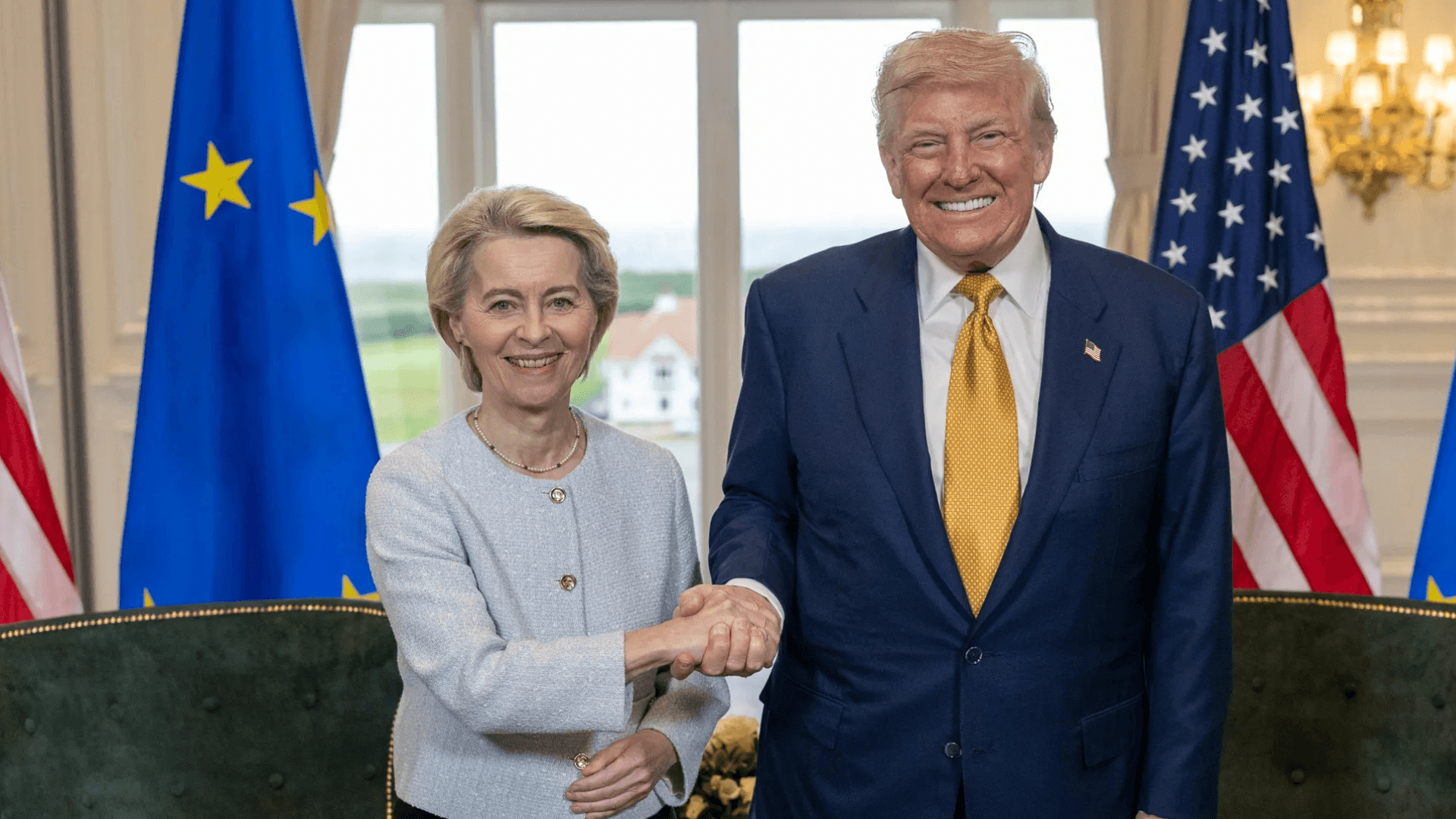
On July 18th, Ursula von der Leyen received the endorsement of the European Parliament for a second term as President of the European Commission. She is now responsible for forming her principal team of commissioners, one from each EU member state. These commissioners, comparable to national government ministers, carry out specific policy areas such as trade, migration, or budget management.
Von der Leyen has the authority to establish and assign commissioner roles, with plans to introduce new ones, including defence and housing. Member states are obligated to propose candidates for these positions, and von der Leyen has continued requesting both male and female nominees from each country to promote gender parity.
Several candidates have been prematurely revealed despite her call for nominations by the end of August. Many countries have overlooked the gender balance initiative, nominating mainly male candidates.
While von der Leyen’s recommendations are not binding, they offer her a wider selection for a gender-balanced Commission and more influence over the candidate selection process.
Sixteen of the EU’s 27 member states have already revealed their candidates, with only male nominees from nine states. The complete list of nominees will be presented to the European Parliament in the fall, where they will undergo scrutiny by specialized committees before a collective approval vote by the MEPs.
Let’s dive deep into who the candidates are.
Austria: The Austrian People’s Party (ÖVP), Finance Minister Magnus Brunner is the official nominee for the new commission.
Belgium: After the June federal elections, Belgium is negotiating a government formation, likely comprising five parties. The EU commissioner’s role is expected to be decided during these discussions. Having claimed the premiership, the main coalition party, the New Flemish Alliance (N-VA), may pass the EU commissioner role to a coalition partner, possibly the Reformist Movement (MR). MR’s nominee is the incumbent, Didier Reynders.
Bulgaria: Political chaos following a failed minority government attempt by the GERB party has postponed EU commissioner discussions. Iliana Ivanova, the current commissioner for innovation, research, culture, and education, might be reappointed due to the instability in the country.
Croatia: Dubravka Šuica, the current Commission Vice-President, is expected to retain her position. She opted to continue as the commissioner for Democracy and Demography over serving as an MEP post-June elections.
Cyprus: The search for a new commissioner is underway as Stella Kyriakides has decided not to return. She served as Commissioner for Health for the past five years, promoting very controversial legislation, such as the General Pharma Legislation and the ban of flavors on Heat Not Burn tobacco products. The candidate has yet to be announced.
Czechia: Prime Minister Petr Fiala has confirmed Jozef Síkela, the Minister of Industry and Trade, as the Czech nominee. During the Czech presidency, Síkela is recognized in Brussels for his pivotal role in securing a gas price cap. He vowed to hold as many Energy Council meetings as needed to decrease reliance on Russian energy.
Denmark: The Danish candidate for commissioner remains unconfirmed, with limited information available.
Estonia: The European Council has nominated Kaja Kallas, the Prime Minister, to become the EU’s High Representative for Foreign Affairs and Security Policy. During her tenure, her strong stance against Russia’s actions in Ukraine and advocacy for sanctions and military aid have been notable.
Finland: Prime Minister Petteri Orpo confirmed Finland’s choice for Commissioner, Henna Virkkunen. Virkkunen, an MEP since 2014, has held various government positions, including Minister of Education, Public Administration, and Transport. While security is a key focus, there is also a desire for a portfolio that enhances competitiveness, reflecting Virkkunen’s involvement in transport, energy, and digital issues in the European Parliament.
France: In a letter addressed to President Ursula von der Leyen, President Emmanuel Macron expressed the intention for Thierry Breton to uphold his role as France’s commissioner. However, the upcoming appointment of a new prime minister following the Olympics may impact this decision. Breton has been the Internal Market commissioner since 2019 and occasionally clashes with von der Leyen.
Germany: Ursula von der Leyen has been officially confirmed by EU leaders and the European Parliament to serve a second term as President of the European Commission.
Greece: On August 1st, Greek Prime Minister Kyriakos Mitsotakis informed the European Commission offices that the country’s candidate is the central Macedonia governor, Apostolos Tzitzikostas.
Hungary: Prime Minister Viktor Orbán intends to nominate Oliver Várhelyi for another term as Hungary’s EU Commissioner.
Ireland: Michael McGrath, former Minister for Finance and Public Expenditure, has been nominated as Ireland’s representative. McGrath played a key role in establishing Ireland’s sovereign wealth fund, which has been utilized for various socioeconomic purposes, including the subsidization of college tuition, energy costs, and childcare expenses.
Italy: Discussions on Italy’s choice for the next commissioner are ongoing, with names like former MEP Raffaele Fitto and Secret Service Director Elisabetta Belloni being considered. Prime Minister Meloni indicated a decision will be made by the end of August.
Latvia: Valdis Dombrovskis, the current Commission Vice-President overseeing trade and economics, will continue representing Latvia in Brussels.
Lithuania: Foreign Minister Gabrielius Landsbergis is likely to be Lithuania’s nominee. He could potentially aim for a portfolio in foreign policy, such as enlargement or defense. Manfred Weber, the EPP group leader, supports his candidacy.
Luxembourg: Christophe Hansen, an MEP, is poised to succeed Nicolas Schmit as Luxembourg’s Commissioner for Employment and Social Affairs by the coalition agreement between the CSV and DP parties.
Malta: Glenn Micallef, former chief of staff to the Prime Minister, has been confirmed as Malta’s choice for the European Commission, marking the first non-politician to take on the role.
Netherlands: Prime Minister Dick Schoof has chosen to reappoint Wopke Hoekstra as the Dutch Commissioner due to his strong candidacy for a significant EU Commission portfolio.
Poland: The official candidate for Poland’s EU Commissioner has yet to be announced.
Portugal: Miguel Poiares Maduro, a member of the center-right PSD party and former regional development minister, is set to be Portugal’s nominee for the European Commission.
Romania: Due to political instability, Romania has not yet proposed a candidate for the European Commission.
Slovakia: President Peter Pellegrini has confirmed Maroš Šefčovič for a fourth term as Slovakia’s commissioner.
Slovenia: Tomaž Vesel, the former president of the National Court of Audit, has been nominated by Prime Minister Robert Golob as Slovenia’s candidate.
Spain: Teresa Ribera, a prominent minister with the ecologic transition portfolio in Pedro Sánchez’s government, is Spain’s official nominee for the upcoming commission.
Sweden: Jessika Roswall, a recent minister for EU affairs and Nordic cooperation and a law graduate, has been announced as Sweden’s first center-right EU commissioner. Her parliamentary work focused on tax and consumer policy.
While the last countries discuss and propose the last names, the European Parliament is ready to vet each one. Will they accept all of them or reject some? Notably, the French Commissioner Breton and the Hungarian Commissioner Várhelyi have had many debates and challenges with MEPs in the past few years, with the latter calling Members of the European Parliament “idiots.” Will the parliament members forget and let them keep their jobs?