Executive Summary
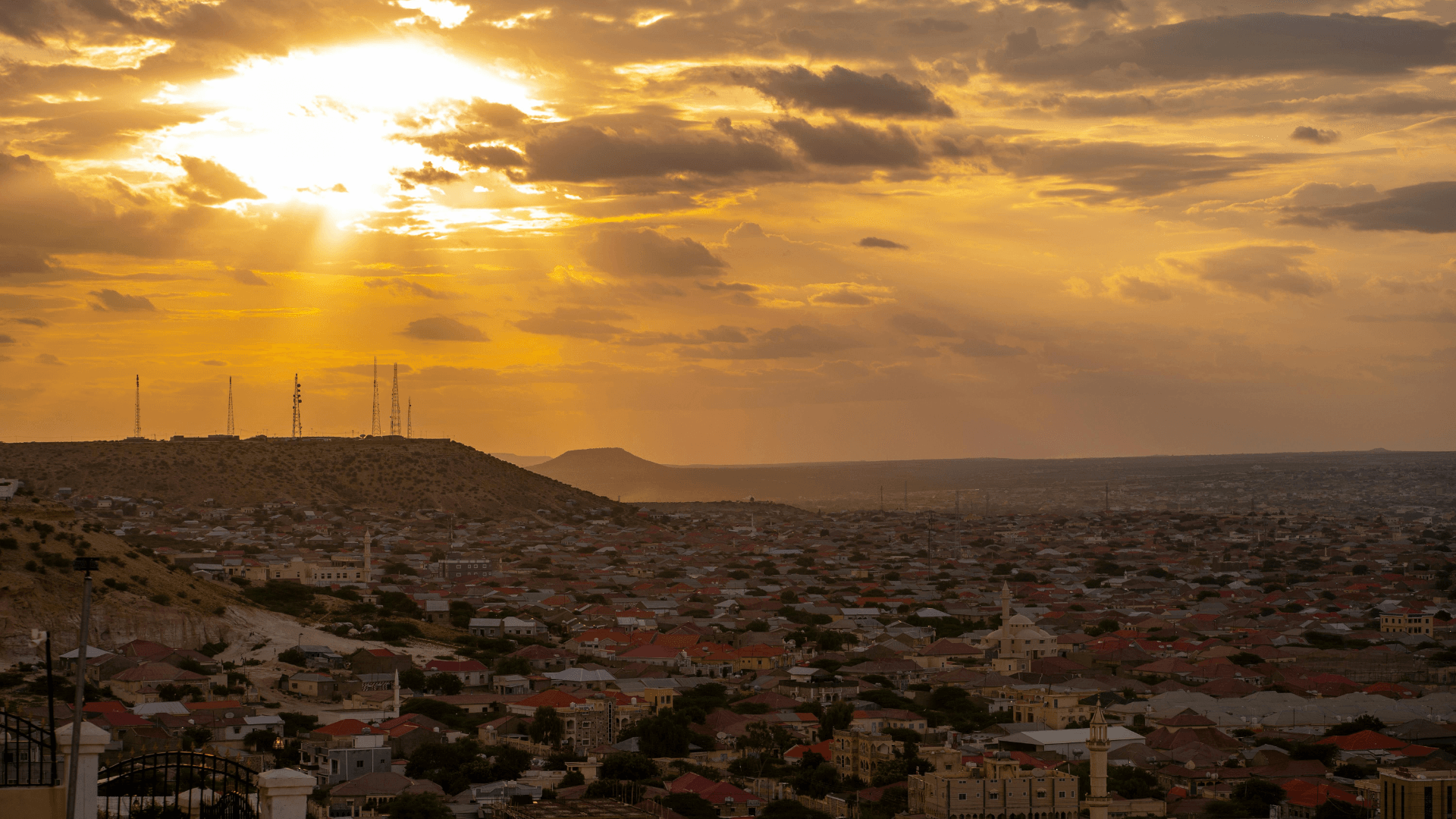
On December 26, 2025, the State of Israel executed a diplomatic maneuver that fundamentally reordered the geopolitical architecture of the Horn of Africa. By officially recognizing the Republic of Somaliland as a sovereign, independent nation, Israel became the first UN member state to break a 34-year diplomatic embargo that had kept the breakaway region in a state of international limbo since 1991.
The agreement, signed in a televised ceremony by Israeli Prime Minister Benjamin Netanyahu and newly elected Somaliland President Abdirahman Mohamed Abdullahi (Cirro), establishes full bilateral relations, including the exchange of ambassadors and a commitment to deep security cooperation. While Hargeisa celebrated with Israeli flags flying alongside its own, the move triggered a diplomatic firestorm.
Mogadishu immediately declared the recognition “null and void,” an act of “blunt aggression” against Somali sovereignty. Regional heavyweights – Egypt, Turkey, and the African Union (AU) – have condemned the move, fearing it provides a “secessionist blueprint” that could dismantle the colonial-era borders that hold the African continent together.
How Did We Get Here? The Long Road from 1991 to 2025
To understand why Israel took this leap in late 2025, one must look at the diverging paths of Somalia and Somaliland over the last three decades. Following the 1991 collapse of the Siad Barre regime, the former British Protectorate of Somaliland rescinded its 1960 union with the former Italian Somalia.
While Somalia descended into decades of civil war, state failure, and the rise of the Al-Shabaab insurgency, Somaliland quietly built a functioning democracy. It established its own currency, military, passport, and constitution. Despite this stability, the “One Somalia” policy – championed by the African Union and the United Nations – denied Somaliland formal status, fearing that recognizing it would open a Pandora’s Box of ethnic separatism across Africa.
The status quo began to fracture in early 2024 when Ethiopia signed a Memorandum of Understanding (MoU) with Somaliland to gain access to the Red Sea via the Port of Berbera in exchange for eventual recognition.
While that deal eventually stalled under immense international pressure, it proved that the “Red Sea Taboo” was no longer absolute. The true turning point arrived with the 2025 election of Abdirahman Mohamed Abdullahi, a veteran diplomat who campaigned on a platform of “pragmatic internationalism.”
Unlike his predecessors, Cirro sought to diversify Somaliland’s potential patrons, moving beyond regional neighbors to engage with global powers that had a direct stake in Red Sea security. By late 2025, against the backdrop of a reshaped Middle East and a relentless Houthi threat in the Red Sea, the interests of a democratically stable Hargeisa and a strategically isolated Jerusalem finally aligned.
Israel’s “Forward Base” Doctrine: Security and Strategy
Israel’s recognition is not a gesture of charity; it is a calculated “Forward Base” doctrine designed for the post-2023 security environment. Since the 2023 Gaza War, the Bab el-Mandeb strait has become a primary combat theater.
The Houthi rebels in Yemen have demonstrated the ability to effectively blockade Israeli-linked shipping, forcing vessels to reroute around the Cape of Good Hope at a massive economic cost. By recognizing Somaliland, Israel gains a permanent, sovereign partner on the southern shore of the Gulf of Aden.
This provides critical intelligence nodes – advanced SIGINT (Signals Intelligence) stations to monitor Houthi missile launches and Iranian naval movements – and potential naval access to the Port of Berbera, allowing the Israeli Navy to project power far beyond the Mediterranean.
Furthermore, Prime Minister Netanyahu framed the recognition as an extension of the “Abraham Accords.” By establishing ties with a moderate, Muslim-majority democracy in East Africa, Israel is signaling to the “Global South” that it is not a pariah state. It is an attempt to “leapfrog” the Arab-Israeli conflict by building a ring of friendly nations around the periphery of its enemies.
This “Periphery Doctrine 2.0” aims to counter-balance regional rivals like Turkey and Qatar, who maintain a heavy footprint in Mogadishu. By recognizing Somaliland, Israel creates a security counter-weight to Turkish influence and coordinates closely with the United Arab Emirates (UAE), which has already invested hundreds of millions of dollars in Berbera’s infrastructure.
Somaliland’s Motivation: Legitimacy and Survival
For Somaliland, recognition is an existential victory. Despite functioning as a state for over thirty years, its lack of international status blocked access to World Bank loans, IMF support, and direct foreign investment. Israel’s decision breaks a long-standing diplomatic taboo, signaling that engagement with Somaliland is no longer confined to informal or technical channels.
President Cirro views this as the first domino in a sequence that will eventually lead to Somaliland becoming Africa’s 56th state. The immediate benefits include Israeli technology transfers in agriculture and water management – critical for a region facing chronic drought – alongside security cooperation to modernize Somaliland’s coast guard and counter-terrorism units.
However, the move carries high risks. Al-Shabaab and other Islamist militant groups have already issued threats, framing the recognition as an “Israeli incursion” into Muslim lands. Hargeisa risks being drawn into the wider Middle East proxy war, potentially making its territory a target for Houthi or Iranian retaliation.
The government in Hargeisa is banking on the fact that the security umbrella provided by Israel and the UAE will outweigh the threats from Mogadishu and its allies. For Somaliland, the price of sovereignty is high, but the price of continued isolation was becoming unbearable.
Geopolitical Ramifications: A Fractured Horn
The “Recognition Shock” of late 2025 has created profound fault lines in global politics. The African Union’s “intangibility of borders” principle – established in 1964 – is the bedrock of continental peace. Israel’s unilateral move is seen by many African capitals as a “neo-colonial” intervention that validates fragmentation.
If Somaliland can be recognized, separatist movements in Ethiopia, Senegal, or Cameroon may feel emboldened to seek similar paths, leading to a rare moment of unity between the AU and the Arab League in their shared opposition to Israel’s move.
The Horn of Africa is now the site of a high-stakes proxy competition. On one side stands a revisionist axis of Israel, the UAE, and Somaliland, prioritizing maritime security and the containment of political Islam. On the other side is a loyalist bloc of Somalia, Turkey, and Egypt, which views the Israeli presence as a direct threat to the “One Somalia” policy and their own regional influence.
Egypt, in particular, is concerned that an independent Somaliland closely aligned with Ethiopia and Israel could jeopardize its interests in the Nile and the Red Sea. Meanwhile, the Houthis have explicitly designated Somaliland as a “military target,” threatening to bring the Yemeni civil war across the water.
The European Dilemma: Between Stability and Reality
For the European Union and the UK, Israel’s move is a diplomatic nightmare. Brussels has traditionally adhered to the AU’s position on preserving colonial borders to prevent ethnic fragmentation. Israel’s unilateral move disrupts this policy alignment.
The primary risk for Europe is the potential collapse of security cooperation between Somalia and its neighbors. If a destabilized Somalia weakens the fight against Al-Shabaab, the resulting security vacuum could increase migration flows toward Europe and provide a haven for international terrorism.
However, the EU also risks being sidelined if it maintains a rigid “One Somalia” policy while other powers engage Hargeisa as a sovereign entity. An Israeli-aligned Somaliland could enhance security in the Red Sea shipping lanes – a vital EU interest – but it could also inflame tensions with Turkey, complicating NATO-level cohesion.
The EU must now decide whether to maintain its principled stance on territorial integrity or move toward a more “transactional” engagement with Somaliland to protect its own maritime and security interests.
What Comes Next?
As we enter 2026, the situation remains highly fluid. The world is watching to see if a “second state” domino falls – potentially the UAE, Taiwan, or even a European outlier like Hungary. If another UN member state follows Israel’s lead, the diplomatic dam will truly break.
Furthermore, the security paradox looms large: will Israeli intelligence help Somaliland maintain its stability, or will the Israeli presence provide Al-Shabaab with a powerful new recruiting tool? The economic integration of the region will also be a key indicator; if Israeli technology transforms the Somaliland landscape, the “success story” of an independent Hargeisa may become too compelling for its neighbors to ignore.
Finally, the response from Washington will be decisive. While the Pentagon sees the value of Berbera for US AFRICOM operations, the State Department remains wary of undermining the Somali state.
The 2026 US midterm results and the evolving doctrine of the Trump administration will determine whether the United States eventually validates Israel’s gamble or continues to hold the line on Somali unity.