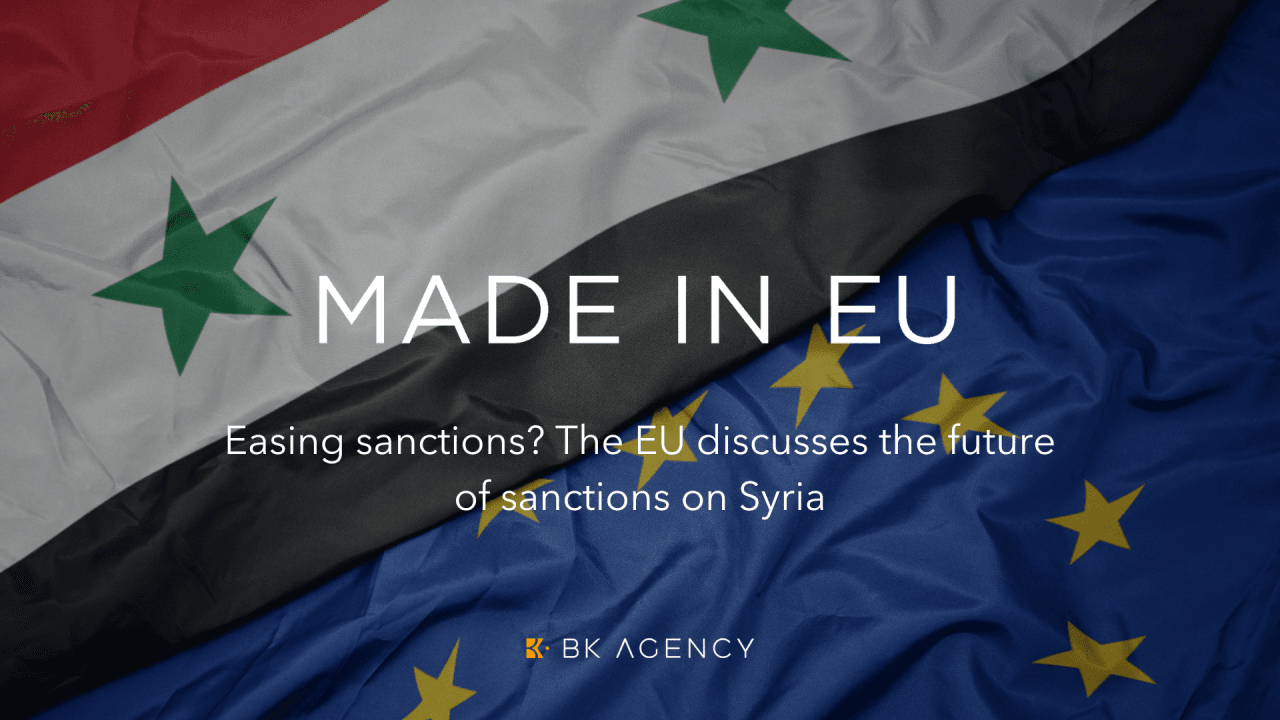
In the past weeks, the EU has been increasingly discussing the possibility of lifting sanctions on Syria. Last Monday during the Foreign Affairs Council meeting, the Ministers of Foreign Affairs of EU Member States discussed to gradually ease sanctions on Syria to support economic recovery without finding an agreement. While some Member States have warned caution on lifting sanctions on the new Hayat Tahrir al-Sham (HTS) leadership, others have instead been in favour of a gradual and reversible approach to lifting sanctions, dependent on changes by the new leadership.
The EU sanctions regime on Syria
In 2011, following the outbreak of the civil war in Syria and the Assad regime’s violent repression of civilians, the EU imposed a sanctions regime on Syria, targeting individuals supporting the regime and specific economic sectors through which the regime was profiting. The measures were consolidated in 2012 and 2013 to include restrictions on imports and exports (especially of Syrian oil exports), on the financing of enterprises and certain infrastructure projects and an arms embargo. Individuals responsible for repressions, supporters and beneficiaries were targeted through travel restrictions and asset freeze. Alongside the sanctions, the EU suspended all bilateral cooperation with Syria, for instance under the European Neighbourhood Policy Instrument and regional programmes, and halted loans and technical assistance through the European Investment Bank.
The Union was not the only one imposing such measures on the country, with the UK, the US and Canada also having similar regimes in place. The aim was to affect the operation and functioning of the repressive regime and halt the abuses while ensuring that the civilian population could still be supported through humanitarian assistance. The measures included, in fact, exceptions and did not impede the delivery of medicines or medical equipment or the healthcare system. This notwithstanding, research by the EU documented that sanctions were impacting humanitarian assistance, affecting the programmes and operations of humanitarian organisations in the country.
What would lifting the sanctions mean?
While the EU had repeatedly stressed its intention to continue imposing sanctions on Syria as long as repression continues, the swift fall of Assad’s regime in December has led to renewed discussions amongst top diplomats on a potential change in approach. Already at the end of 2024, the EU announced its intention to open its Delegation – functioning as an embassy – in the country and initiate contact with the new leadership, while monitoring the human rights situation and transition. Several EU member states had similarly decided to reopen their embassies in the country, with Italy being the first to do so in June last year.
The proponents for the gradual easing of sanctions have pointed out that this would bring immediate relief to the Syrian population, ensuring an end to shortages and positively impacting the staggering inflation in the country along with allowing for interactions with the new leaders to ensure that other actors such as Turkey, Qatar or Russia are not the only ones engaging with the country. The degree of financial relief brought about by easing certain measures would allow the country to start a process of recovery and stabilise the country.
Opponents have instead warned of easing the restrictions given the current leadership. HTS is still designated as a terrorist organisation by the UN Security Council and reports had previously highlighted extensive human rights abuses. Ahmed al-Sharaa (previously Abu Mohammed al-Jolani), who was nominated president for a ‘transitional period’ this week, has also come under scrutiny given his previous ties with al-Quaeda. Many fear that the current leadership – despite its initial commitments – will not be able to guarantee pluralism and the respect of human rights in a delicate transitional period.
Next steps
While the Foreign Affairs Council on Monday signalled a general agreement to ease sanctions on Syria, the details and timeline are still open. The current agreement ‘in principle’ would so far only apply to the Syrian economic sector. Speaking ahead of the meeting, French Foreign Minister Barrot signalled that these would mostly be measures affecting the energy and transport sectors and financial institutions. Sanctions would still apply to the country’s new de facto leader, Ahmed al-Sharaa, and his HTS group, and those linked to arms would continue to be implemented. High Representative Kallas also underlined that this would be a ‘reversible approach’, foreseeing that restrictions would be re-imposed in case of significant and continued human rights breaches.
The EU sanctions on Syria, which must be renewed annually, were most recently extended until 01 June 2025, after which the EU will have to vote on the continuation or potentially a complete termination of sanctions. Nonetheless, any lifting of sanctions seems to be closely linked to a strong conditionality that the human rights situation in the country improve, and on a demonstrated deep adherence of the new leadership to EU values and principles, including the respect of human and civil rights and a commitment to an inclusive democratic transition.
This will require the EU to strictly monitor the human rights and democratic situation in Syria, and to assess with great caution any developments. Working with humanitarian organisations in the country and human rights advocates should be a prime commitment of the EU to ensure that realistic and detailed information can determine any further steps in discussing easing sanctions.