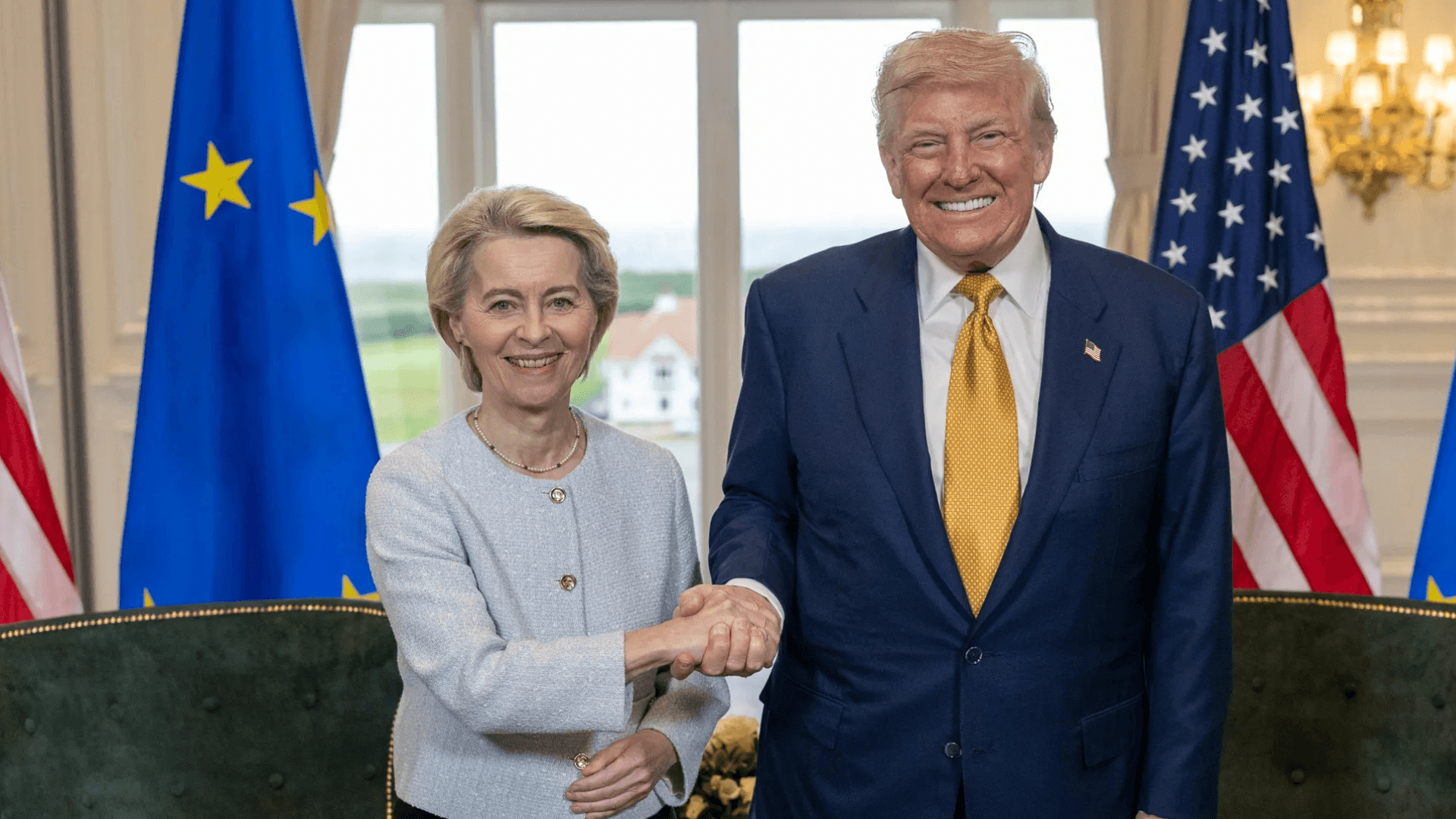
US Retrenchment and the “Dormant NATO”
The return of an “America First” foreign policy doctrine in the US creates a high probability that Washington will withdraw or significantly degrade its presence on NATO’s eastern flank in 2026.
Scenario: Partial Withdrawal
B&K Agency’s assessments suggest a scenario where the US reduces its footprint to naval and air support, withdrawing ground combat teams and leaving land defense entirely to European nations. This would create a “security gap” that the EU is currently ill-equipped to fill.
EU Policy Shift: Operationalising Autonomy:
- Strategic Autonomy: The loss of the automatic US security guarantee forces Brussels to accelerate “European Strategic Autonomy.” This moves from a theoretical concept to an operational necessity, including joint procurement of air-defense systems (e.g., expanding the European Sky Shield Initiative). According to the Centre for European Reform by 2026, the European pole of a multipolar world will increasingly be forced to assume responsibility for its own defense without relying on automatic US support.
- Budgetary Shock: To compensate for the US withdrawal, EU analysts warn that defense spending would need to rise well above the standard NATO targets. Critically, this refers to the new baseline established at the June 2025 NATO Summit in The Hague. While the 2% spending floor had been the standard for a decade, the alliance under intense pressure from the US administration adopted a new “Warfighting Readiness Target” of 5% of GDP by 2035. This new 5% metric is bifurcated:
- 3.5% allocated strictly to “Core Defense” (personnel, procurement, and R&D).
- 1.5% allocated to “Civil Resilience & Dual-Use Infrastructure” (cybersecurity, logistics rail lines, and energy hardening).
In the immediate context of 2026, European nations are scrambling to bridge the gap between their current ~2.1% average and this steep new trajectory. This will likely necessitate a revision of EU fiscal rules to exempt these specific defense investments from deficit calculations.
Impact on Europe
A significant US withdrawal from NATO’s eastern flank would fundamentally alter European security calculations, forcing rapid militarisation and a recalibration of the transatlantic partnership. This scenario represents the most acute challenge to European strategic autonomy in 2026.
US Military Intervention in Venezuela
While considered a lower probability than trade wars, the scenario of a US military intervention in Venezuela in 2026 is a “high impact” wildcard. By “high impact wildcard,” we refer to a low-probability event that, should it occur, would have disproportionately massive consequences on global energy markets and migration flows, catching most analysts unprepared. Tensions involving US policy shifts, regional drug interdiction efforts, and the breakdown of the Barbados Agreement could escalate into kinetic action.
Scenario Variations & Oil Market Impact:
B&K Agency’s outlines three potential intervention scales and their impact on Venezuelan oil output:
- Targeted Disruption Scenario: A short, contained campaign that avoids major infrastructure would likely cut output by 10-15 percent.
- Regional Escalation Scenario: Fighting extending into coastal oilfields and export terminals could drive a 15-25 percent fall in production and a 20-30 percent decline in exports.
- Comprehensive Conflict Scenario: A prolonged occupation would risk a 25-50 percent collapse in supply and a 30-60 percent reduction in exports.
Implications for the EU:
- Energy Price Spike: The removal of heavy crude from the market would tighten global supply. While the EU has diversified away from Russian oil, a global spike affects all indices. Estimates suggest this could raise EU energy prices by 10-20%. It is worth noting that this vulnerability exists despite Venezuelan oil having recently returned to the global market under the Biden administration’s easing of sanctions, which is a supply cushion that would be immediately removed.
- Refining Competition: US refineries, deprived of Venezuelan heavy crude, would compete aggressively for alternative heavy grades from the Middle East and Canada. This would drive up premiums that European refiners must also pay to secure similar grades.
- Migration Crisis: A conflict would trigger a massive refugee outflow. While primarily impacting the Americas, secondary flows would reach the EU’s outermost regions (e.g., the Canary Islands) and Spain, which is already home to a large Venezuelan diaspora.
- Diplomatic Fracture: The EU would face intense pressure to align with US sanctions or military actions. Given the EU’s emphasis on international law, this would create a diplomatic crisis, splitting the bloc between interventionist states (aligning with Washington) and those favoring non-intervention.
Impact on Europe
A Venezuela intervention would test European unity and reveal fissures regarding alignment with US military actions. It would also exacerbate energy price pressures and create a secondary migration challenge for southern EU members.
Latin America: The Mercosur Deal and China’s Regional Pivot
The EU-Mercosur trade agreement faces a decisive moment in early 2026. Ratification votes in national parliaments will determine if the deal survives.
Strategic Stakes:
For the EU, this is about more than beef and cars; it is about geopolitical diversification. Securing access to South America’s critical minerals (Lithium Triangle) and consumer markets (creating a market of 780 million people) is a vital hedge against China.
- Target: The deal targets €416 billion in trade.
- Failure Scenario: A failure to ratify would push Mercosur nations closer to Beijing, which is actively negotiating its own deals in the region.
Impact on Europe
The Mercosur deal’s fate in 2026 will signal the EU’s capacity to execute strategic diversification. Success would demonstrate Europe’s ability to build alternative trade relationships; failure would reinforce China’s gravitational pull over Latin America.
Read the full B&K Agency Global Outlook for 2026: