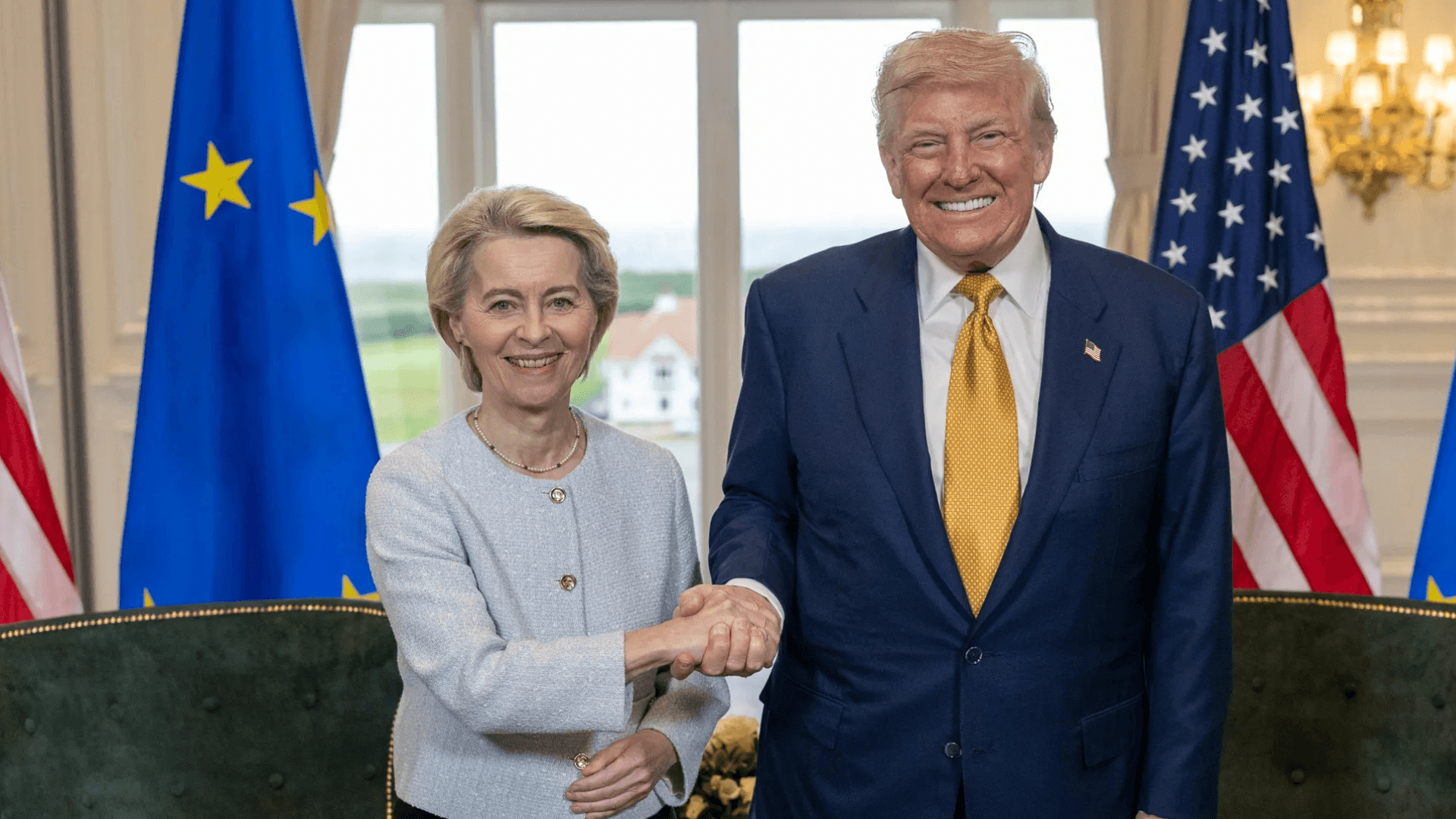
The year 2026 will not be remembered for a single shock, but for the moment when accumulated pressures finally force strategic decisions that Europe has deferred for more than a decade. The post-Cold War assumption that prosperity, security, and stability could be outsourced has expired. What replaces it is a far harsher operating environment in which trade, technology, energy, and defence are no longer separate policy silos, but instruments of power.
B&K Agency’s Global Outlook for 2026 assesses this moment as one of forced adaptation. The external pillars that underwrote European stability – the US security guarantee, cheap and predictable energy, and frictionless global trade – are simultaneously weakening. The result is a poly-crisis environment in which delay is no longer a viable strategy.
From Strategic Debate to Strategic Necessity
Several themes dominate the outlook.
First, European security. The Russia-Ukraine war is projected to enter a phase where the primary risk is not battlefield collapse but diplomatic imposition. A US-backed “28-point” peace framework would freeze the conflict, limit Ukraine’s armed forces, and permanently bar NATO membership. For Europe, the implication is stark: either accept a grey-zone settlement that embeds long-term instability on its eastern border, or assume the financial and military burden of sustaining Ukraine largely alone. Defence spending trajectories, fiscal rules, and the credibility of European deterrence are all set to be tested in 2026.
Second, the internal rebalancing of power within Europe. Poland is emerging as the indispensable land-power anchor of NATO’s eastern flank, with defence spending approaching 5 percent of GDP. This shift reflects strategic reality, but it also exposes fractures in European defence industrial policy, as national procurement choices increasingly bypass pan-European frameworks. Whether EU instruments such as SAFE can reconcile rearmament with fiscal sustainability will be decisive.
Third, geoeconomics replaces globalisation. Trade in 2026 is no longer about efficiency alone. The outlook anticipates tariff shocks, industrial protectionism, and intensified competition for markets as the US, China, and Europe weaponise access to capital, technology, and supply chains. For the EU, this creates a double bind: restricted access to the US market on one side, and increased dumping pressure from diverted Chinese exports on the other. Growth forecasts of 1.2 to 1.6 percent leave little margin for error.
Fourth, technology and resource sovereignty move from aspiration to constraint. A Taiwan contingency, even short of full conflict, would trigger what the report describes as a supply-chain “cardiac arrest” for European industry, given Taiwan’s dominance in advanced semiconductors. At the same time, the entry into force of CBAM, the AI Act compliance deadline, and intensifying competition over critical minerals will impose real economic costs that must be absorbed politically.
Finally, the world beyond Europe grows less permissive. From the Arctic’s militarisation to instability in the Balkans, the Sahel, and the Middle East, European policymakers face a widening arc of risk with diminishing US bandwidth. Engagement with non-aligned powers such as India and ASEAN will be essential, but fundamentally transactional. Strategic autonomy, where it exists, will have to be earned rather than declared.
The Strategic Bottom Line
The central conclusion of the 2026 Outlook is not alarmist, but unambiguous. Europe can no longer treat security, economic resilience, and technological sovereignty as long-term projects. They are immediate budgetary and political choices. Strategic autonomy is no longer a slogan; it is a cost structure.
Whether the EU can absorb that cost – financially, institutionally, and electorally – will determine its position in the emerging multipolar order.
Read the full B&K Agency Global Outlook for 2026: