Today, we look at the new ‘reciprocal’ tariffs announced by the Trump administration, their potential effect on the European Union – focusing on the steel and aluminium industries – and the European response.
‘Liberation Day’
On 2 April, dubbed ‘Liberation Day’, the Trump administration presented a series of reciprocal tariffs on imports in a move to free the US from reliance on foreign goods. In a statement on Wednesday afternoon, the US President announced a minimum tariff of 10% on most goods imported to the United States starting from 5 April. Several countries will face higher duties from 9 April, with tariffs on EU exports rising to 20%, Japan to 24%, and China to 34%.
Trump’s push for tariffs is driven by his long-standing criticism of global trade agreements, particularly European VAT policies and China’s trade practices. His administration claims that the new trade barriers will level the playing field, attract new manufacturing investment and generate revenue. According to the White House, the new duties should raise $100 billion in revenue annually. Critics argue that they risk isolating the US from key economic partners.
Economists predict that the tariffs will increase inflation and slow global economic growth. Goldman Sachs estimates that America’s year-on-year growth rate could decrease between 0.8 and 1.3 percentage points depending on the full extent of the tariffs. Additionally, Deutsche Bank warns that inflation could increase by 1.2 percentage points, pushing it above 3%. This has raised questions over how businesses and consumers will absorb the higher costs. Major corporations, from Tesla to consumer goods companies like JM Smucker Co., have expressed concerns over rising costs and the potential for retaliatory trade measures.
The Effect of Tariffs on the EU
The European Union will be particularly affected by the tariffs imposed by the US. One sector which is expected to suffer is the EU steel industry. The industry has seen a decline due to energy prices, global excess capacities and unfair competition. On 10 February, the Trump administration announced 25% tariffs on imports of steel and aluminium, as well as semi-finished, finished and derivative products. The European Commission estimated that the measures would affect over €26 billion worth of EU exports to the US and harm the industry by limiting access to the US market. In 2023, the EU exported €22.32 billion worth of products to the US, including €7.44 billion in steel and €14.88 billion in aluminium.
For many of the EU’s goals, steel and metals such as aluminium are crucial. Both are essential to the EU’s green transition due to their use in renewable energy infrastructure. Aluminium, for instance, is used in the manufacturing of wind turbines, solar photovoltaics (PVs), and energy storage technologies. The use of steel and aluminium in the aerospace, automotive, and defence industries also contributes to the EU’s strategic independence and competitiveness.
The EU Reaction
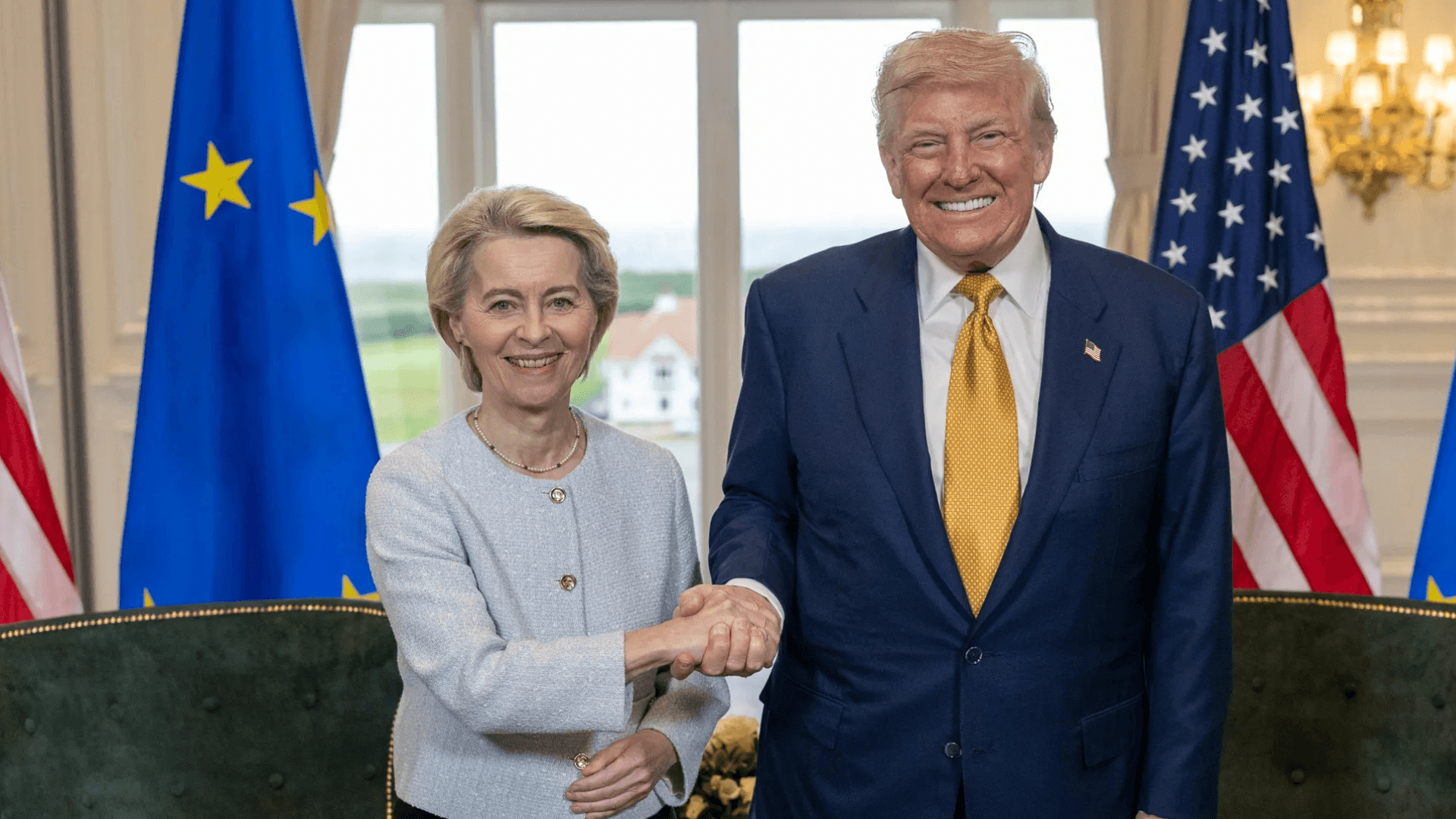
In a statement after Trump’s announcement, Commission President von der Leyen underlined that the EU is prepared to respond but would privilege dialogue. So far, the Commission has announced that it would re-instate the 25% levies on products such as tobacco, textile, and many iron or steel products that it had already introduced in 2018 and 2020 and temporarily suspended.
By mid-April, the Commission plans to present a new package of tariffs targeting €26 billion worth of goods exported by the US, including food, beverages, and industrial equipment. However, the negotiations on the final list of items that will be included under the new measures have been slow. Industries have requested the EU Commission to exempt products such as soy, timber and spirits, fearing market disruptions and price increases for consumers. Meanwhile, the governments of Italy, France and Ireland, have warned that imposing additional tariffs on the US would only lead to a vicious cycle and worsen the trade dispute.
The European Steel & Metal Action Plan
In the meantime, the EU is aiming to support its steel and aluminium industries. On Wednesday morning, the Commission presented its new European Steel & Metals Action Plan, which introduces measures to strengthen the sector’s competitiveness. The most notable response to the US tariffs is the decision to review and strengthen the EU’s provisional safeguard measure on steel imports (“steel safeguard”) and to introduce similar measures for aluminium. The steel safeguard establishes quotas for imports of various steel products. Imports exceeding these quotas are subject to a 25% levy. Nevertheless, during the debate on the Action Plan, many MEPs criticised the lack of clear funds to support the initiatives mentioned in the proposal and the lack of concrete short-term actions: Most of the proposals, in fact, are to be presented in late 2025 or 2026.
From dialogue to retaliation
Trump’s decision to impose ‘reciprocal tariffs’ is just the latest reminder that his administration puts US workers and companies first. While the administration expects substantial gains, the broader economic impact is still uncertain. This will be complicated by potential retaliatory measures. The EU’s resolve to engage in dialogue might be the best approach to avoid escalation into a trade war, although Trump’s willingness to negotiate remains unclear. If the dialogue fails, the EU must prove that it can respond with speed and determination to ensure the wellbeing of its citizens and the competitiveness of its industry. Now more than ever, policymakers must respond with concrete proposals to support the European economy.