After three weeks of uncertainty between rounds one and two of Portuguese presidential elections, a moderate candidate scored a win against his right-wing opponent, but what does that mean for the country and the Continent?
Portugal Chooses a Left-Leaning President – What’s Next?
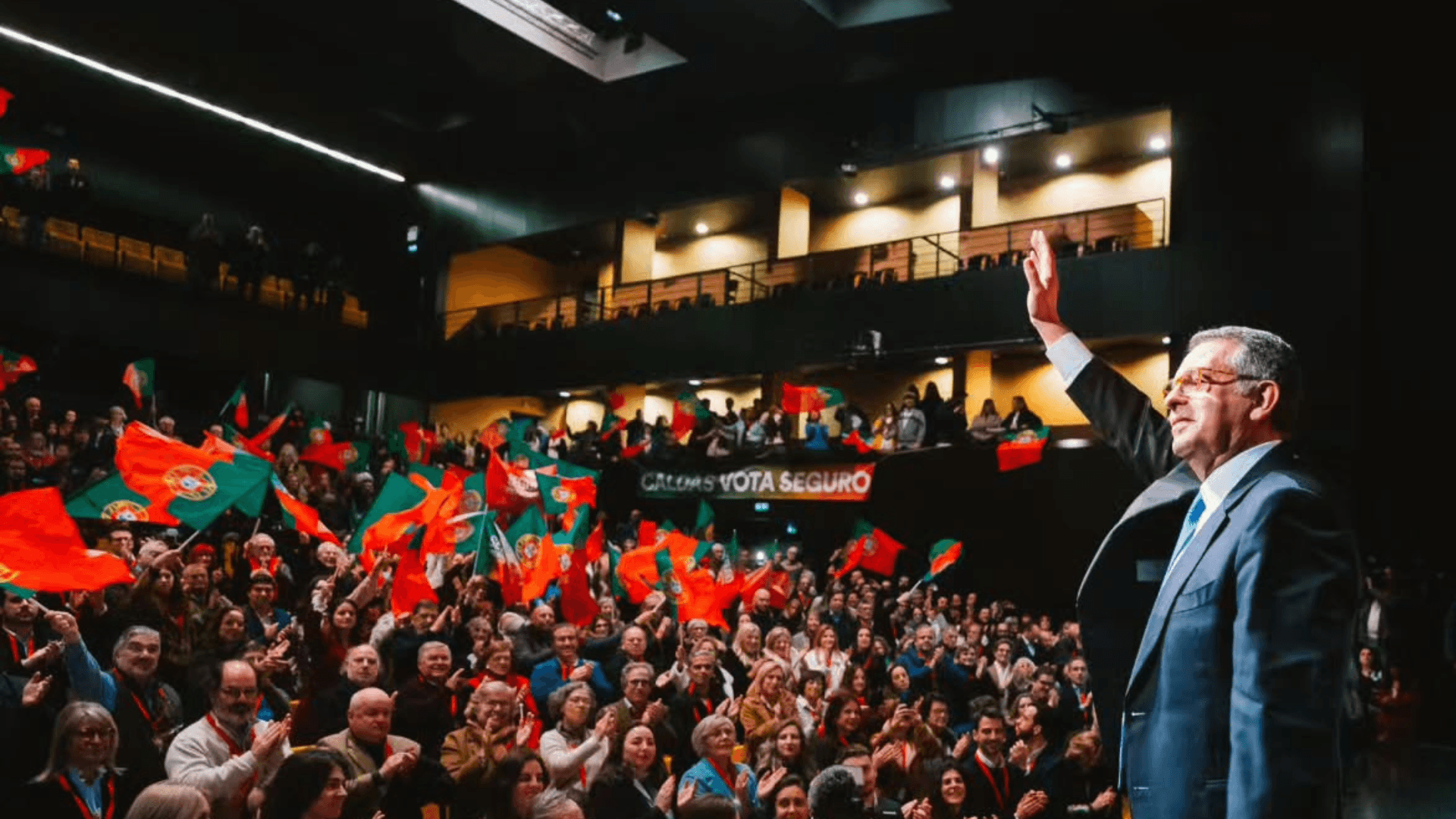
In the photo-finish of the second-round runoff on 8 February, Portugal has chosen a successor to the incumbent president Marcelo Rebelo de Sousa. António José Seguro, the former leader of the Socialist Party, secured a win with 66.8% of the vote, defeating André Ventura of the right-wing party Chega, who won 33.2%. Despite the logistical challenges posed by Storm Leonardo, this result represents the highest absolute vote count for any presidential candidate in Portuguese history.
The victory can be attributed to the number of centrist-oriented parties urging their voters to endorse Seguro in the period of three weeks between the first and the second round of elections. Many figures from the governing centrist-right Social Democratic Party (PSD) and liberal centrist politicians decided to showcase their support to the moderate candidate, eventually resulting in the landslide victory. Nonetheless, it is worth mentioning that Ventura still scored an impressive score, winning over the third of the electorate and sending a clear message to both domestic and foreign political actors: Chega will stay on the Portugal’s political playground as one of the most important factors in the country.
Portugal will now enter an interesting period. On the one hand, a moderate socialist will assume office in the following month, and on the other, the minority government is led by a moderate conservatives led by PSD’s Luís Montenegro. The minority government means that the PSD can’t pass laws (and even more importantly the national budget) alone, rather, it has to rely on convincing members of other parties, such as Chega or the Socialists, to vote with them on every given issue. This necessarily creates a sense of instability since the government could collapse if the parliament is unable to perform its duties.
In his victory speech, President-elect Seguro openly stated that he will not immediately use the power to dissolve parliament and trigger snap elections and that he will try to persevere national stability. This situation means that the country enters a period where two moderate politicians – Montenegro and Seguro – will have to compromise, cohabitate, and negotiate every move. If the PSD-led government tries to pass some controversial policies such as cutting social benefits or reducing public spending, Seguro will likely use his power to block or change them. This provides a dual reality for market actors. While the risk of immediate systemic collapse is not present, the pace of structural reform in the fields such as labor markets and tax policy will likely decelerate if the President exercises his veto to maintain a moderate social consensus.
Is It Time to Celebrate?
From his first day in office, one of the biggest challenges to Seguro’s presidency will be managing the fragmented political right. Ventura’s performance has shown that he is able to match the traditional leadership of the right-wing bloc, as his 33% vote share arguably grants him a stronger mandate to claim the leadership of the opposition than the governing centrist-right PSD. It will be interesting to see whether the Montenegro administration shifts toward more restrictive immigration and security policies to prevent further voter leakage to Chega.
On the European stage, Seguro’s victory is mostly welcomed. Brussels can expect Lisbon to remain a reliable partner in the Eurozone and a vocal advocate for the EU’s push toward strategic autonomy. Still, the domestic pressure from an empowered right-wing opposition means that Portugal’s support for common EU migration pacts may become more conditional, as Seguro will now have to deal a society that is increasingly polarised on the issues of border management.
Because of its history and language, Portugal is in a unique position. For the Portuguese-speaking world, particularly Brazil and Lusophonic African countries, this outcome means mobility agreements with countries such as Mozambique or Angola will stay in power, making it easier for the people and families from those parts of the world to come and work or study. Unlike his opponent’s policy of closing down the borders, Seguro believes that Portugal is better off with such cooperation. All of that means that Portugal will remain one of the main points of contact between the EU and Lusophone world, acting as a strategic intermediary.
President-elect Seguro will take office on March 9, and his first priority will be mediating the 2026 budget negotiations. While it is now more likely that radical systematic shifts in Portuguese policy will not happen, the underlying problems that are regarded as the hot topics in the Portuguese discourse (e.g. housing shortages and stagnant wages) remain unaddressed. If the centrist-left President and the centrist-right Prime Minister fail to deliver improvements in these areas which will be perceived as positive by common population, the technical centrist “union” that gathered around Seguro may face bigger challenges in the future.
Image source: Official Instagram account of António José Seguro, the president-elect of Portugal