In today’s newsletter, we analyse the EU-US trade deal and its cost for the European Union. Enjoy!
A strategic step or a costly compromise?
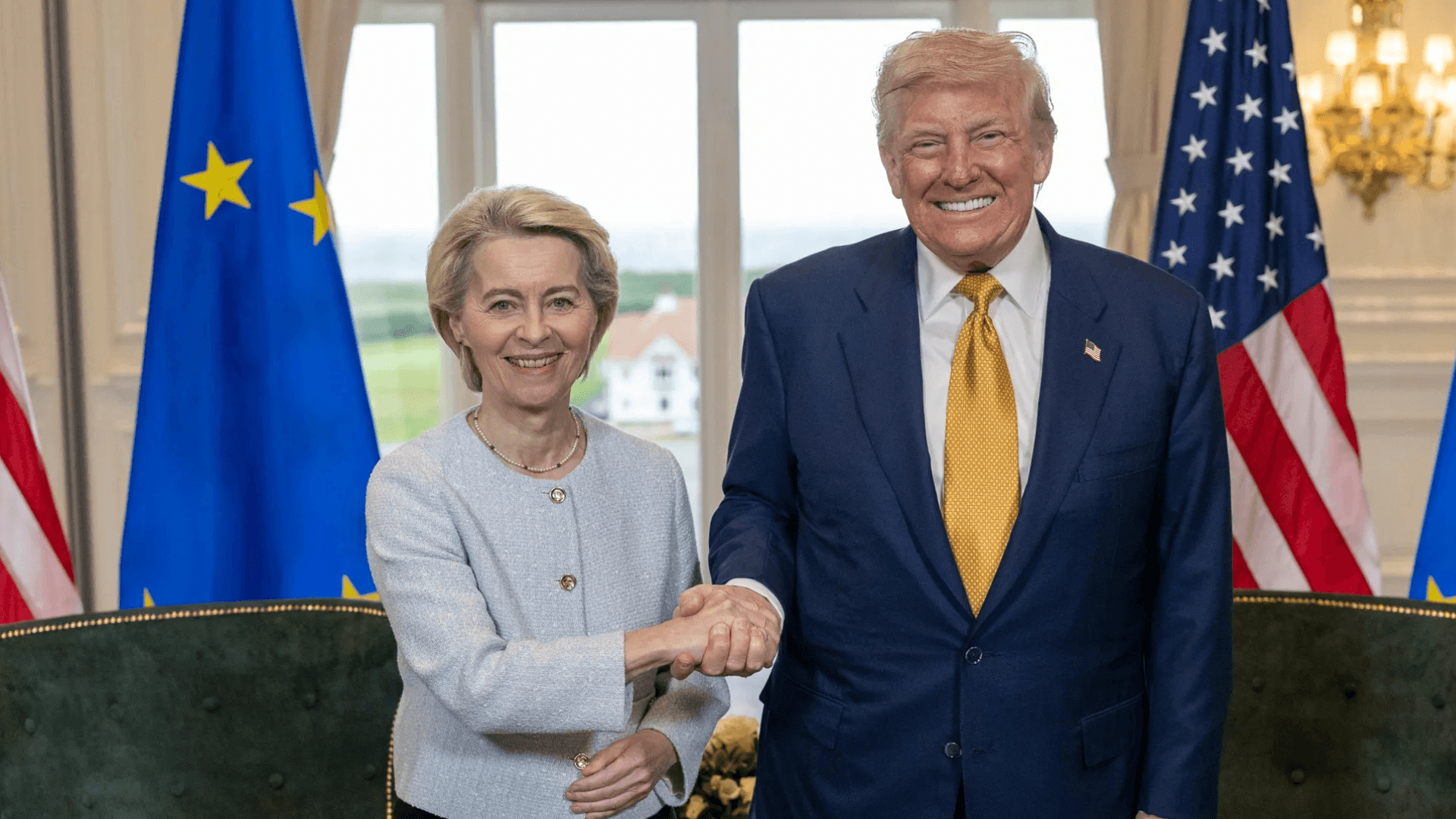
On Sunday, 26 July, the United States and the European Union reached a new trade arrangement. The average US tariff on European goods will rise to 15%, up from an average of just 4.5% last year. This represents a tenfold increase, and yet, after months of looming threats of blanket duties of 30% or even 50%, this agreement is being framed as a success.
In many ways, it is. It stabilises transatlantic relations — for now, at least. It avoids an all-out trade war. It also buys European exporters a bit of time. But let’s be clear: the deal is not a win for the European Union.
The average 15% tariff now applied to EU exports to the US is significant — historically so. These are levels we haven’t seen since the 1930s. While there are sectoral exemptions are still being negotiated, the overall effect is clear: European goods will be more expensive in the US and, unless producers slash margins or find new efficiencies, they will lose ground to American or third-country competitors.
What remains unclear — and dangerously so — is which specific products will be subject to zero tariffs and which will not. While both sides have issued optimistic political statements about ongoing “technical negotiations” and potential carveouts, no definitive list has been made public. This ambiguity leaves businesses in limbo, unable to plan pricing strategies, adjust supply chains or renegotiate contracts. For sectors operating on tight margins or with just-in-time logistics, this uncertainty alone can be damaging. According to both statements, the supply chains for aerospace, chips, certain pharmaceutical products and some agricultural products will be subject to 0 tariffs from on both sides of the Atlantic.
The economic theory is straightforward. Tariffs are paid at the border. Companies can either absorb the costs, split them with distributors, or pass it on to consumers. In reality, most firms will use a combination of all three strategies. But whatever the strategy, margins will be squeezed, and demand is likely to soften.
Despite the obvious downsides, this deal is preferable to chaos. Just a few months ago, President Trump was openly considering a flat 30% or 50% tariff on all European imports. The current agreement avoids that scenario and offers a degree of predictability for European businesses, which is crucial in a moment of already high global uncertainty.
Washington’s approach to trade has been transactional: starting with high tariffs, using carve-outs and reductions as leverage, and ultimately aiming for massive buy-American incentives.
On the other hand, the EU has promised to purchase $250 billion worth of US oil and gas and to channel €600 billion into defence-related investments, which will largely benefit American companies. These are not binding commitments, especially given that the energy supply is not a prerogative of the Commission without a unanimous vote of the European Council. This could cost Europe the entire deal. So, what is the EU’s response to this tariff? There has been talk of temporarily loosening of state aid rules, possible reallocations of funds from the National Resilience Plan, and pan-European compensation mechanisms “by supply chain rather than by country.”
All of that sounds reasonable until you remember the real constraints: many member states, constrained by the Stability and Growth Pact, do not have the fiscal space to support industries meaningfully.
This is not just about tariffs. It is about a broader question of what kind of economy Europe wants to build in a world of blocs, strategic competition and industrial rearmament.
The current patchwork of side deals, exemptions and political commitments is insufficient. If Europe wants to ensure long-term access to the US market, protect key sectors and avoid being outmanoeuvred in every round of negotiations, it must think bigger.
Maybe it is time to revisit what many policymakers once considered politically toxic: a real transatlantic trade agreement. A new TTIP — updated, streamlined and realistic — could offer a framework for mutual benefit, predictability and strategic alignment. It would take political courage on both sides. But it’s a conversation worth starting. Because the alternative is more tactical firefighting, more uncertainty and more lost ground.