Another World Economic Forum has ended and heralded the beginning of a new year, with new challenges to be faced in the geopolitical landscape. Today, we are looking closer at the messages of the main stars of the show.
The Ever-Changing Mountain Air of Davos
What used to be an economic summit where economists, business leaders, investors, and politicians meet to share their ideas and discuss global issues is now turned into one of the capital events of the year where long-term decisions are made. Between 19 and 23 of January, the world had the chance to listen to some of the most influential leaders and their ideas on how the future of the world should look like.
Snoozing the Alarm for the Wake-Up Call
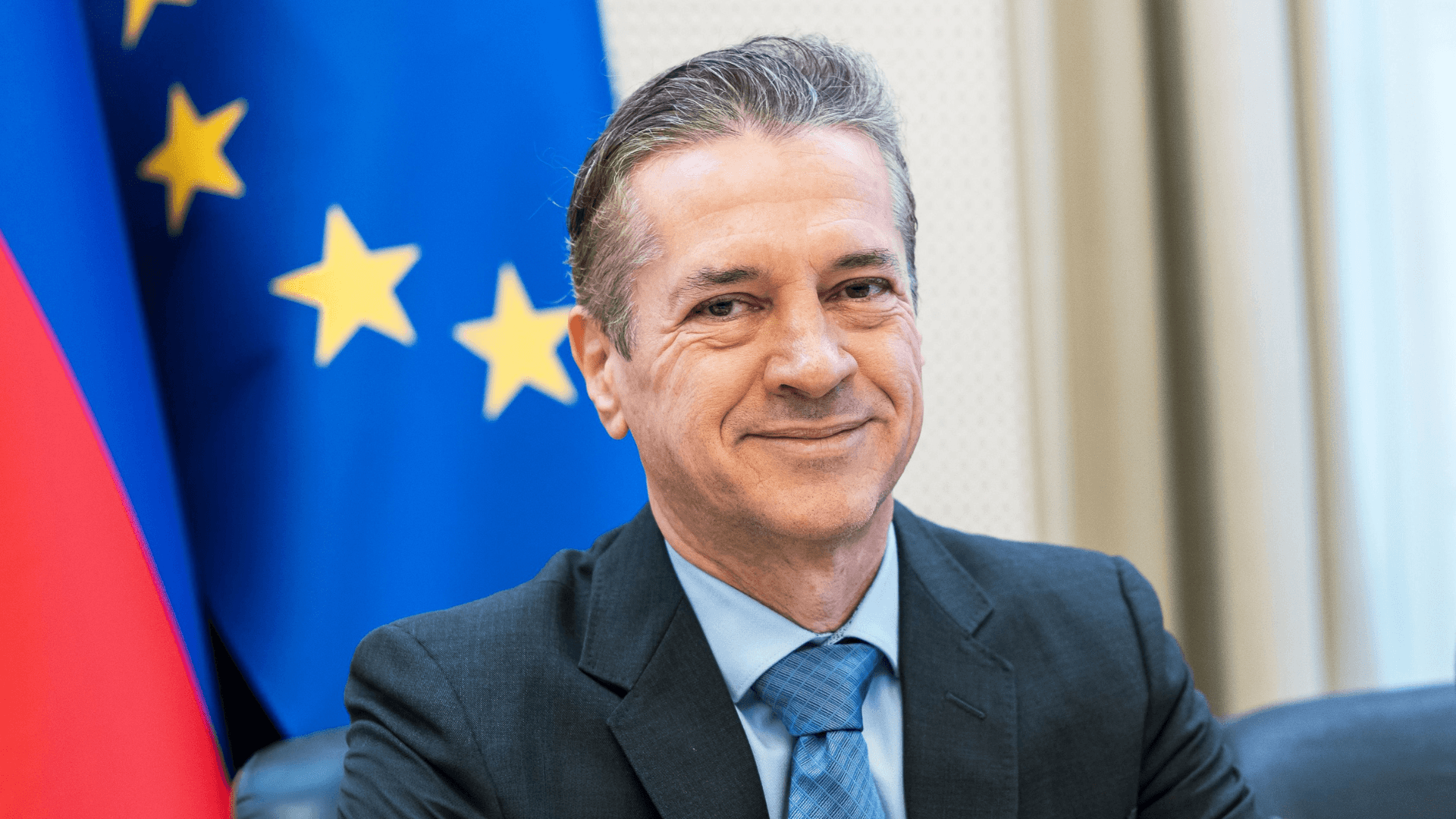
President Zelenskyy’s address was a cold shower for many, and a shift from his earlier wartime appeals. He has adopted the role of a strategic critic and diagnosed what he calls Europe’s Greenland mode: a state of reactive paralysis and excessive reliance on the United States. By contrasting the arrest of Maduro in Venezuela with the continued freedom of Putin, Zelenskyy tried to highlight the justice gap in European policy. His central thesis is that Europe remains a “kaleidoscope of small powers” rather than a singular great power, and he warns that the continent’s reliance on NATO is effectively a reliance on a single American variable that is no longer a guaranteed constant.
The most consequential tactical takeaway is the revelation of a trilateral negotiation process in the UAE involving American and Russian representatives. Zelenskyy exhibited a sort of pragmatism that aligns with the transactional nature of the Trump’s rule, moving toward what he identified as the last mile of the conflict. He still balanced this by demanding a European response, namely the confiscation of Russian shadow-fleet oil and the unification of European armed forces. He is essentially telling Brussels that if it wants to avoid becoming a secondary player, it must stop treating security guarantees as a post-war luxury and start treating them as an immediate industrial and military requirement.
The repetitive cycle of an endless war that just wears everyone down is now likely to evolve into high-pressure negotiations. Zelenskyy’s interest in the “Board of Peace” and his direct engagement with Trump’s inner circle (Kushner and Witkoff) suggests that a ceasefire groundwork is being built outside of traditional European diplomatic channels. His trust test for the business community (such as calling for offices to open in Ukraine now) indicates that he views economic integration as the only real security guarantee that will survive the change of pulse in Washington.
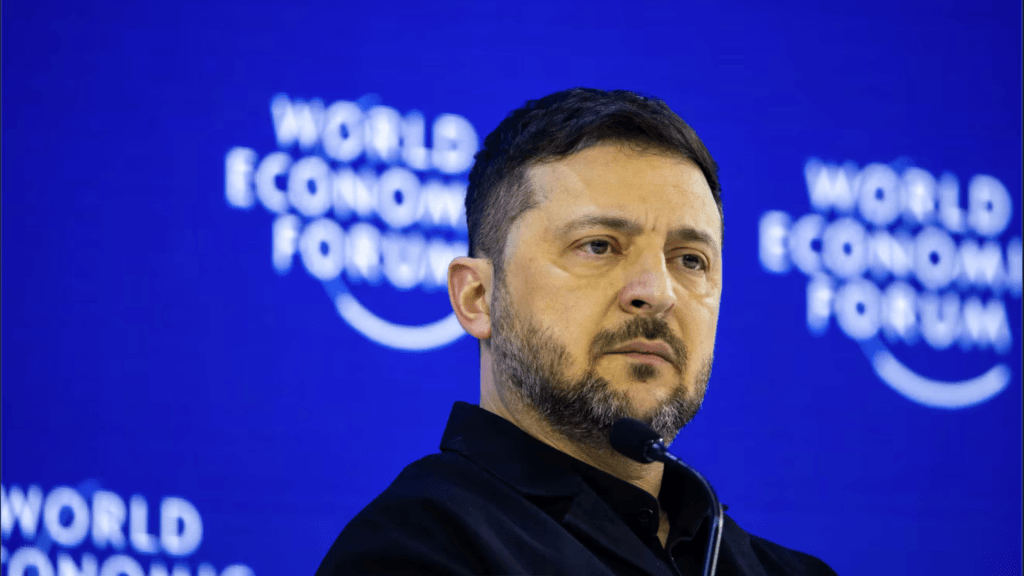
Image source: World Economic Forum (Volodymyr Zelenskyy, President of Ukraine)
Rolling the Dice for the “Big Piece of Ice”
Rather than a participant of the world order, President Trump framed the United States as the sole benefactor that is tired of subsidising the rest of the world. His economic narrative centred on a massive deregulatory surge and an energy policy which will mostly replace climate initiatives with fossil fuels and nuclear power. For the tech sector, his most significant move is the privatisation of the energy grid. By allowing AI companies to build their own power plants, he is creating a two-tier infrastructure designed to ensure the US dominance in artificial intelligence regardless of the public grid’s stability.
On the geopolitical front, an interesting demand was the acquisition of Greenland. Trump is signaling that he no longer trusts traditional alliances like NATO to secure the northern American frontier. Also, his anecdote about using tariff threats to force President Macron into raising French drug prices serves as a heads-up to all allies – with Trump in office, the diplomacy will be conducted via ultimatums, with the American consumer market used as a weapon to fix what he perceives as a thirty-year scam by his global partners in Europe and Asia.
Trump unveiled his idea of creating the so-called Board of Peace, which would serve as a high-speed, transactional alternative to the UN. More than sixty nations are invited to participate in three-year rotating terms, with permanent membership available for the generous $1 billion contribution to the fund that’s managed by Board’s leadership. Operationally, the Board bypasses multilateral consensus in favor of direct negotiations, such as the security talks between the States, Ukraine, and Russia held in Abu Dhabi last Friday. While its initial scope of focus was the post-ceasefire administration and reconstruction of Gaza through, the National Committee for the Administration of Gaza, it has already expanded to address conflicts in other parts of the world.
Trump’s strategy so far has been, and will in all likelihood continue to be, leveraging high tariffs to make foreign companies move their factories and capital onto US soil. The GENIUS Act and his embrace of crypto suggest he wants to turn USA into a deregulated safe haven for digital assets, while simultaneously cracking down on institutional Wall Street companies in the domestic housing market.
The World Order is Dead, Long Live the World Order
According to Prime Minister of Canada, Mark Carney, the illusion that global integration always leads to mutual benefit has been shattered. He described a situation where great powers now use trade and tariffs as a weapon to subordinate others. Carney pointed out that Canada will no longer pretend the old system is functional, and that it will face the reality of a world dominated by intense power rivalries and transactionalism. To survive in this reality, he advocates for a strategy of “value-based realism”. This approach is designed to be both principled and pragmatic. Canada remains committed to core values like sovereignty and human rights, but recognises that it must build the value of the strength to protect them. This involves huge domestic investment (specifically a trillion dollars earmarked for energy, AI, and critical minerals) and a doubling of defence spending in order to reach strategic autonomy. Carney’s point is that a country unable to fuel or defend itself loses its ability to make independent choices. This is reflected in Canada’s recent move to join the EU’s SAFE procurement program, which integrates Canadian defence industries into European supply chains to reduce reliance on any single country or bloc.
Finally, Carney proposes a third path for middle powers to avoid becoming subordinated in a bipolar world. He suggested variable geometry – creating flexible, issue-specific coalitions. For instance, while Canada is tightening its security ties with the Nordic-Baltic countries to defend Arctic sovereignty (opposing any external claims or tariffs on Greenland), it is simultaneously diversifying its economic ties by negotiating new trade pacts with alliances such as ASEAN or Mercosur. Carney’s thesis is that if middle powers combine their market size and legitimacy, they can create a dense web of connections that allows them to absorb pressure from larger powers.
However, the reported developments in relationship between Canada and China might be a thorn in the side of Western unity. The mutual tariff relief between these two countries might suggest more fragmentation of the transatlantic partners against China’s expansion. At the same time when the EU is letting the world know that it’s about to strengthen and de-risk its strategic autonomy, Canada’s flirting with Beijing is a good example of how economic pragmatism can easily override the security concerns. In reality, aggressive trade policies between allies on the Western front may have an unintended consequence of driving some actors closer to the Chinese embrace, as we have seen recently in Eastern Europe and Western Balkans. If the Western alliance is not able to come to an agreement about the common strategy, it is at risk of gifting the economic and cultural influence to a long-term Chinese approach that tries to represent the country as the most stable and reliable partner on the world stage.
Europe and Its Unicorns
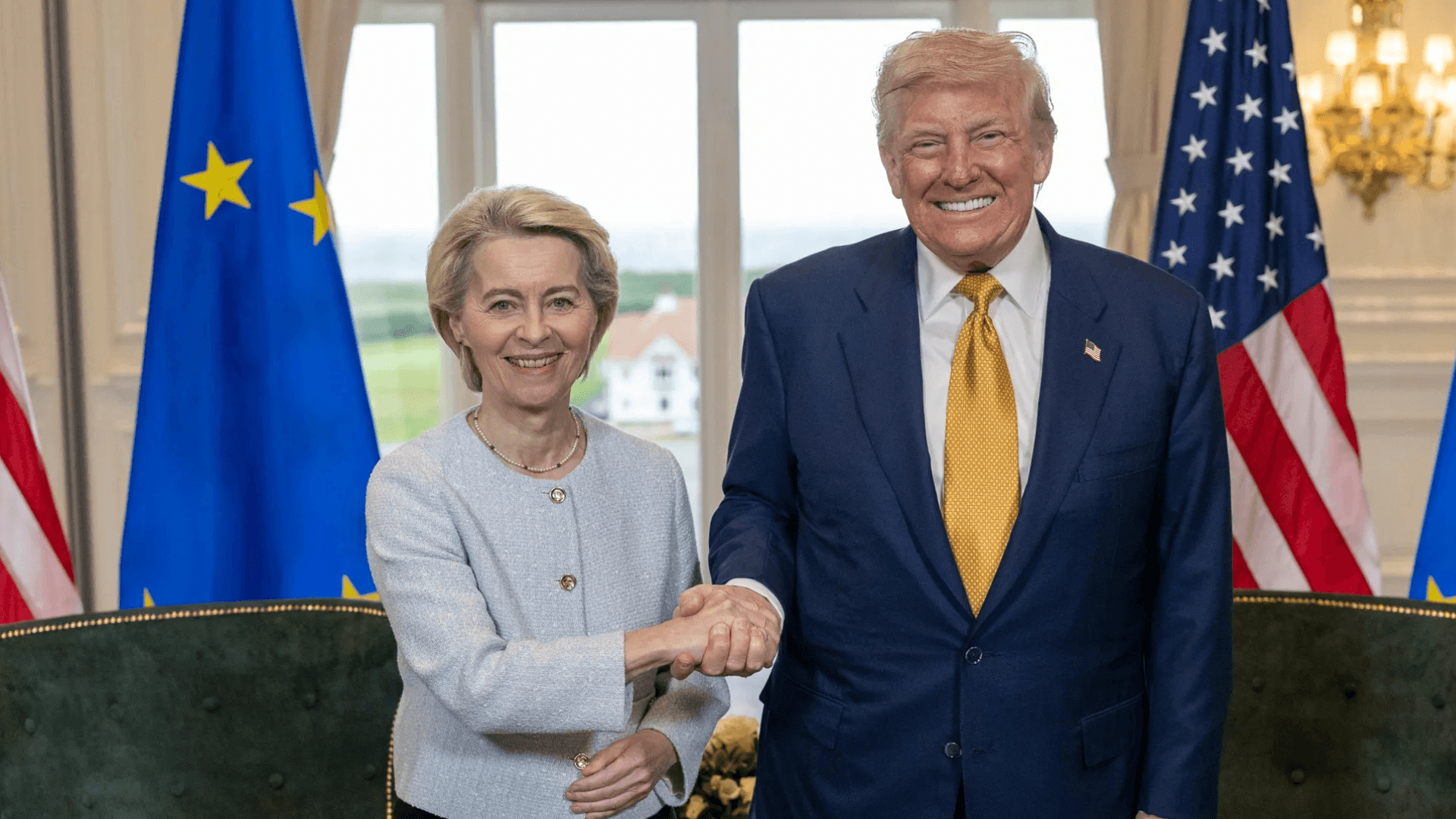
The President of the European Commission, Ursula von der Leyen, winked at a transition from reactive diplomacy to a more proactive defence of European independence. She argued that “nostalgia will not bring back the old order.” Central to this vision is the EU, Inc. initiative and the 28th Regime, which aim to create a smooth market by allowing businesses to register fully online within 48 hours and operate under a single set of rules across all Member States. This economic sovereignty is reinforced by regulations such as the proposed Cybersecurity Act 2, on which B&K wrote extensively last week.
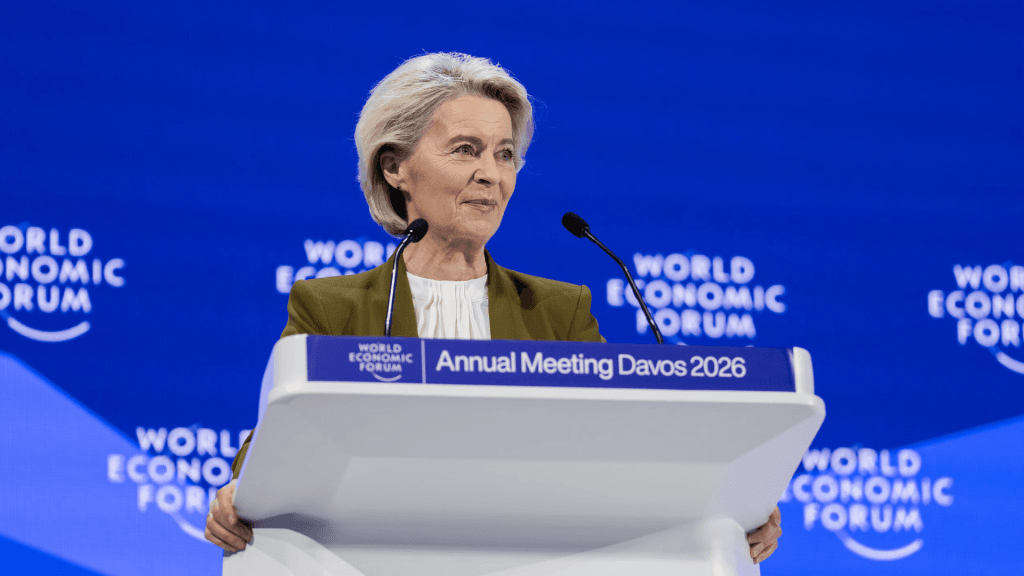
Image source: World Economic Forum (Ursula von der Leyen delivering her address)
Beyond regulatory reform, von der Leyen acknowledged the necessity of a self-reliant security architecture, mentioning a €800 billion defence spending surge by 2030 and the emergence of European defence tech “unicorns”. This commitment to independence extends to the High North, where she took a firm stance on Arctic security and solidarity with Greenland. Combining massive investments in energy and defence together with the development of a dedicated European icebreaker capability, will help Europe become an assertive global player ready to defend its sovereignty while remaining open to fair, strategic partnerships with allies like the United States.
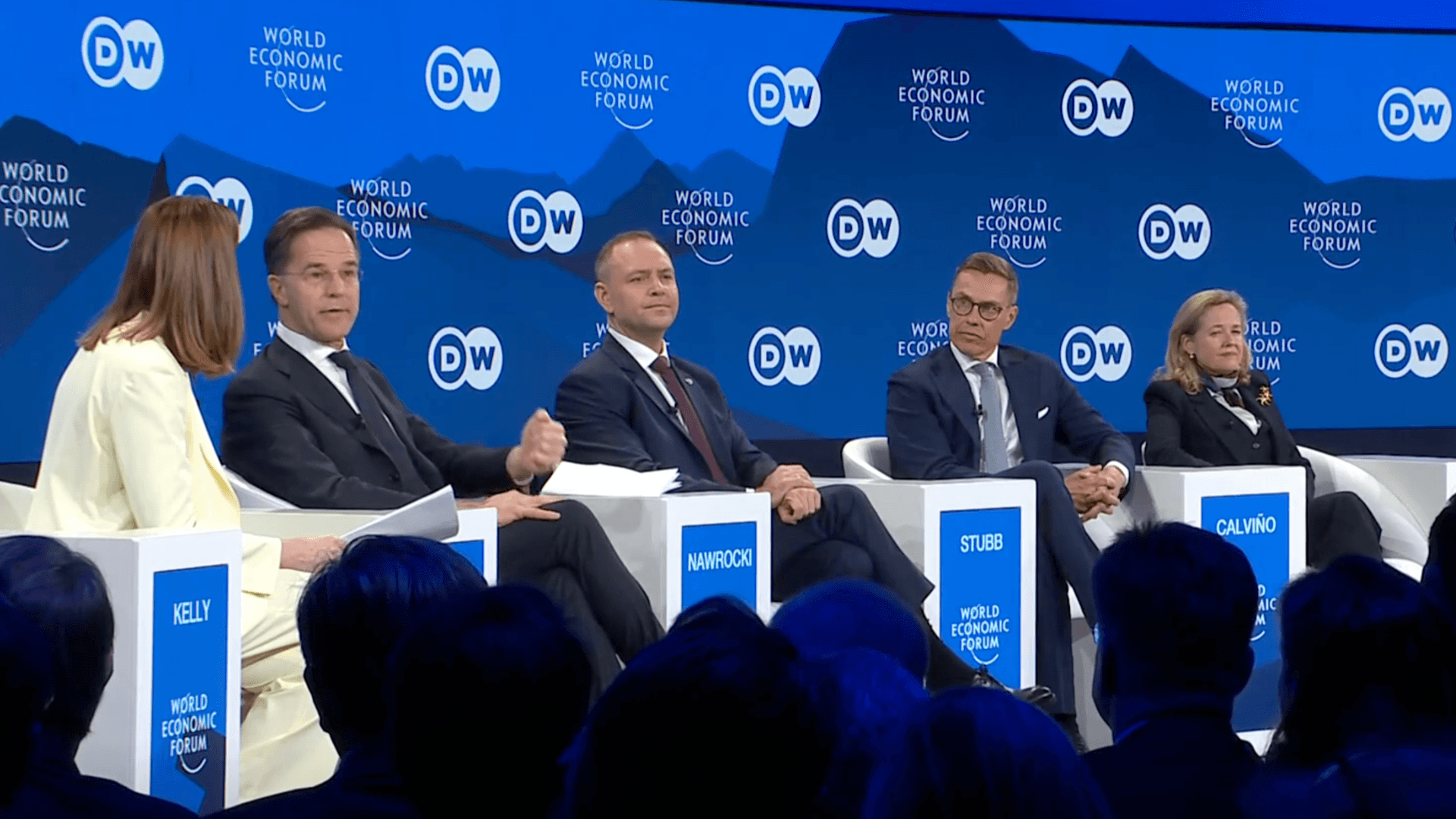
Cover image: World Economic Forum (Mark Rutte, Karol Nawrocki, Alexander Stubb, Nadia Calviño at the panel discussion ‘Can Europe Defend Itself?’)