The conflict in the Middle East escalates after the US and Israel take decisive action in Iran for a regime change, while the EU is sidelined in crisis response as Cyprus is attacked.
The Middle East and the EU’s Seat at the Table
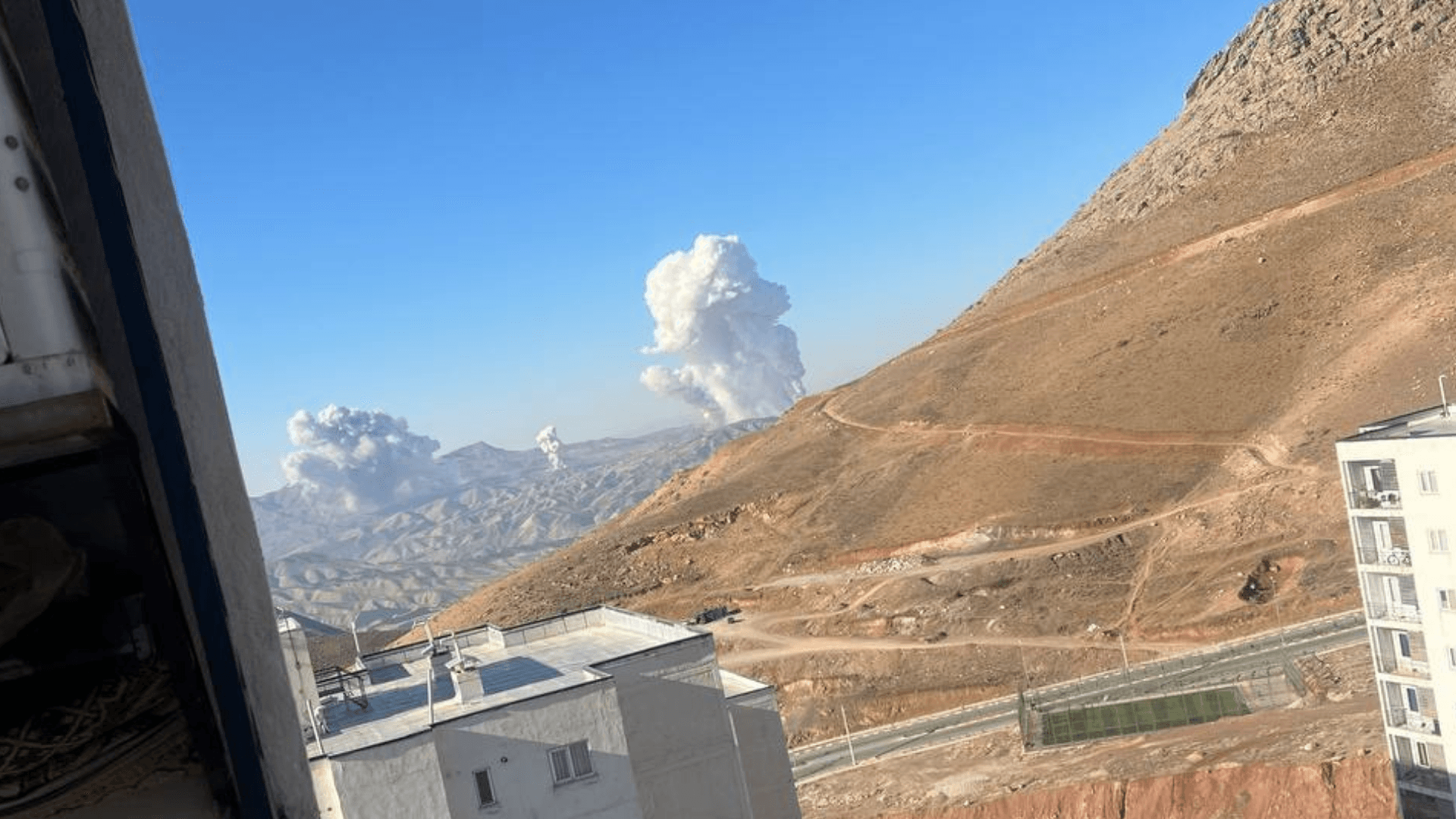
If the geopolitical world had a tipping point, it was likely crossed this weekend. While Europe was still digesting the latest vetoes over Ukraine aid, which we discussed in our previous newsletter, the map to our south effectively caught fire. In a series of strikes on Saturday, US and Israeli forces targeted the heart of the Iranian regime, killing Supreme Leader Ayatollah Ali Khamenei and a large number of top-ranking officials. By Sunday, as Iranian security officials gathered to begin an unprecedented leadership transition, the retaliation had begun, and the consequences were felt outside of the Persian Gulf.
For the European Union, the war became relevant in the early hours of Monday morning. As Cyprus prepared to host the bloc’s ministers for a critical summit under its rotating presidency, an Iranian Shahed drone struck the British RAF Akrotiri base on the island. While the Cypriot government quickly clarified that they were not the intended target, an attack of any kind on an EU member state’s soil was enough to delay EU diplomacy. The summit in Nicosia was postponed and flights were cancelled. All of a sudden, the distant conflict in the Middle East was not so distant anymore.
The postponement of the General Affairs Council in Nicosia is more of a metaphor for the EU’s current predicament. Cyprus, which is often called the “unsinkable aircraft carrier” of the Mediterranean, was supposed to be the stage where Europe would discuss its future budget and the so-called “Democracy Shield”. Instead, the island country has become a reminder that the EU’s soft power approach often finds itself stuck when other superpowers start exchanging missiles and drones. The irony here is quite sharp. While the US is acting with what Donald Trump has called a four-week timeline for regime change and Israel is intensifying its strikes, Europe is doing what it does best (and, some would say, all it can do): drafting statements. We have seen a flurry of joint statements clarifying they did not participate in the strikes and calling for maximum restraint. It is a familiar script, but in a world where the Supreme Leader of Iran has been killed in his own capital, “maximum restraint” sounds increasingly like a message from a different era, the one that was addressed as a time long past at recent summits in Munich and Davos.
The Consequences of Fence-Sitting
Let’s take a look at why the EU acts as an observer in a war happening in its own backyard, and how this will affect the continent. Ursula von der Leyen has been a proponent of the “geopolitical Commission”, but this particular crisis managed to expose a gap in that ambition. It is evident that the EU lacks a unified military command or a singular “phone number” (to paraphrase the old joke by Henry Kissinger) that can influence the Pentagon or Tehran (or any other place) in real time. While Kaja Kallas warned about the Strait of Hormuz and maritime security, actual security right now is being provided by the US with its carrier groups and Israeli intelligence. Europe’s engagement remains largely humanitarian and rhetorical, leaving a vacuum which needs to be filled with strategic leadership.
Secondly, the attack on Cyprus has forced a difficult conversation about Article 42.7, which outlines the EU’s mutual defence clause. If a drone were to hit a British base on Cypriot soil, would that even be considered as an attack on the EU? Greece is already moving its frigates and fighter jets to protect its own sea territory, acting bilaterally because the existing EU-wide mechanism is too slow to respond to a drone strike that happens at midnight. The postponement of the summit shows that the EU is still struggling to reconcile the civilian nature of its presidency with the reality of its geography which is rather militarily intensive.
Lastly, the Khamenei transition process in the midst of rumours of further assassinations within the interim council presents a terrifying uncertainty. For years, EU diplomacy led by Borrell and now Kallas has tried to keep the nuclear deal on life support. That possibility now seems completely impossible. Without a clear successor in Tehran to negotiate with and with the US leaning into a military resolution within several weeks, Europe’s traditional role as a mediator has vanished, as there is no middle ground left to mediate.
The wait-and-see approach from Brussels will likely mean the risks are now entirely market-driven. With Kaja Kallas highlighting the Strait of Hormuz, the insurance premiums for Mediterranean and Gulf shipping are expected to skyrocket. In comparison, the shadow fleet sanctions vetoed by Hungary now seem a minor deal compared to the potential for a full maritime blockade. At the same time, most EU member states are already drawing up bilateral evacuation plans for citizens in Lebanon and the Gulf states. The lack of a coordinated EU evacuation effort is another sign that, in a crisis, the ever-closer Union often reverts to its 27 individual nations. Lastly, it will be interesting to see whether the EU decides to reschedule the summit or move it to Brussels. Failing to return to Nicosia soon would send a signal that the EU cannot guarantee the security of its own rotating presidency, representing a major blow to the bloc’s image and prestige.
The EU is currently not in the spotlight. Europe provides humanitarian aid and the post-conflict reconstruction funds, but the high-impact decisions are being made in Washington, Tel Aviv and Tehran. The attack on Cyprus was a wake-up call that the war is moving closer to our borders. The question for the coming weeks is whether the EU will find its voice and strength or continue to be an entity that merely postpones its response until the smoke clears.
Image source: Official X account of Open Source Intel – US-Israeli strikes in Pardis, Tehran