Over the weekend, Trump signed executive orders to impose tariffs on goods imported from China, Mexico and Canada. The countries taken together accounted for 40% of imports into the US last year. The measures, which Trump had already promised during his campaign, were allegedly introduced to boost American industries, protect jobs, and grow the US economy. Tariffs were also intended to curb the flow of fentanyl – a drug that is causing thousands of deaths in the country – to the US and address the entrance of illegal immigrants into the country from Mexico and Canada.
The 25% tariffs on imports from Mexico and Canada were ultimately paused for 30 days after both countries announced that they would increase border and crime enforcement. The 10% tariffs for China were instead implemented, effective 12.01 am on Tuesday, with Trump claiming that he was in ‘no hurry’ to talk to Chinese counterparts to try and diffuse the situation. In response, China has implemented a 15% tariff affecting US coal and liquefied natural gas, as well as a 10% levy affecting crude oil, agricultural machinery and cars. It also decided to launch an antitrust investigation into Google. Economists have estimated that China’s tariffs would apply to about €19.2 billion of annual imports, a small amount compared with the €432 billion of Chinese goods affected by the US tariff. Despite its initially cautious approach, China is believed to be prepared to implement much harsher countermeasures.
The emergence of protectionist measures intended to support policies at home is not a surprise move from the Trump administration, and while it has received widespread support from Republicans in the US, economists have warned that retaliation from trading partners could lead to a trade war affecting both US and global economic growth and have an impact on prices for consumers and companies alike. In its annual 2025 World Economic Outlook, the International Monetary Fund warned that intensified protectionist measures – such as tariffs – could increase trade tensions and affect both trade flows and supply chains. The continued threats of tariffs from the Trump administration could additionally increase uncertainty for businesses worldwide, leading to lower investments.
Tariffs on the EU for the ‘$300 billion trade deficit’
Alongside other trading partners, Trump has already warned European leaders that tariffs will also be imposed on the EU, citing the trade deficit of around $300 billion between the two markets as a leading reason behind the decision. The deficit seems to have been grossly overstated, given Trump’s focus on goods in the calculations. While the EU was exporting €150 billion worth of goods more to the US than it was importing in 2023, the US did have a €104 billion surplus in the trade of services. The total trade deficit between the EU and the US seems to be closer to €52 billion, a still significant but smaller number. Shortly after his election, the US President stated that the EU would face tariffs on trade if they did not step up their purchase of US oil and gas.
If tariffs on EU exports were to be imposed, certain sectors such as the automotive one would be particularly affected. Machinery and vehicles were the most exported manufactured data from the EU to the US, with Germany being one of the leading exporters to the country. The challenges posed by tariffs on the EU would only compound the obstacles that the country’s sector is facing by having significant operations in Mexico. According to some analysts at Deutsche Bank, the effect of 10% tariffs on the EU could reduce the Union’s GDP by around 0.5-0.9%, while the EU’s economy is expected to grow only by 1.5% this year.
From dialogue to retaliation
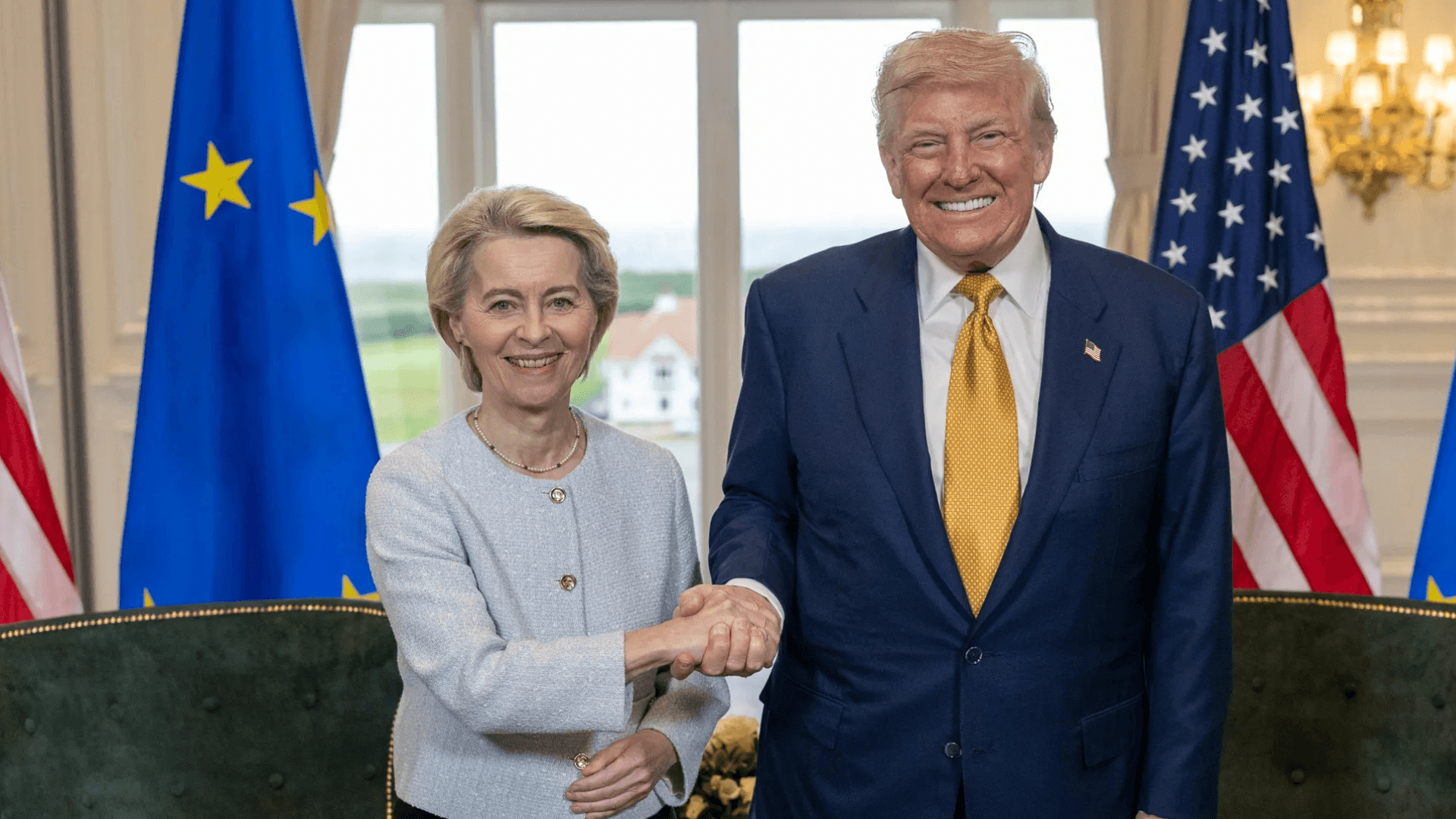
The European Commission seems to have been preparing for the potential measures introduced by Trump already before his election and does not exclude retaliatory measures, including lists of US imports to target by sanctions and the possibility of launching investigations into US companies. For now, the approach at the European level seems to favour dialogue with Trump, in the hope of avoiding tariffs overall. EU leaders have also been steadfast in reiterating that the US and EU economies are closely tied and that a trade war would have consequences for businesses and individuals on both sides of the Atlantic. According to EU data, in 2023 the trade in goods and services between the two powers reached €1.5 trillion, representing almost 30% of global trade in goods and services and 43% of global GDP.
Von der Leyen has indicated that the EU could increase the volumes of liquefied natural gas imports from the US further as part of a strategy of diversification from Russian resources. Increased investment in defence could also partially respond to the deficit. Policymakers have observed though that increasing imports from the US might not be straightforward, as the EU economy is growing at a lower rate than that of the US, and that the difference in value between European and US products also plays a role.
Innovation and competitiveness in Europe
Another question is the EU’s ability to promote the innovation it needs at home. The latest reports on the future of the European competitiveness published last autumn underlined that the EU must implement significant changes for its businesses to remain competitive, as its economy is experiencing overall less innovation than other economies such as China and the US. In response to the challenges posed by the rapid growth of key industrial and technology sectors in China and the US’s protectionist shift, the EU recently published a new roadmap to increase its competitiveness – the Competitiveness Compass.
To boost productivity, the Compass includes proposals to close the innovation gap with global competitors by supporting start-ups, unifying corporate laws, and fostering a cohesive tech ecosystem while also transitioning to a climate-neutral economy through energy affordability measures and market incentives. Additionally, the EU seeks to reduce dependencies on critical suppliers, enhance security, and streamline regulations to improve coordination, investment, and job quality across Member States. In many of the key areas covered by the Compass, from AI to quantum computing and low carbon or clean technologies, the EU aims to focus on simplification of the regulatory environment and better coordination to favour investments and innovation to support the development of edge-cutting technologies.
While the Compass represents so far the most comprehensive strategy to support European innovation and competitiveness, speed and funding are two key elements that the EU must address to ensure that the initiative can deliver on its goals. If the EU is able to successfully pool financial sources its position on several technologies could be strengthened, especially when it comes to clean technologies. However, success depends on member states’ financial commitment and on ensuring that regulatory simplifications do not undermine the growth of innovative companies benefiting from high EU standards.
Though the effects of tariffs on the EU will not be as significant as those on other countries, such as Mexico and Canada, Trump’s decision to move forward with tariffs raises some crucial questions that the EU must be ready to address. Beyond being prepared to respond unitedly beyond individual relations with the White House, the EU’s latest strategies for increasing its competitiveness and innovation will be put to test. Only through actual implementation of its commitments can the European economy hope to acquire the competitive edge that it needs.