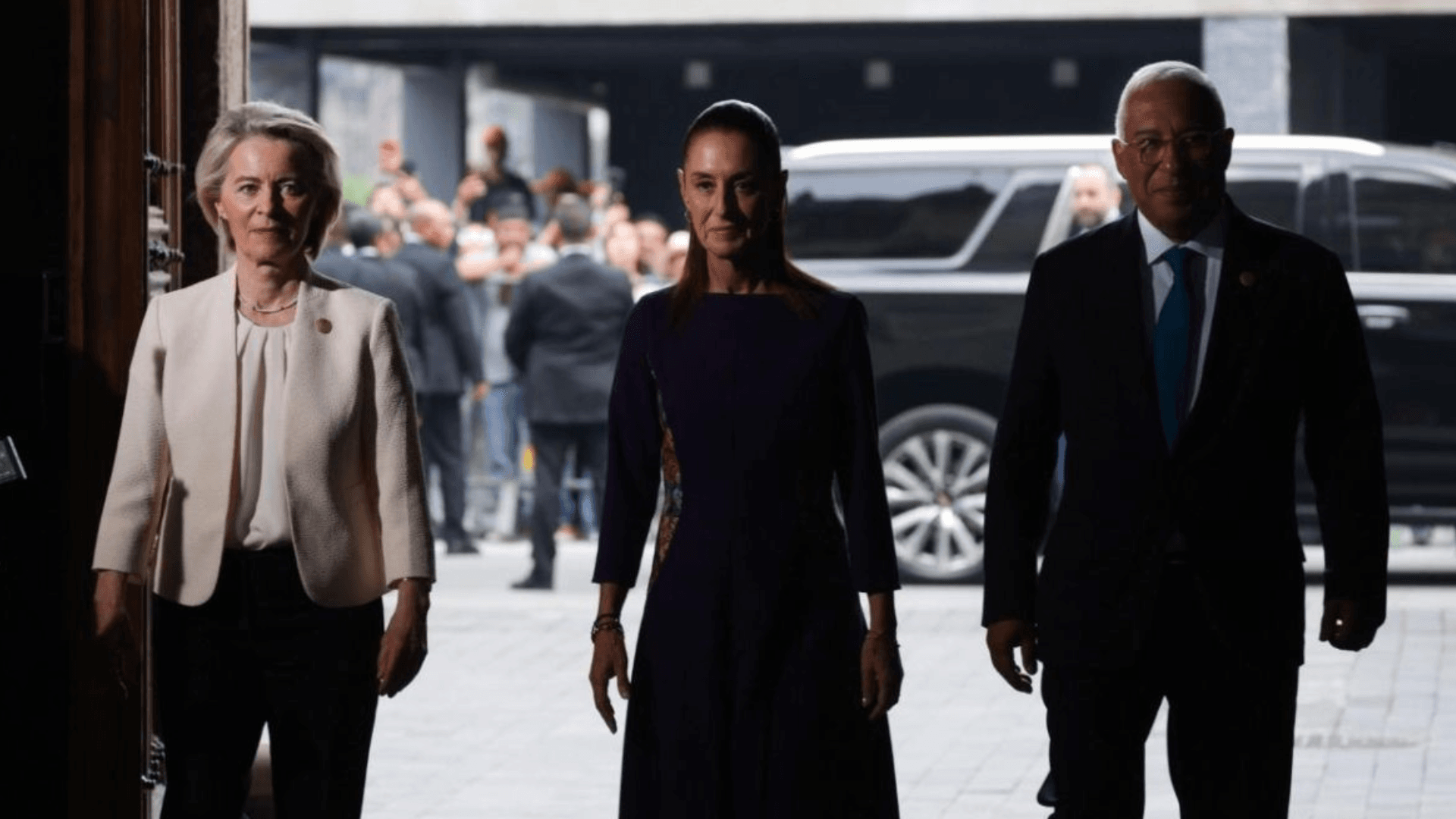
The EU has signed a trade deal with Mexico on 22 May during the first joint summit in more than ten years. This agreement follows the developments in the trade sector with countries such as India, Malaysia, and the Latin American bloc known as Mercosur and shows the often forgotten voice of European power on the global stage.
Whenever international experts look at global politics, they often end up discussing whether the European Union actually has a real and unified foreign policy. Decades ago, Henry Kissinger allegedly posed the question: “who am I supposed to call if I want to speak to Europe?” Even now, this question is hard to answer using traditional perception of diplomacy or statecraft. When it comes to hard security questions such as defence or military alliances, the power still belongs mostly to the national governments. That is why on security issues, the most important voices come from Paris or Berlin.
However, this divided picture completely changes in the sphere of international commerce. On global trade, member states do not negotiate on their own. Instead, the European Commission acts as the single voice for a combined market of 450 million relatively wealthy consumers. This unified setup changes trade from a strictly expertise-driven nomotechnical skill into Europe’s most powerful diplomatic tool. By controlling who gets access to its massive internal market, Brussels can easily push foreign governments to rewrite their domestic labor laws or improve their human rights records. Rather than relying on military threats or temporary political deals, the EU builds its global alliances on the legally binding text of extensive trade agreements which aresupposed to last for decades.
The 2026 Breakthroughs
This unique style of market-driven diplomacy has speeded up in the first half of 2026. First of all, global trade tensions grow, and second, traditional alliances tend to shift faster than before. As a consequence, Brussels is working to immunise European industries from unexpected supply chain shocks. The most significant move happened just last week, on 22 May, at a bilateral summit in Mexico City. The EU and Mexico officially signed a modernised Global Agreement alongside a targeted Interim Trade Agreement. A new comprehensive update to a pact, originally written in 2000, primarily cuts duties on nearly all goods traded between EU and Mexico, and eliminates nearly all remaining Mexican taxes on European agricultural goods and manufacturing exports, projected to save European companies roughly a hundred million euros every year. Additionally, it legally protects over more than three hundred traditional European regional food and drink names (such as Champagne or proscuitto di Parma) from being sold under the same name by local manufacturers.
For both sides, this deal carries strategic weight as it acts as an insurance policy against economic instability in the United States. With Washington taking a more unpredictable path on tariffs, Europe offers Mexican industries a reliable alternative trade corridor. In return, the EU has successfully imposed its own regulatory standards directly into Mexican law. The new treaty replaces the old private arbitration system for corporate disputes with a highly structured public Investment Court System. The deal also suggests legally binding commitments to the Paris Climate Agreement, creating a significant impact on global environmental policy as well.
Expanding the Trade with Asian Countries
This European strategy of securing stable partnerships is moving forward just as quickly in other critical parts of the world, especially in South and Southeast Asia. Malaysia has officially ratified the landmark Malaysia-EU Partnership and Cooperation Agreement on 16 May. This agreement sets up a strong foundation to boost long-term cooperation in advanced manufacturing and digital trade.
To balance these new economic opportunities with strict European standards, the agreement establishes a permanent Joint Committee – the primary institution where both sides can directly coordinate their partnership. The Committee will function as a diplomatic mediator for sensitive disputes, giving the Malaysian officials a formal platform to settle any possible conflicts caused by strict new European rules against importing goods tied to deforestation.
At the same time, the signing of the comprehensive EU-India Free Trade Agreement earlier this year in New Delhi represents perhaps the largest single economic move for Europe this decade. Frequently described by experts as the mother of all trade deals, this pact connects two markets that together make up a quarter of the global economy and almost as big share of the world population. For Brussels, the primary goal here is economic security in the long run, as well as diversification. Cutting duties on heavy machinery and food products, among others, is likely to build an economic bridge that gives European businesses a reliable manufacturing and technology alternative to excessive reliance on Chinese industrial supply chains.
The Long-term Outlook
Recent EU trade deals indicate that the general direction of EU trade policy has shifted. The old era of open global markets exclusively to secure low consumer prices has come to an end. In its place, Europe has adopted a much more assertive posture focused on economic security and reducing strategic vulnerabilities. The EU is proving that it can effectively use its rather massive purchasing power to lock in resources and build reliable global buffers, with the goal of protecting its economic interests even if a wider trade tension sparks between the world’s largest economies.
This new style of trade diplomacy is likely to bring changes to the daily operations of corporations. The most immediate consequence is a permanent increase in compliance costs. Companies can no longer build their supply chains based solely on cheap logistics and low labor costs. Under modern EU trade treaties, saving cost through lower tariff rates depends on business’s ability to clearly prove that its entire production line (including third-party suppliers abroad) follows European rules.
However, while these strict standards create a real bureaucratic burden, the payoff for businesses is a much higher level of predictability. At a time when sudden political shifts can lead to retaliatory tariff spikes in the matter of hours, these deeply integrated treaties offer corporate actors legal protection and a stable environment to plan future investments. Europe is sending a clear message to the rest of the world that its most effective diplomats are the ones drafting the fine print of international trade law, which is being proven with the signing of the deals all throughout Asia and Latin America in the recent months.
Image source: Official LinkedIn account of Ursula Von Der Leyen, President of the European Commission