United Kingdom gets its seventh Prime Minister in ten years as Andy Burnham enters Downing Street to stabilise a weakened Labour Party and confront Reform UK that keeps rising in polls.
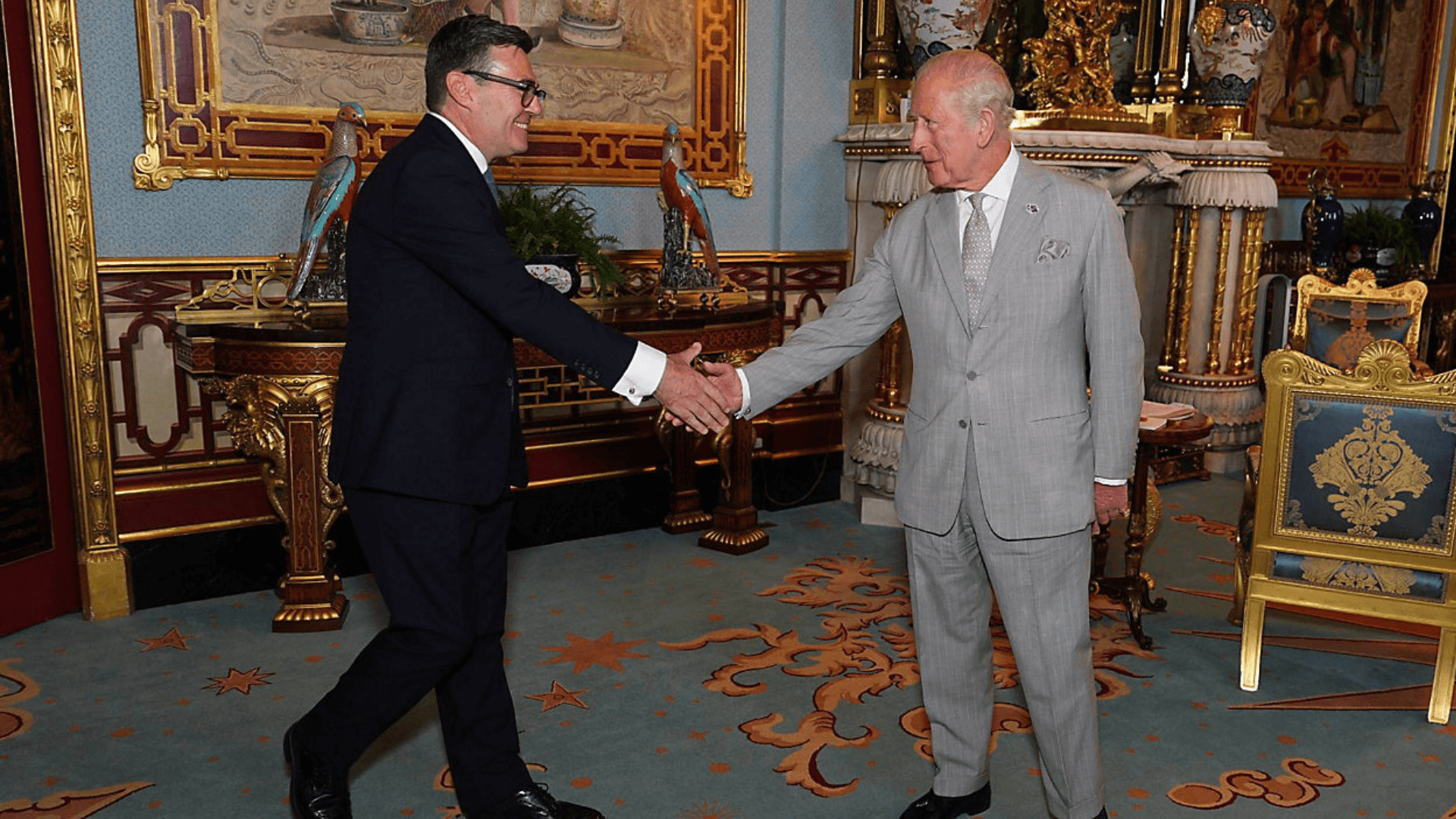
On 20 July, Andy Burnham went to Buckingham Palace to accept King Charles’ invitation to form a government, making him the United Kingdom’s 59th Prime Minister. He is also the seventh person to hold the office in the past ten years – this tempo has been unmatched by any other G7 democracy since Britain voted to leave the EU in 2016. Burnham goes into the office with the Island still searching for the stability that Brexit was meant to deliver and governing party struggling to overtake the right-wing in the polls.
Six Prime Ministers in One Decade
Keir Starmer’s resignation on 22 June came just two years after he led Labour to a victory in 2024, but that majority became less stable once voters felt the government was not meeting its expectations. A series of policy reversals, as well as welfare and inheritance tax proposals, were not well received with both centrist and traditional Labour voters. Concurrently, a cost-of-living crisis that never eased, and a damaging scandal over the appointment of Peter Mandelson as ambassador to Washington all contributed to the erosion of Starmer’s standing. The final trigger was a defeat in Makerfield by-election where voters chose Andy Burnham himself. Facing a likely party mutiny from the inside, Starmer decided to step aside rather than wait to be replaced.
Because only sitting MPs can acquire the Labour leadership, Burnham’s return to Parliament after almost a decade as Mayor of Greater Manchester was the precondition for the job he now holds. He won the Makerfield seat with 54.8% of the vote, defeating a Reform UK candidate in the process, and then ran for the Labour leadership unopposed, being confirmed on 17 July before taking office three days later.
The King of the North
Burnham is not a newbie to national politics, although it is worth noting that his recent path to Downing Street was fairly fast. He was born in 1970 near Liverpool and was educated at Cambridge, becoming a member of Parliament in 2001. Burnham rose through the governments of Tony Blair and Gordon Brown, serving as Chief Secretary to the Treasury, then Culture Secretary, and finally Health Secretary, where his focus was building a more robust public system of care for elderly and disabled adults.
After Labour lost power in 2010, he ran for the party leadership twice and lost both times before leaving Westminster in 2017 and becoming the first directly elected Mayor of Greater Manchester.
It was in that regional role that Burnham built the political identity he now brings to PM office. His signature achievement was the “Bee Network”, which brought Manchester’s privatised bus system under public control similarly to London’s integrated transport system. He became closely associated with the long campaign for accountability over the 1989 Hillsborough football stadium disaster and earned the nickname “King of the North” for his campaigning to secure funding for northern England during the coronavirus pandemic. That combination of a working-class political identity and a willingness to publicly clash with Westminster is likely to define his approach as Prime Minister more than any grand ideological programme. Those traits also explain Burnham’s attractiveness to traditional Labour voters.
New and Familiar Faces
In his first remarks as Labour leader, Burnham promised to fix the “big things”, explicitly mentioning social care policy, and criticised decades of British governance in which (in his words) political power was centralised while economic power was privatised. That framing suggests a Prime Minister more inclined toward state intervention and devolution than Starmer was, although his cabinet choices suggest a higher degree of continuity will be seen in practice.
Foreign Secretary Yvette Cooper and Culture Secretary Lisa Nandy are both expected to keep their posts, and Chancellor Rachel Reeves is widely expected to be replaced by Home Secretary Shabana Mahmood rather than the more fiscally expansive Ed Miliband. This choice has been received by market actors as reassuring considering earlier worries that a Burnham government will loosen the public spending restraint that Reeves and Starmer had prioritised.
On energy policy, Burnham faces an early test. He has publicly committed to Labour’s manifesto pledge not to issue new North Sea oil and gas exploration licences, but has also declined to rule out fast-tracking drilling at the Rosebank and Jackdaw fields, a distinction his own deputy leader has described as a shift in “emphasis” rather than policy. President Trump publicly welcomed the prospect on his social media platform hours before Burnham took office, framing expanded North Sea drilling as the difference between Britain remaining what he called a “poverty stricken disaster” and becoming one of the richest countries in the world. This kind of intervention puts immediate pressure on a government that has not made its final decision yet.
Steady on Ukraine and Softer on Europe
On the war in Ukraine, continuity looks highly likely. Foreign Secretary Cooper has already stated that Burnham is fully behind UK’s existing support for Kyiv and remains a committed believer in transatlantic alliance. Since Starmer’s positions on current conflicts in Ukraine and the Middle East were broadly mainstream within the Labour Party, sharp change in either area seems highly improbable, regardless of who is the Prime Minister or the Foreign Secretary.
The outlook is a bit more nuanced on the European Union. Burnham has spoken much less about EU relations than Starmer did, and his public rhetoric so far sounds less enthusiastically pro-European than his. This is a notable shift considering how much Starmer leaned on closer EU alignment as the “biggest prize” available to the British economy. Yet the substance of Burnham’s likely economic and security agenda that is built around regional investment and pragmatic engagement on shared challenges could still bring London closer in practice to Brussels than Starmer’s more cautious approach ever did. A lot will depend on who Burnham appoints as Foreign Secretary and EU minister and how they translate that instinct into policy over the coming months.
On the transatlantic relationship more broadly, Burnham arrives with limited foreign policy experience and a public record of criticising Trump – an awkward starting point given Trump’s history of publicly attacking Starmer’s handling of energy and immigration policy. The North Sea intervention on his first weekend in office suggests Trump intends to continue applying public pressure on UK domestic policy just like he did in the previous months.
The Farage Factor
The most immediate political threat to Burnham’s government is not economic policy, but Nigel Farage’s Reform UK, which has spent much of the year running close to or ahead of Labour in national polling. Recent polling has been somewhat volatile, though. Reform held a substantial lead through the spring before a scandal over an undeclared 5 million pound gift to Farage from a foreign businessman narrowed the gap, and Ipsos polling from late June put Reform just two points ahead of Labour, with Burnham preferred as Prime Minister over both Farage and Conservative leader Kemi Badenoch by a wide margin. Some polls identified a slight bounce for Labour since his leadership became likely, though it still remains unclear if that could represent a more persistent shift or just relief that a leadership transition became resolved.
Whether Burnham can hold his position until the next scheduled election in 2029 will depend on whether that early polling bounce stays in place once his government starts tackling the issues that concern the general populace. His northern, working-class political identity is precisely the demographic Reform has been targeting most aggressively, giving him a personal advantage in that contest that Starmer lacked, but also meaning any failure to visibly improve living standards in the same communities could backfire even more.
Down the Downing Street
So far, financial markets seem to be reassured by the expected stay of fiscally cautious figures like Mahmood at the Treasury. Still, the investors are likely to watch closely for any sign that Burnham’s more interventionist ideas translate into higher borrowing or spending. Companies in the energy sector should expect near-term clarity on the Rosebank and Jackdaw drilling decisions, a live test of how far Burnham is willing to push his manifesto commitments under external pressure.
For Brussels and European businesses, Burnham’s government is likely to prove less rhetorically pro-European than its predecessor, but potentially more pragmatic in specific areas like manufacturing standards and energy cooperation. The practical trajectory of UK-EU relations can thus end up more stable than the public messaging around it intially suggests.