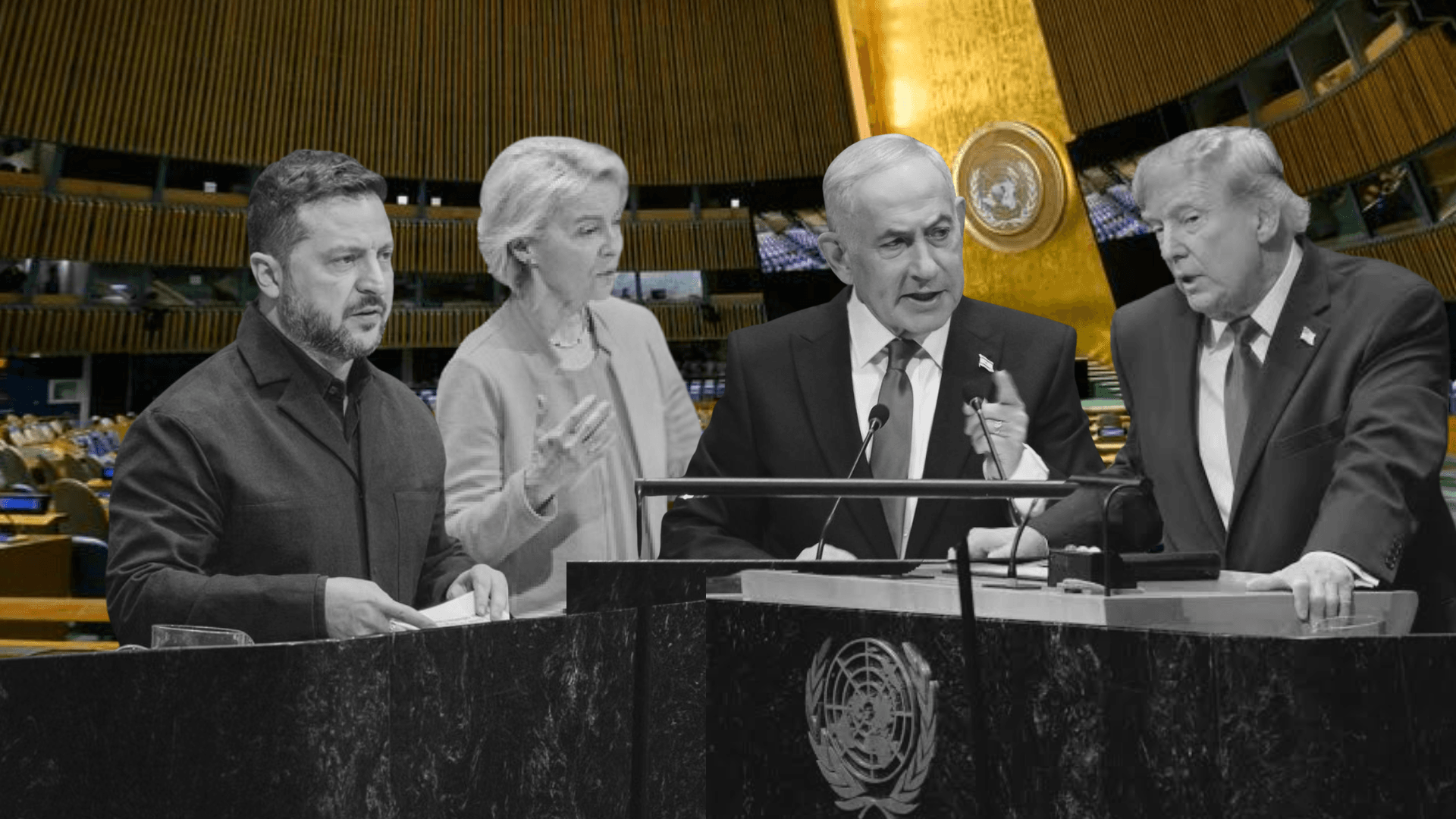
This year’s United Nations General Assembly has been unusually revealing, not because it produced a major diplomatic breakthrough, but because of what it says about the changing role of the United Nations itself.
The official theme of this year’s General Assembly is “Restoring trust, managing transformation: A United Nations that delivers for all”, but much of the political discussion in New York has focused on whether the organisation is still capable of doing what its members expect it to do. While the entire world was in the US this week, some leaders decided to use that venue as a place where to hold bilateral meetings or different regional discussions.
The agreement on Greenland, American President Donald Trump’s speech, the absence of several major leaders, for example Russian President Vladimir Putin, Chinese Leader Xi and and Italian Prime Minister Meloni and the increasingly direct criticism of the UN by different members, such as Argentina, most of southern American countries, Turkey and Israel shows that something has changed in the way the United Nations is perceived in the world.
Greenland: We Have a Deal, Finally.
The agreement signed on Tuesday by U.S. President Donald Trump, Danish Prime Minister Mette Frederiksen and Greenlandic Prime Minister Jens-Frederik Nielsen is probably the most important development of this high level week in New York. And it happened outside the UN perimeter. The agreement amends the existing 1951 defence arrangements and gives the United States substantially greater military access to Greenland, including the modernisation and expansion of Pituffik Space Base and additional defence arrangements at Narsarsuaq and Mestersvig. It also introduces restrictions on military installations by non-NATO states and gives Washington a significant role in screening foreign investment in sensitive sectors. At the same time, the agreement reaffirms the sovereignty and territorial integrity of the Kingdom of Denmark and recognises the right of the Greenlandic people to self-determination. Washington has therefore secured much of the strategic access it was seeking without Greenland becoming American territory.
The logic behind the agreement is quite simple to understand: Greenland occupies an increasingly important position between North America and Europe, while the Arctic is becoming more relevant for military infrastructure, missile defence, shipping routes, resources and the wider competition involving Russia and China. What makes the agreement politically interesting is the way the dispute was ultimately resolved. After months of tension over Trump’s demands, the issue was settled through direct negotiations between Washington, Copenhagen and Nuuk, with NATO considerations incorporated into the final arrangement rather than through an UN resolution.
Trump Uses the UN Podium to Challenge the Institution Itself
American President Donald Trump’s speech reflected a similar scepticism towards the existing international architecture. Alongside his discussion of Iran and American foreign policy, he presented reductions in the UN budget and the elimination of more than 4,000 positions as evidence of reform, while arguing that the organisation should remain focused on what Washington considers its core responsibilities. He also placed strong emphasis on national sovereignty and rejected the idea that international institutions should constrain American policy when Washington considers its national interests to be at stake.
U.S. Secretary of State Marco Rubio has made the argument even more explicit. During the General Assembly, Rubio argued that the rules-based international order is failing and that the United States will continue to act alone when necessary, rather than placing the international system above American interests. The significance of the position is that Washington is no longer primarily debating how the existing international system should be improved; it is openly questioning how much authority that system should have over a sovereign state. That takes the discussion beyond efficiency, budget cuts or bureaucratic reform and into a much more fundamental debate about the limits of multilateralism itself.
The Empty Seats Matter
The attendance of world leaders has provided another indication of the General Assembly’s changing political weight. More than fifty leaders were absent from this year’s high-level week, including Chinese President Xi Jinping, who is currently in the US, Russian President Vladimir Putin and German Chancellor Friedrich Merz and Italian Prime Minister Meloni.
Individual absences have perfectly ordinary explanations and should not automatically be interpreted as rejection of the United Nations. The cumulative picture is nevertheless significant, particularly when some of the most consequential diplomatic discussions are taking place elsewhere. President Xi, for example, chose to meet President Trump in Washington rather than attend the General Assembly, illustrating how direct engagement between major powers can sometimes take precedence over the UN diplomatic calendar.
The absence of Italian Prime Minister Giorgia Meloni is particularly notable because no Italian Prime Minister had skipped the UN General Assembly for the past fifteen years. Meloni was represented by Deputy Prime Minister and Foreign Minister Antonio Tajani, with spokesperson from the presidency citing her international schedule and domestic issues. Italy has not withdrawn from the UN: Foreign Minister Tajani attended the Assembly and maintained that the organiszation must regain its capacity to decide and act. This episode fits a wider diplomatic context where governments balance several competing arenas for their interests, rather than showing a specific Italian rejection of multilateralism.
Criticism of the UN is Becoming Much Broader
But something has to change at the UN, where the criticism coming from Trump’s administration is also no longer isolated. Argentine President Javier Milei used his address to argue that the UN has failed in its original mission while expanding into areas beyond it, criticising what he sees as an increasingly ineffective international bureaucracy. Turkish President Recep Tayyip Erdoğan likewise argued that the organisation has become increasingly unable to fulfil its responsibility for maintaining peace and called for reform of the Security Council, particularly the concentration of decision-making power among its five permanent members. Their political agendas are very different, but both are questioning whether the existing institutional structure still reflects the realities of international politics.
More strikingly, the organisation’s own leadership is acknowledging the depth of the problem. The President of the General Assembly, Khalid’s Rahman opened the session by asking whether the United Nations still works, while arguing that reform cannot simply mean cutting staff or merging departments. That is important because the debate has moved beyond the familiar criticism that the UN is too expensive or bureaucratic. The concern is increasingly about political effectiveness: whether the organisation can actually produce decisions when its most powerful members disagree.
The issue is important because the UN has not simply stopped functioning. It continues to provide humanitarian assistance, coordinate development programmes, support peacekeeping and perform technical functions that would be extremely difficult to reproduce through bilateral diplomacy. The weakness is much more visible in the areas where great-power interests collide, particularly when the Security Council is paralysed by disagreement among its permanent members.
Reform is Easier to Demand than to Deliver
The hardest question for the UN is what meaningful reform might resemble. Most participants in the debate now accept that the organization must change, yet consensus on a replacement is scarce. Secretary Rubio defends national sovereignty and a more limited UN role. President Erdoğan challenges the Security Council’s structure. President Milei questions the expanding political reach of the organization. UN leadership urges deeper institutional change. These stances share a view of dysfunction but point toward distinct models.
The problem is more political rather than administrative. The UN is governed by its members, and those states lack equal incentives to alter the system. Permanent Security Council members, France, the U.K, Russia, China and the US, hold privileges, such as the veto right, hard to align with calls for a more representative body. Meanwhile, states seeking greater representation, for example the Southern American countries, disagree on how it should function and the role the security council should have in the XXI centuries. The 2026 General Assembly has revealed a gap between the institution the international community expects, and the one member states currently support. The organization remains essential in many fields, but its political authority faces growing challenge. The Greenland deal, the speeches in New York, and the notable absence indicate that a large portion of the World still require the institution but are less willing to accept it as the central tool for every major international issue. The UN must adapt to this reality without losing the functions that keep it vital.