Today, China remains a major trading partner for the EU, but the scale of the bilateral trade imbalance, alongside European concerns about industrial overcapacity and state support, has intensified pressure on Brussels to respond.
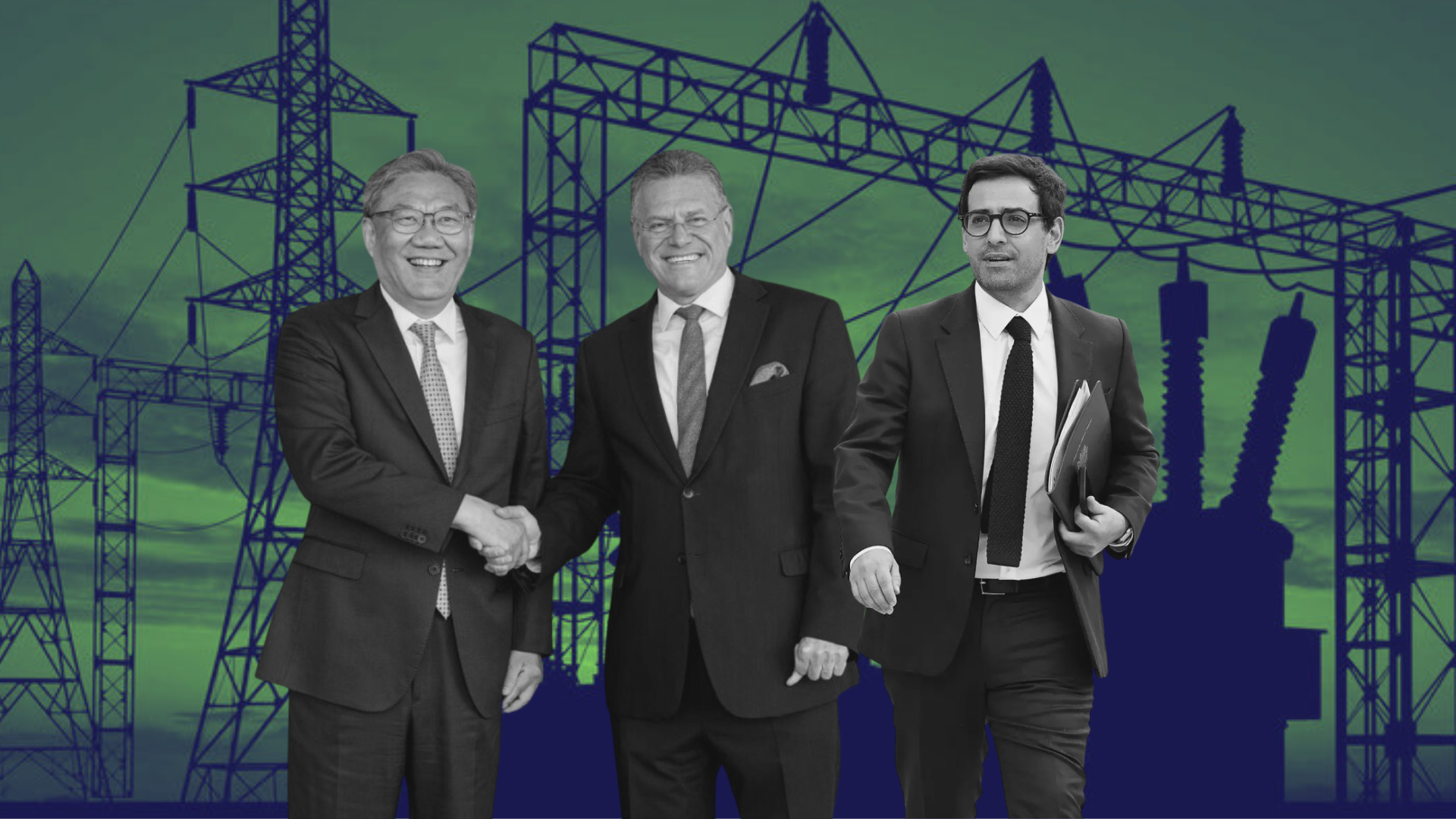
On 9 October 2026, European Trade Commissioner Maroš Šefčovič announced a breakthrough in negotiations with Beijing. The two sides reached a shared understanding intended to moderate Chinese exports of hybrid and plug-in hybrid vehicles to the EU, potentially reducing projected exports by more than half over four years. The discussions also covered improved access to the Chinese market for European products worth approximately €4 billion and the facilitation of Chinese export licences for rare earths and permanent magnets.
The agreement reflects the EU’s efforts to ease trade tensions with Beijing and protect European industrial interests. Rather than relying exclusively on tariffs, Šefčovič has pursued negotiations alongside the development of additional EU trade-defence instruments. This creates a paradox, as Brussels tries to address respond to urgent market challenges without allowing bilateral relations to deteriorate into a prolonged trade conflict. However, the agreement is only a first step. Its effectiveness will depend on implementation, underlying trade imbalance and concerns about industrial competition.
The Automotive Sector at the Centre of the Dispute
The automotive industry illustrates the challenges that European policymakers face. Following the EU’s imposition of additional countervailing duties on Chinese battery electric vehicles in October 2024, Chinese manufacturers expanded their presence in other vehicle segments, particularly hybrids and plug-in hybrids. Chinese hybrid vehicle exports to the EU have increased rapidly. Imports could reach approximately 800,000 vehicles in 2026, pushing Brussels and Beijing to agree on an initial annual limit of 350,000 vehicles. The reported framework is expected to last four years, with the ceiling increasing by 6% annually from the second year.
The agreement provides a degree of protection for European manufacturers, but it also demonstrates how companies can adjust their strategies in response to trade restrictions. Chinese producers including BYD, Geely and SAIC Motor have established substantial international operations and seek to expand production within Europe rather than depend exclusively on exports from China. For European manufacturers, the pressure is considerable. This raises additional concerns for European car companies. While Chinese companies easily manage to adjust, some of the EU’s largest automotive groups like Volkswagen have faced restructuring challenges as the industry adapts to electrification, cost pressures and competition from lower-priced vehicles. European producers must simultaneously invest in new technologies, maintain existing operations and preserve their position on a market.
The ‘Made in Europe’ Debate
The proposed ‘Made in Europe’ requirements under the Industrial Accelerator Act, backed by Commission President Ursula von der Leyen and initiated by Industry Commissioner Stéphane Séjourné, initially aimed to encourage local manufacturing and sourcing. However, the proposal has faced political and industry-level challenges, with its final scope and implementation still under discussion. Although the legislative framework has not been finalised, Chinese manufacturers are already pursuing investment strategies that could help them adapt to future requirements. Changan Automobile, for example, has announced plans to produce 180,000 vehicles annually in Europe by 2028 and 350,000 by 2030. Xpeng, Chery and GAC are also pursuing European production and supplier networks. Meanwhile, BYD has been exploring options for establishing a manufacturing presence in Europe.
These developments have implications for both European industry and investment. Local production can create jobs, attract investment and strengthen European supply chains. However, it may also affect competitiveness of established manufacturers and raise questions about the extent to which local-content requirements can deliver the intended benefits. It could also result in direct damage for European industries while Chinese companies manage to adjust smoothly.
Assessing the exact geographical scope of the proposed rules is another source of disagreement. European automotive supply chains extend beyond EU borders, particularly into Türkiye, Morocco and the Western Balkans, where regional manufacturing and supplier networks support European carmakers, including Stellantis. Türkiye’s Automotive Industry Exporters’ Association has argued that the country’s automotive industry supports approximately 250,000 EU jobs, highlighting the extent of cross-border industrial integration. A narrowly defined European-content requirement could therefore create additional costs or disrupt established supplier relationships. Therefore, the challenge is how to strengthen European manufacturing without undermining the integrated supply chains on which the industry depends.
Critical Raw Materials and the Search for Alternative Suppliers
The EU’s economic-security agenda also extends to critical raw materials, which are essential to defence production, electric vehicles, renewable energy and advanced manufacturing. China’s position in the extraction and processing of several strategically important materials has made diversification a growing priority for European policymakers. On 14 October 2026 internal EU documents identified Vietnam as a potential partner for reducing dependence on Chinese critical raw materials. Vietnam’s reserves of tungsten, rare earths, antimony, bismuth and bauxite could offer the EU additional sourcing opportunities. The documents recommend financial and technical support for Vietnam’s mining and processing industries, including loans, grants and export-credit insurance. Such measures could help European companies secure alternative sources of materials while supporting the development of local processing capacity.
The initiative also reflects growing competition among international investors. One example concerns Masan High-Tech Materials, which operates a major tungsten mine and refinery in Vietnam. A proposed acquisition involving entities from Australia, the United States and Canada failed to proceed last year, which raised concerns about the future availability of supplies for European buyers. In September 2026, Masan High-Tech sold a 4.99% stake to US tungsten supplier Elmet Group, while discussions over a further stake sale were reportedly ongoing. These developments demonstrate that European access will also depend on investment competition, processing capacity, regulatory conditions and the commercial interests of local partners.
Vietnam nevertheless offers an opportunity to broaden the EU’s network of suppliers. Stronger cooperation could support investment in mineral processing and create additional sourcing options for European industry. However, regulatory uncertainty, technology-transfer requirements and concerns over transparency regarding Chinese involvement remain potential obstacles. Therefore, diversification can reduce exposure to supply disruptions, but it cannot immediately replace established supply chains or eliminate all strategic dependencies.
From Trade Defence to Strategic Resilience
The EU’s recent initiatives are rather complex, as it tries to increase international trade and partnerships, while simultaneously it takes a preserving approach. It is indisputable that Economic security became a central consideration in European trade and industrial policy.
The European Commission is expected to present further economic security and trade-policy initiatives in December 2026. These may include measures to encourage supplier diversification in high-risk sectors and additional instruments to protect European industries from the effects of external trade restrictions. For European businesses, these developments could affect investment decisions, supplier selection and production strategies. Companies operating in automotive manufacturing, renewable energy, chemicals and defence-related supply chains should monitor both the evolving legislative framework and the practical implications of new trade arrangements.
Ultimately, Europe’s challenge is to strengthen its industrial competitiveness without sacrificing the benefits of international trade. Negotiated agreements can ease immediate tensions, as well as industrial policy and alternative supply partnerships can reduce vulnerabilities over time. Their success, however, will depend on implementation, investment and the EU’s ability to maintain a coherent approach across its Member States.