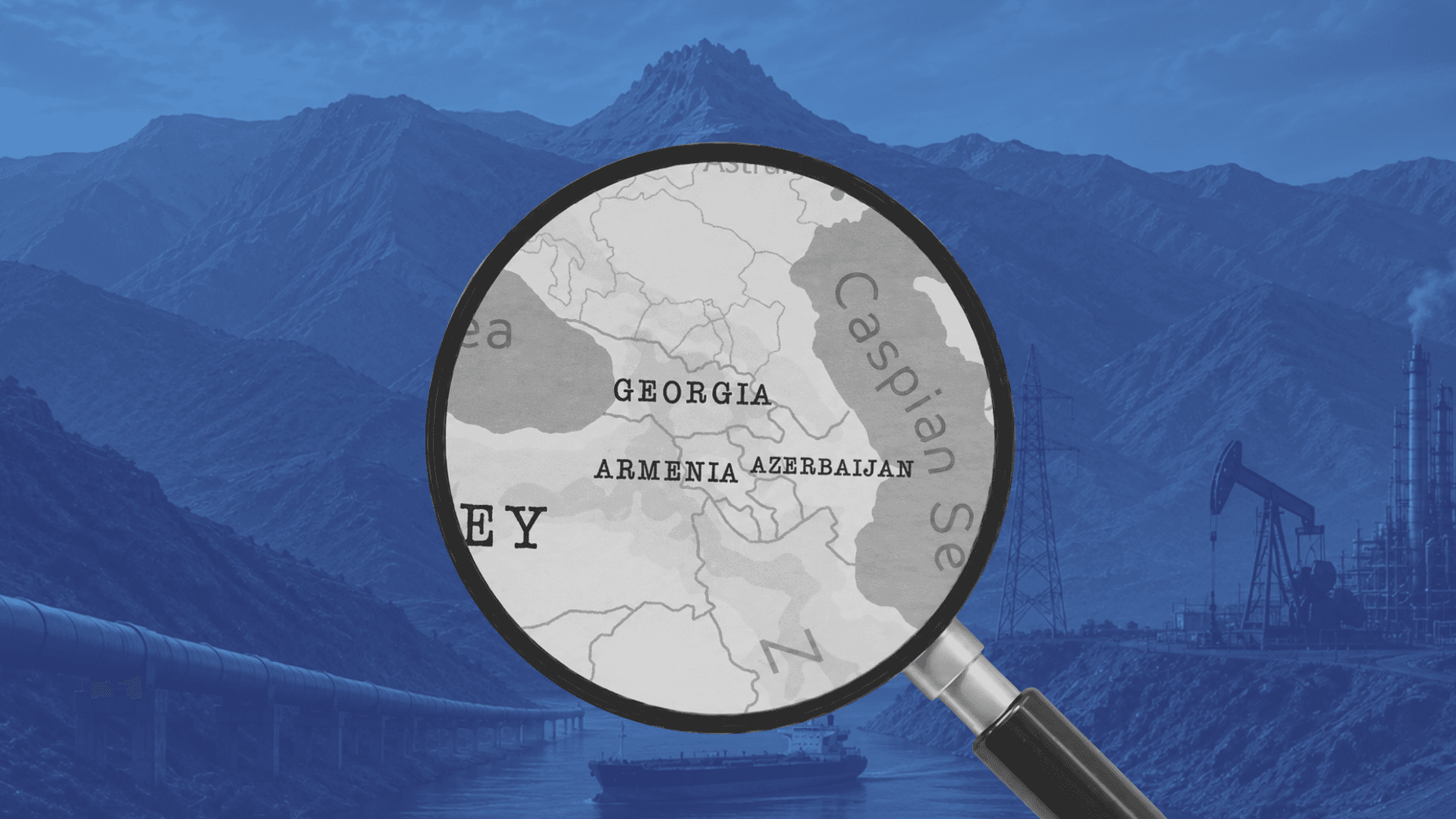
The results of the parliamentary elections in Armenia signal an endorsement of country’s turn away from its traditional security ally, the Russian Federation, and towards integration with the European Union and Western countries. Still, navigating the next chapters will require the new-old government to manage profound domestic and a volatile matrix of competing global powers.
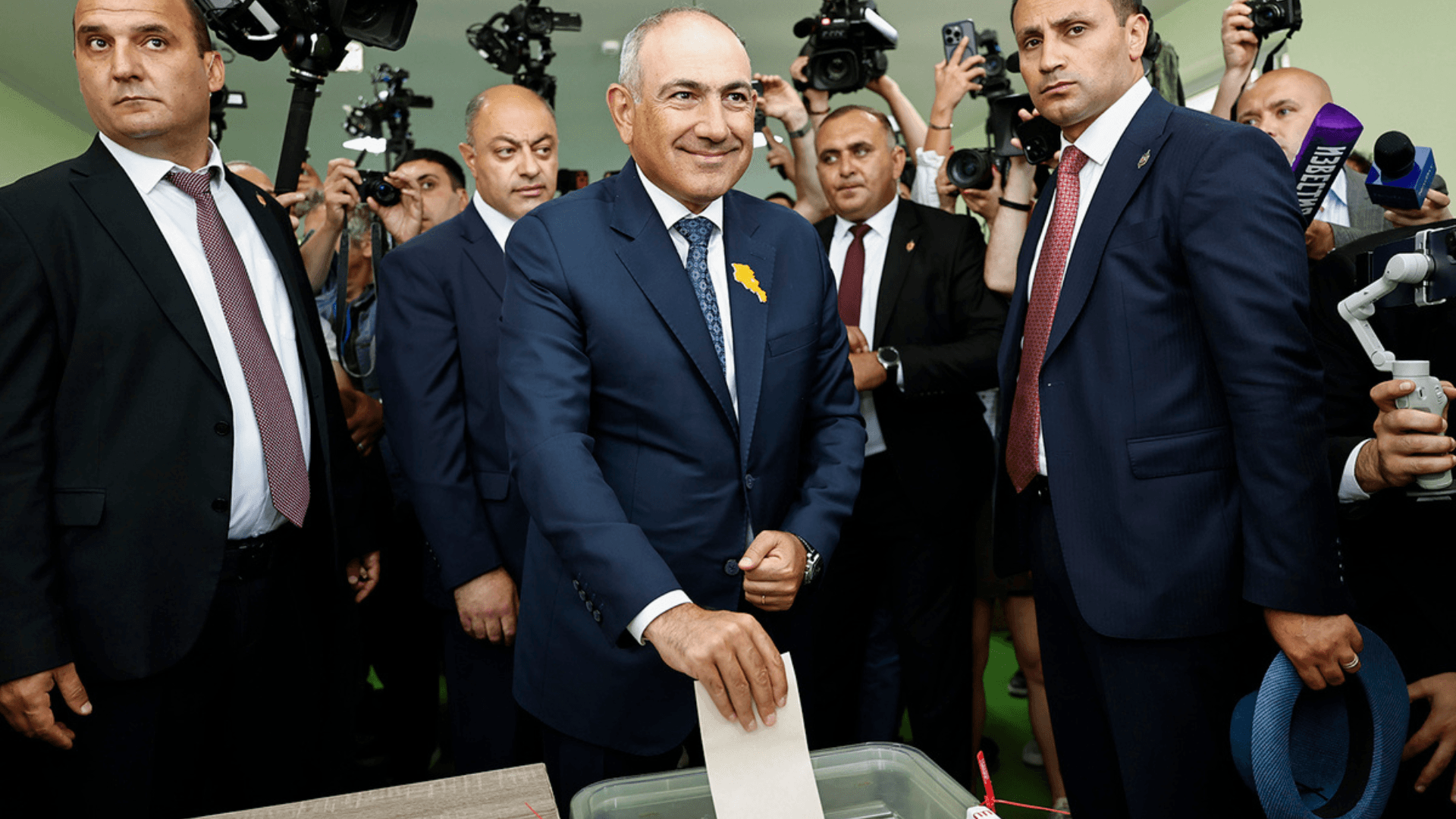
On 7 June, Armenia held its highly anticipated parliamentary election. This vote was widely framed as a referendum on the country’s geopolitical destiny as it struggles to find its place in the new geopolitical reality of the world. Facing internal polarisation and immense external pressure, voters delivered a decisive mandate to incumbent Prime Minister Nikol Pashinyan and his ruling Civil Contract party.
Preliminary results from the Central Election Commission show Pashinyan’s Civil Contract capturing 49.85% of the vote. Under Armenia’s complex proportional electoral system (which includes a “majority bonus” mechanisms meant to ensure stable governance) this performance grants Civil Contract 61 out of 101 seats in the National Assembly. This absolute majority of around 58% of parliamentary mandates enables Pashinyan to form a government independently and pass standard legislation without relying on a coalition.
The opposition camp is strongly backed by pro-Russian forces and traditional commercial elites. The bloc consolidated behind the newly formed Strong Armenia alliance, led by the Russian-Armenian billionaire Samvel Karapetyan, who positioned himself as the opposition leader, securing 23.31% of the vote. Former President Robert Kocharyan’s conservative, Moscow-friendly Armenia Alliance finished a distant third with 9.95% of the vote, while the veteran businessmen Gagik Tsarukyan’s Prosperous Armenia party barely made it past the legislative threshold to capture exactly 4% of the vote. Voter turnout stood at 58.97%, reflecting a sharp nine-percentage-point increase compared to the 2021 elections, underscoring the high stakes felt across the electorate.
A Change of Course
To understand the weight of this election, it is worth looking at the event that redefined Armenian politics over the last six years. Historically, Armenia relied almost entirely on Russia for its security, even hosting a Russian military base and anchoring its defence in the Moscow-led Collective Security Treaty Organisation (CSTO).
This arrangement fell apart between 2020 and 2023. After a defeat by Azerbaijan in the Second Nagorno-Karabakh War, Azerbaijani military operations in September 2023 led to the complete dissolution of the breakaway Republic of Artsakh and the subsequent flight of over 100,000 ethnic Armenians from the territory. Throughout this crisis, Russian peacekeepers and CSTO defence guarantees turned out to be entirely ineffective. Yerevan viewed this inaction as a strategic betrayal. In response, Pashinyan’s government systematically froze Armenia’s participation in the CSTO, halted Russian arms contracts, ordered Russian border guards to leave Yerevan’s international airport, and launched a strategy for the diversification of foreign policy. The 2026 election became the litmus test of whether the public would punish Pashinyan for these territorial losses or support his efforts to break free from the Kremlin’s area of influence.
Between Europe and Russia
The preservation of the pro-Western status quo altered the balance of power in the South Caucasus, bringing joy to some and headaches for others. For Brussels, the election outcome is a significant victory. Armenia’s newfound EU aspirations have evolved into concrete policy steps, including talks on visa liberalisation and expanded European Union Mission in Armenia monitoring along the border. European leaders, including European Parliament President Roberta Metsola and EU Commissioner Marta Kos, immediately congratulated Pashinyan, viewing the result as an endorsement of democratic reforms and European alignment. Armenia is effectively attempting to follow the path carved out by Moldova and Ukraine, where they would transition from a post-Soviet country with a significant Russian influence into an aspiring EU candidate. The United States have also actively encouraged Yerevan’s current trajectory. Washington has deepened diplomatic ties through diplomatic visits and started strategic cooperative agreements in civil nuclear energy and technology sector. The stabilisation of the region includes a planned transit corridor connecting Azerbaijan to its Nakhchivan exclave through Armenian territory, which would be managed by a joint US-Armenian corporate entity.
On the opposite end, the vote represents a strategic setback for Moscow. Putin’s government actively tried leveraging regional instability to orchestrate a political shift in Yerevan. Right before the vote, Russian authorities imposed sudden import bans on Armenian agricultural goods, while President Vladimir Putin publicly drew ominous parallels to Ukraine, warning that Armenia’s European ambitions required “special consideration”. Furthermore, the pre-election period was marked by domestic turbulence. The government seized the assets belonging to Karapetyan’s electricity network and arrested the high-profile class of senior figures within the influential Armenian Apostolic Church for an alleged coup plot. After the elections, it is clear that Armenian public wants a future outside of Kremlin’s shadow, cementing Russia’s rapidly declining influence in the Caucasus.
On a regional level, the continuation of Pashinyan’s administration ensures the survival of his “Peace Agenda”. The Agenda is centered around the formal normalisation of ties and opening of borders with Turkey, together with a legally binding peace treaty with Azerbaijan. While the opposition campaigned on reclaiming lost leverage, Pashinyan’s victory signals a pragmatic acceptance by the public that regional economic unblocking is necessary for long-term survival of a country. For neighboring Iran, which is dealing with its own security challenges, a stable Armenia that avoids total border re-draws remains an important economic and transit corridor, even though Tehran sees expanding Western influence in the Caucasus as a potential threat in the future.
The Cost of Western Orientation
While the Civil Contract party has secured the legal right to govern, the coming months will test Armenia’s stability. Even though the pro-Russian parties were defeated at the ballot box, the combined opposition holds nearly 40% of the parliament. Given the deeply polarised political climate, the opposition is likely to challenge the legitimacy of the vote, alleging political persecution, which could manifest as renewed street protests and civil disruption in Yerevan. Simultaneously, Moscow may try to impose even harsher economic barriers given the Kocharyan’s and Karpatyan’s defeat. This would complicate the government’s economic agenda, since the country has a structural dependency on Russian natural gas and grain imports. Yerevan will likely press Brussels and Washington for larger security assistance and formal defence procurement agreements to replace its outdated Soviet-era defence structures.
The voters across Armenia have chosen a path that is risky, but could bring a lot of benefits to Armenia in the long run. After a decisive reaffirmation of their support for a European orientation, they have closed the door on complete reliance on Moscow. This creates a space for the Armenians to work on reforms and modernise their country as they prepare to stand in line for a possible EU membership in the future.
Image source: Official Portal of The Prime Minister of the Republic of Armenia