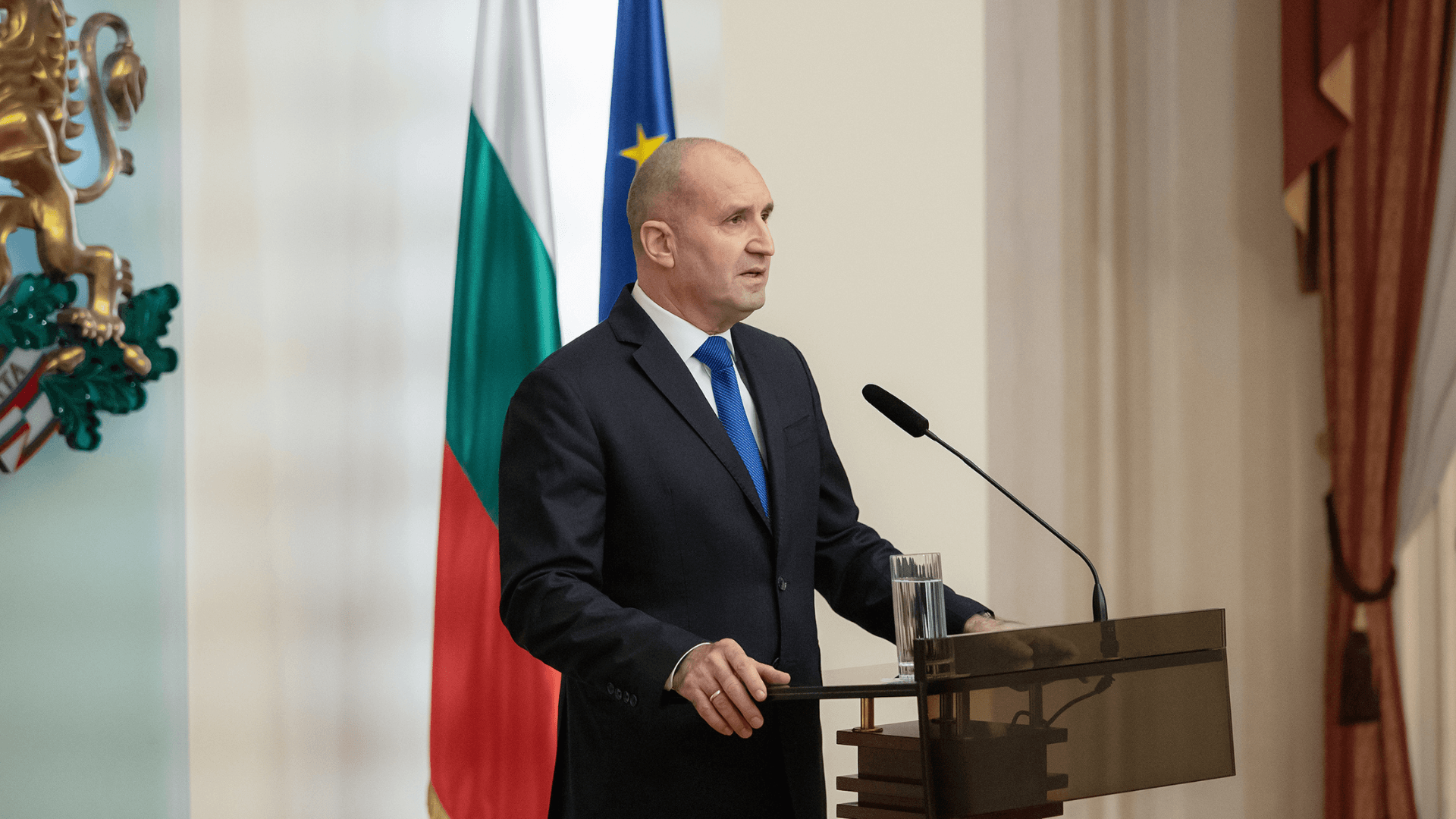
Bulgaria’s populist ex-president rode on the transactional geopolitical position wave and anti-corruption platform right to his first term in the Prime Minister’s office, securing an absolute majority in the parliament.
Following the electoral victory of pro-EU Tisza in Budapest last week, the political landscape of central and eastern Europe continues to rapidly evolve. The final results of the parliamentary elections in Bulgaria, held on 19 April, confirm a landslide victory for former President Rumen Radev’s newly formed Progressive Bulgaria. With more than 43% of the vote, PB has secured the top spot and effectively dismantled a decade-long duopoly of the centre-right GERB and the reformist PP-DB. For a country that has had nearly five years of revolving-door governments and caretaker administrations, this result likely puts the end to political stability. However, for institutional stakeholders and market actors, the victory introduces a new set of variables for Bulgaria’s role as the EU country and the Eurozone’s newest member.
The Anatomy of the Win
Radev’s landslide win is the result of a series of calculated moves. By transitioning from the presidency to active party leadership, Radev successfully captured the stability vote that had previously belonged to GERB, while simultaneously appealing to the anti-corruption sentiment that fueled PP-DB. His campaign focused on sovereign stability, which is the idea that Bulgaria can be a loyal Eurozone and NATO member while maintaining a more transactional approach to its own national interests. This resonated with a large amount of general populace that was getting the election fatigue and the constant friction between the old political blocs. Radev now holds a mandate larger than any Bulgarian leader in the post-communist era, granting him significant leverage over judicial appointments and economic policy.
Since PB managed to mobilise the abstainers, and flip over some of the voters from almost all parties, his victory pushed three out of four right wing parties below the electoral threshold, with the fourth one, Revival, barely pushing through the threshold. Additionally, PB’s win pushed the legacy centre-left populist BSP below the threshold, which has been its worst electoral result since the fall of the Communist regime.
The Path Forward: Government Formation
Radev’s party managed to secure the absolute majority, making them the inevitable core of any cabinet. We expect two primary scenarios to play out. Scenario one would be a one-party government by Radev that would try to follow up on all the pre-election promises to its voter. The second option would be a coalition government with the centrist PP-DB, as Radev stated that he would be willing to cooperate with pro-EU forces to form a government. The coalition with the right-wing Revival, while possible, seems significantly less likely than it did last week. Current signals from Sofia suggest Radev will opt for the first option, prioritising institutional stability to protect Bulgaria’s place in the Eurozone during this sensitive first year of membership.
Radev’s government could bring both clarity and new complexities. The immediate concern for investors is fiscal discipline. As a Eurozone member, Bulgaria is under the strict oversight of the ECB. PB’s promises of increased social spending must be balanced against the Stability and Growth Pact. Investors are closely monitoring the appointment of the finance minister – in case that the position gets occupied by a technocratic choice, the signal will be that the EU path remains the priority.
Bulgaria remains a critical transit hub for the Balkans. The new administration is expected to continue the diversification away from Russian energy, but with a more vocal emphasis on securing lower prices for domestic industry. The period of stagnation for major infrastructure projects is likely over, as a stable government would be willing to sign long-term contracts.
From the European Union’s perspective, Brussels is losing a compliant player in GERB and gaining a more demanding, but potentially more stable, partner in Radev. Sofia is likely to become more vocal in the European Council, especially regarding the full integration into the Schengen Area’s land borders and regional defence initiatives. The era of the unstable Balkan state is being replaced by a centralised executive in Sofia.
Much like the transition in Hungary, the old playbooks for Bulgarian politics are over. The focus now moves from electoral politics to regulatory predictability, with the coming days of coalition building determining whether Radev’s “third way” is a bridge to deeper European integration or a shift toward a more isolated national-interest-first policy that would benefit the non-EU actors.
Image source: Official X account of the President of the Republic of Bulgaria